Flat roofs on Brentry's inter-war and post-war houses
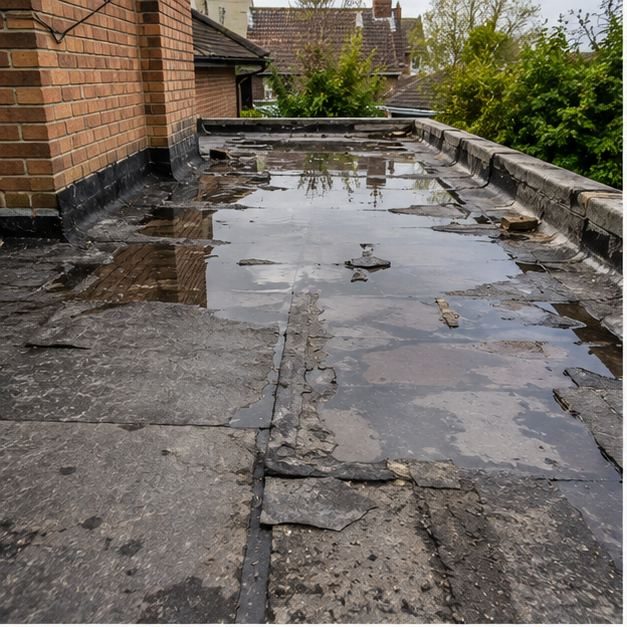
Garages are a defining part of many Brentry streets, usually built flat beside the house. Years of weather leave the original surface cracked or blistered, and water finds its way to the joint where the garage roof meets the house wall. Where the felt has cracked at the wall, rain runs down the brickwork inside the garage and shows as damp at the top of the wall.
Porches over front doors are small but exposed. Their upstands and edge trims suffer from every shower, and a minor failure there can run inside the entrance hall before anyone sees the roof. Because the area is small, even a modest split can drip into the hallway directly below. We look at how the covering is lapped up the wall and at the drip edge.
Extensions added behind these semis often have a flat section too. Because Brentry sits close to the open Downs, the surface can be hit by wind-driven rain from several sides, so edge details and outlets matter as much as the covering itself. We check each side, since the weather does not always hit the same edge.
Flat roofing services in Brentry
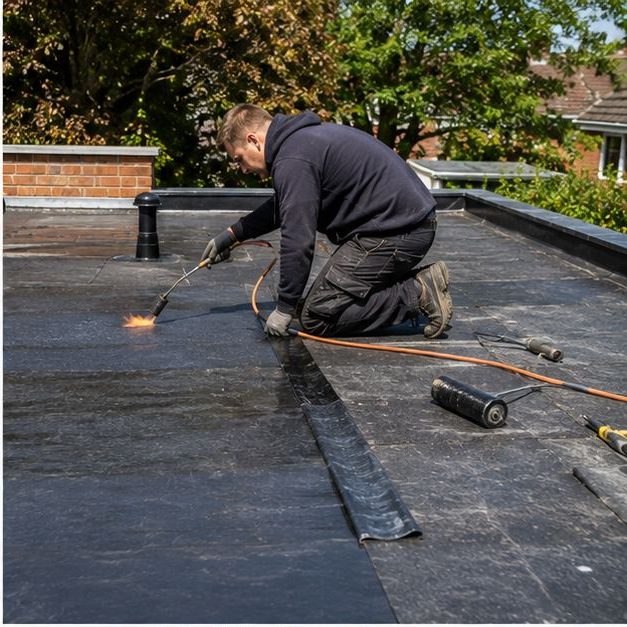
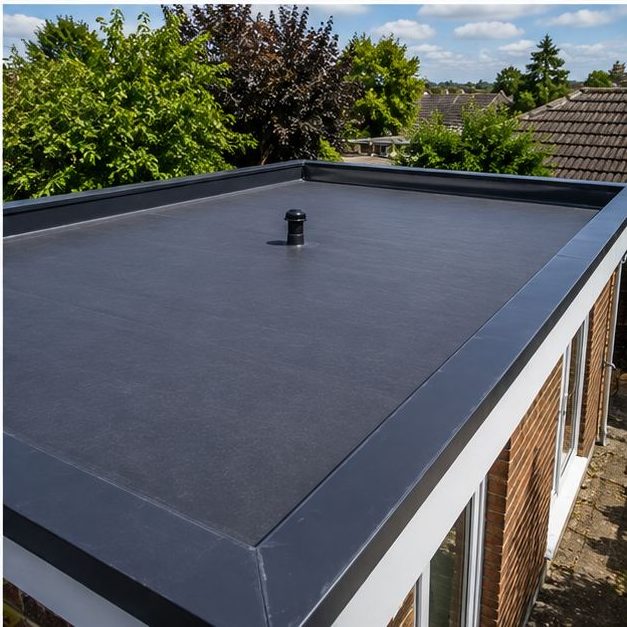
- Garage roof re-covering. Stripping a worn garage roof, checking the deck, and fitting a new waterproof covering with proper edges and upstands.
- Porch roof repairs. Sealing splits and renewing the trim and upstand on small entrance roofs where water has started to get in.
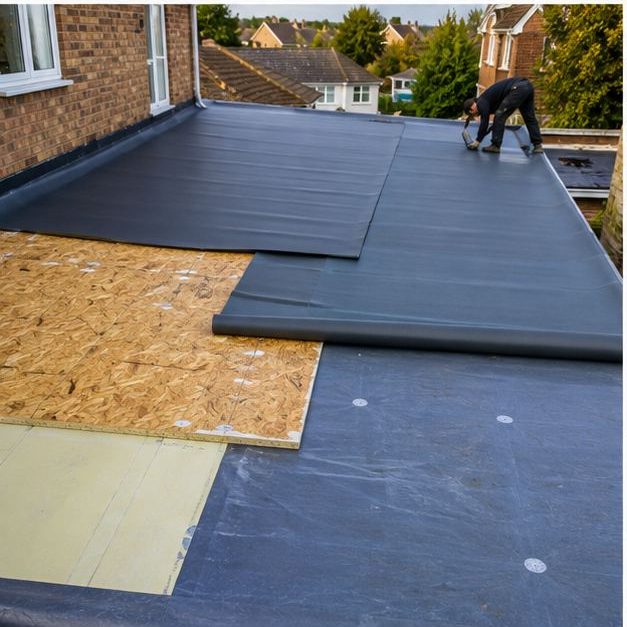
- Extension flat roof replacement. Renewing the covering on a rear extension, with insulation and falls looked at while the old surface is off.
- Blister and crack repairs. Cutting out damaged patches and fitting a repair where the rest of the covering is firm and the deck beneath is dry.
- Ponding and outlet work. Clearing blocked outlets and correcting low spots so water leaves the roof instead of lying on it.
- Dormer and bay top roofs. Repairing or renewing the flat tops of dormers and bays, where flashing and side details need careful work.
How we look at a flat roof in Brentry
Access is usually simple on a garage or porch, but we still start with what you can see from inside: ceiling marks, damp walls, or paint lifting near the junction. Then we check the surface for splits, blisters and standing water. Soft or spongy boards tell us the deck below has been wet for some time.
If the deck feels firm and the damage is local, we repair and tell you what to watch. If boards are soft or the covering has failed all over, we explain why replacing is better, and discuss rubber, fibreglass or felt options. We keep the discussion about the real condition of the roof, not a sales line.