Repairing the tiled roofs of Brentry's estates
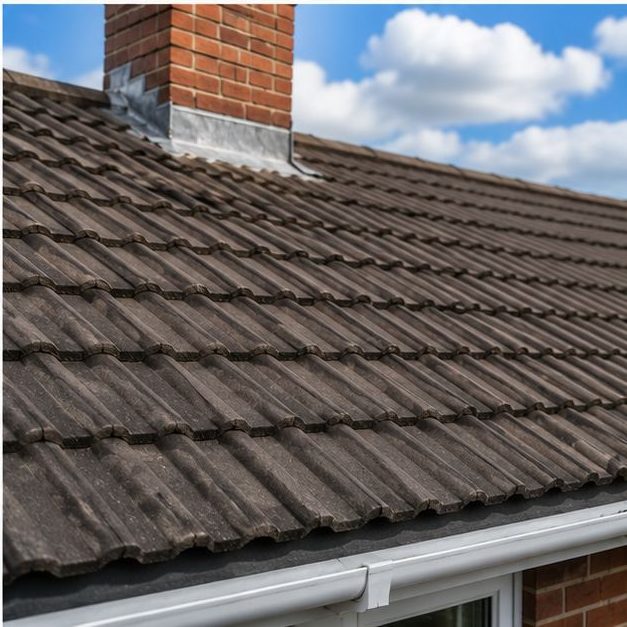
Brentry's streets are mostly inter-war and post-war semis and short terraces, so a single run of roof can be shared by several homes. Where one section of tiling or ridge has weakened, the neighbouring roofs often share the same age and the same tired details. Where one has gone, it is worth looking along the same slope for others that have loosened.
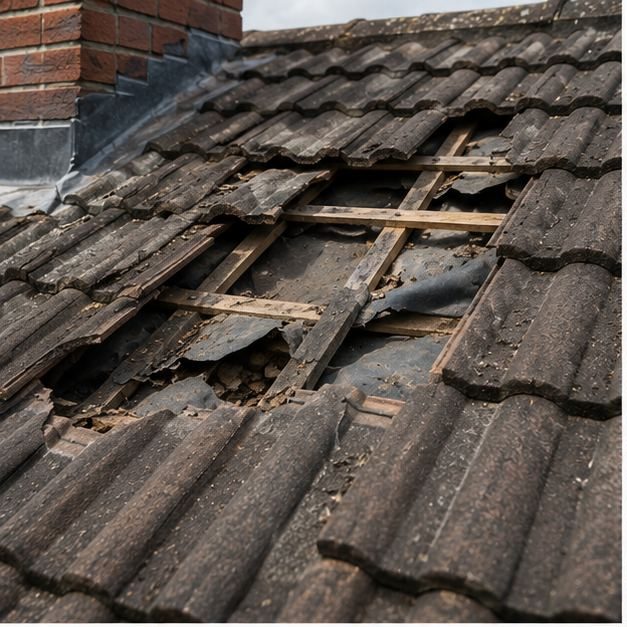
Sitting on the edge of the Downs and the Blaise area, the estates catch open weather from that side. Wind lifts tile edges and loosens ridge bedding, and rain driven under a displaced tile soaks the old felt and battens beneath it faster than most people expect. Checking those edges is a normal part of our look at a Brentry roof.
Garages and porches attached to the front of these houses create their own junctions with the main roof. A flashing that has lifted where a porch roof meets the wall is a classic Brentry leak, and it is easy to mistake for a fault in the main slope. Lead or a new flashing strip put right is a far smaller job than reslating or retiling a pitch.
Roof repair jobs we handle in Brentry
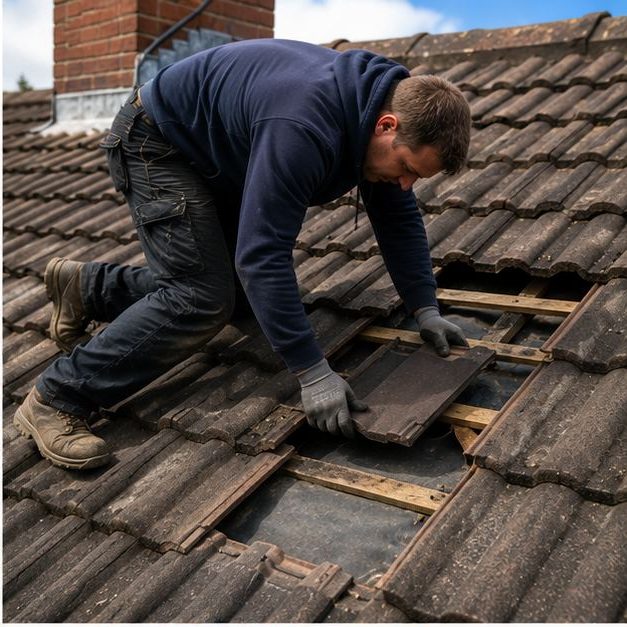
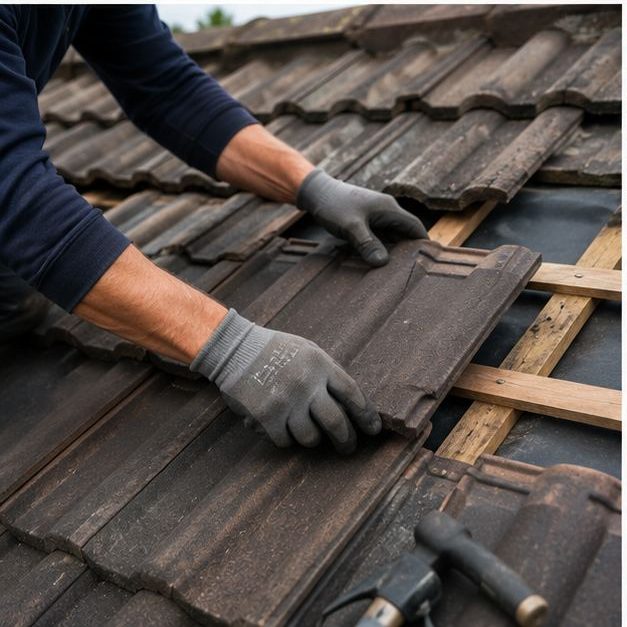
- Slipped and broken tiles. Replacing displaced or cracked tiles on semis and terraces, then checking the felt and battens beneath for soaking or rot.
- Ridge and hip re-bedding. Taking off loose ridge sections and re-laying them so the top line of the roof sheds water and wind properly again.
- Flashing and valley repairs. Renewing lead where a porch, garage or party wall meets the roof, which is where many Brentry leaks begin.
- Verge and gutter-edge repairs. Making good the roof edge at the gable and the eaves where tiles have shifted or mortar has broken away.
- Tracing hidden leaks. Following water along timbers and felt from the stain on the ceiling back to the opening on the roof.
- Storm damage repairs. Re-fixing tiles and ridges lifted by gusts and checking nearby sections for damage that is not yet obvious.
How a roof repair visit works in Brentry
We ask what you have seen and when, then look the roof over from the ground and from our own safe access. In the loft we look for stained timber, wet insulation and daylight, because the inside often tells a clearer story than the outside. We also check the eaves, where water can sit unseen.
Once we know the cause, we explain it plainly and give you the choice. If the tiles are fundamentally sound, we repair. If the covering is failing across much of a slope, we say it is time to think about replacing, and why. You decide what happens next.