Flat roofs in an exposed market town
The exposed Cotswold-edge weather puts flat roofs under strain here. Wind pulls at edge trims and the corners of coverings, and heavy rain tests every seam and upstand. A flat roof on this side of South Gloucestershire has to be well fixed at the edges as well as watertight across the middle. Good fixing at the perimeter is as important as the covering itself.
Older buildings near the main street often have flat additions tacked onto stone or brick walls that are not perfectly square. The junction between the new roof and the old wall is the weak point, and it needs careful flashing or an upstand cut to follow the wall. Done properly, that detail keeps rain out for a long time.
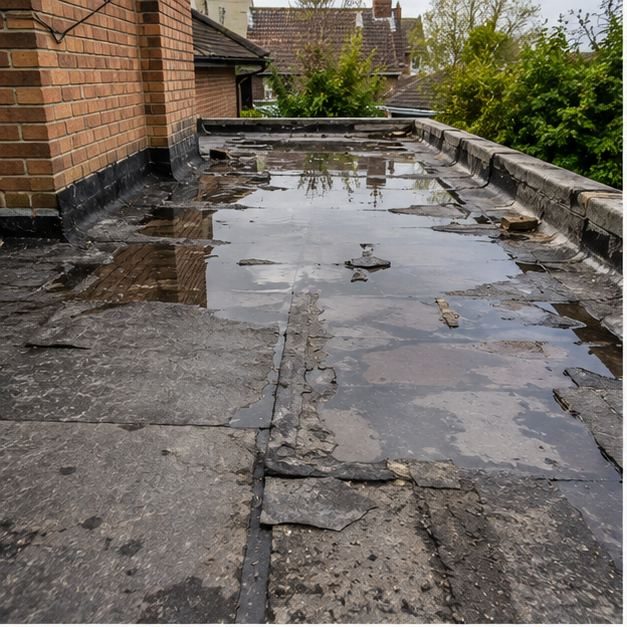
On the newer estates, flat roofs tend to sit on garages and extensions built from standard materials. Faults there are usually blocked outlets, shallow falls that let water stand, or a covering that has simply reached the end of its working life. A clear look usually settles which. A short, careful inspection is usually enough to tell which applies before we suggest any work.
Flat roofing jobs we do in Chipping Sodbury
- Ponding and falls correction. Standing water traced to shallow falls, a sagging deck or a blocked outlet, and put right so the roof drains.
- Split and blister repairs. Cracks, blisters and opened joints repaired where the rest of the covering is sound enough to be worth saving.
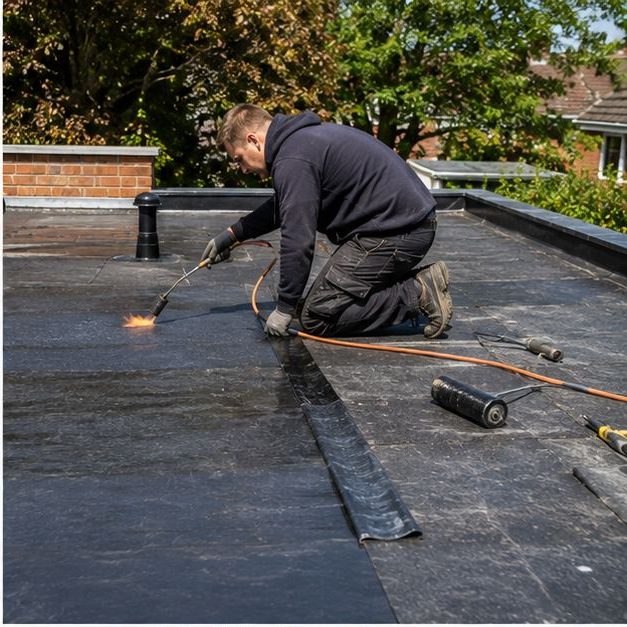
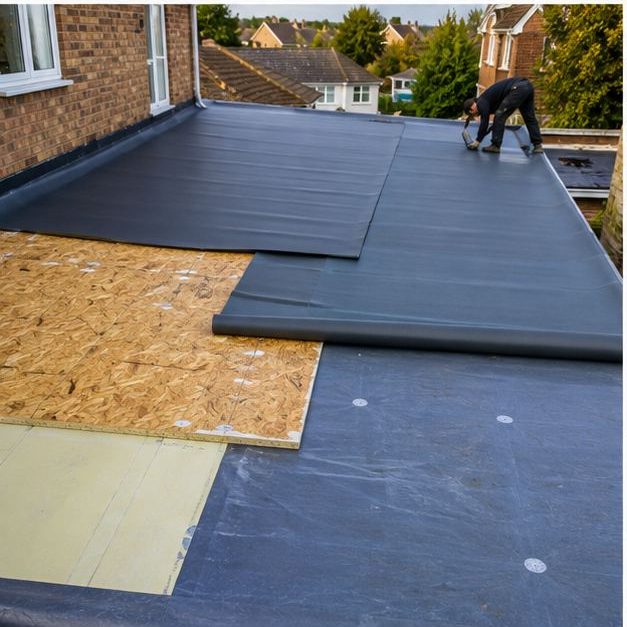
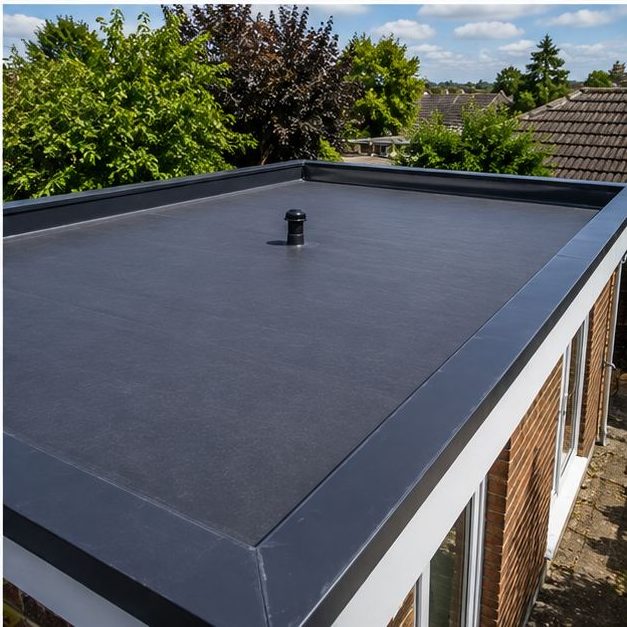
- New roof coverings. Widespread failure is dealt with by a full strip and replacement in single-ply rubber, fibreglass or felt, whichever suits the building.
- Deck repairs. Soft or rotten boards found beneath the old covering are replaced before anything new is laid on top.
- Wall abutments and edge trims. Upstands, flashings and edge trims renewed so wind cannot lift the edge and rain cannot track behind the wall.
- Dormer and bay roofs. Small flat tops on dormers and bays, where access is tight and detailing around the walls needs particular care.
How we plan flat roofing work in Chipping Sodbury
We check the roof from above and from inside. Outside we look at falls, seams, outlets and edges. Inside we check ceilings, and the underside of the deck where reachable, for staining or soft patches that show water has been getting in for a while. Those signs shape the advice we give you.
Then we set out the choices in plain language. If the covering is sound apart from a few faults, a repair is fair. If the deck is gone or the covering is failing across the roof, a new system is the sensible answer and we explain how it will be laid.