Flat roofs on St Pauls houses and flats
Many flat roofs here were added to Georgian and Victorian terraces long after the main house was built. They butt against tall brick walls, which means the upstand where the covering turns up the wall is one of the first places to open up and let water in. Spotting that early saves the brickwork and plaster beside it.
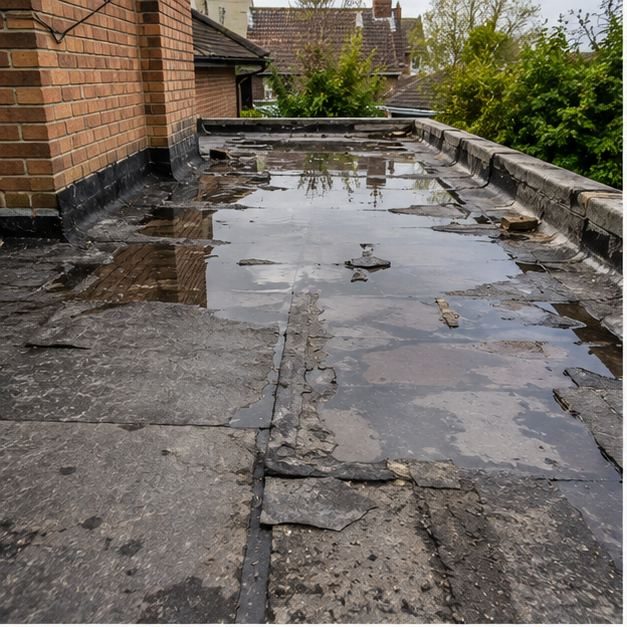
Surrounded by dense housing, these roofs collect leaves, dirt and debris from neighbouring buildings. Outlets and gutters block, water sits for days and the surface wears faster, so a roof that looks tired is often one that has simply not been draining properly. Clearing and fixing the outlet is the first step.
Flats and converted houses complicate matters, because a small flat roof may serve one flat while sitting beside another. We check what the roof covers underneath and pay attention to the deck, since a soft or rotten board found under the covering changes the job. We explain what we find before any new covering goes on.
Flat roofing work in St Pauls
- Ponding and blocked outlets. Standing water is traced to its cause, whether poor falls or a clogged outlet, and fixed so the surface drains instead of weathering in the same wet spot.
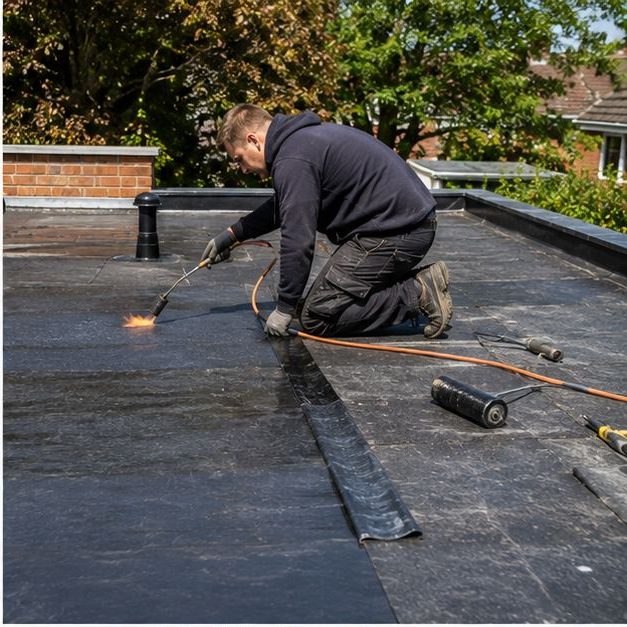
- Splits, cracks and blisters. Damaged areas of single-ply, fibreglass or felt covering are cut out and repaired where the surrounding roof is still in good enough condition.
- Upstands and wall abutments. Where the roof rises against a tall terrace wall, the upstand and flashing are renewed so rain stops running behind the covering.
- Edge trims and gutters. Failed edge trims and drip details are replaced so water leaves the roof cleanly instead of tracking back under the covering.
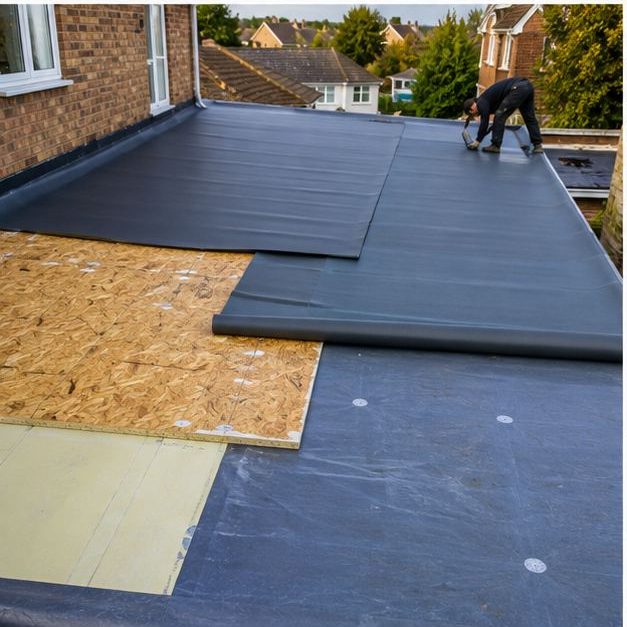
- Deck repair beneath the covering. If boards are soft or rotten once the old covering is stripped, they are replaced before any new surface goes down.
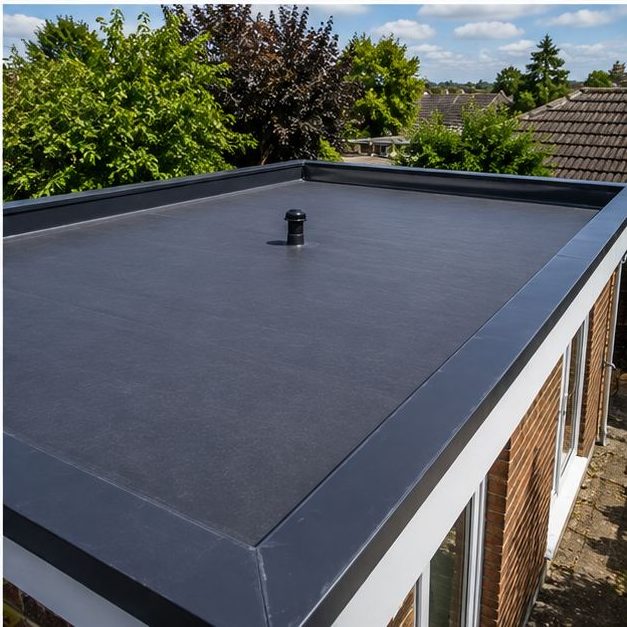
- Full flat roof replacement. Where wear is widespread, we strip back and fit a new system, discussing single-ply rubber, fibreglass or felt in terms of how your roof is used.
How we handle a flat roof in St Pauls
We start by finding out what the roof sits above and how water leaves it. On a crowded terrace that often means checking the neighbouring walls, the gutter runs and where a bin store or pavement limits where materials can be lifted. Then we check the outlets and edges and look for water marks inside.
Then we explain our reading of the roof: where it is sound, where it has failed and whether repair is sensible. If insulation or falls need improving as part of a replacement, we raise that early, and it may need Building Regulations checks — we advise before work starts.