
The stain on the ceiling is rarely under the hole. This guide shows what you can safely check from inside, and how we trace a leak on the tiled roofs of Longwell Green.
A drip in the back bedroom does not mean the fault is directly above it. Water runs along felt, battens and rafters before it finds a way down, so the wet patch can sit a long way from the entry point. On Longwell Green's modern tiled roofs, finding the true source takes a methodical look.
Begin inside, with a torch
The loft is the best place to start, and you do not need to go outside at all. With a torch, look for daylight where it should not be, dark or damp timber, wet insulation and felt that is stained or sagging. Do this in daytime during or just after rain if you can, and stay on the joists, not the plasterboard. If you find nothing, that is useful to know as well, and we take over from there.
- Daylight showing through the roof covering
- Dark tide marks on rafters, battens or felt
- Damp or compressed insulation below a suspect area
- Drips or beads of water on nails and timber
How water travels before it shows
Water seldom drops straight through. It tracks along the underside of the felt, runs down a rafter, or follows a pipe or chimney breast before it reaches the ceiling. By the time you notice a stain, the entry point may be higher up the slope or round a corner.
That is why the position of the stain is only a clue. We work back from it, rather than assuming the fault sits directly overhead. From there we check the felt, the rafters and any penetrations in between, until the evidence stops and the entry point becomes clear.
Common sources on tiled roofs
On the later 20th-century houses around Longwell Green, the usual culprits are slipped or cracked tiles, worn ridge bedding, failed lead flashing at chimneys and abutments, valley troughs that have split, and blocked or leaking gutters at the eaves. Short verges and garage roofs can leak too, particularly where the covering meets a wall.
What we do on site
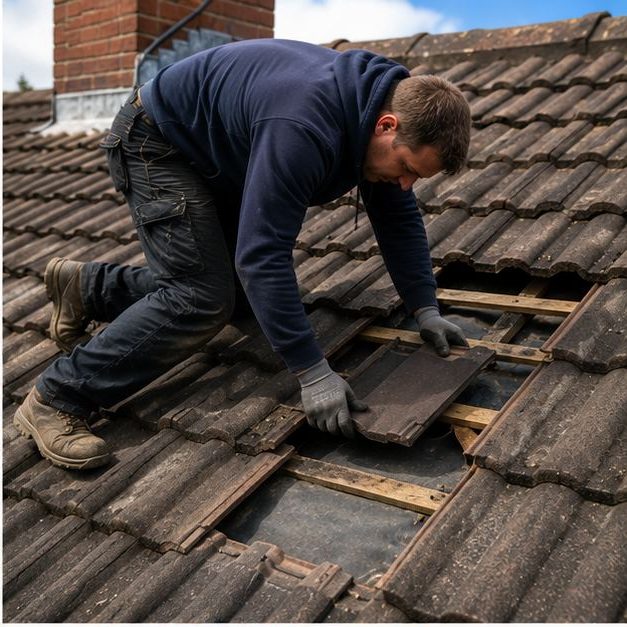
We look at the roof from the ground and then closely at the area the loft points to. We follow the evidence from the stain upwards, check the flashings and valleys, and test suspects where we can. Sometimes a patch of tiles needs lifting to see the felt. We keep a record of what we found so the explanation is clear. Where roof access is needed we arrange it safely.
Why a guess is not enough
Sealing the first thing that looks suspect often moves the leak or hides it for a while. A proper trace means a repair that lasts, and it shows whether other weak spots are waiting. If you notice drips, put a bucket under them and call us for a proper look rather than trying to repair anything from outside yourself.
Frequently Asked Questions
Can I find the leak by going on the roof?
Please do not. Wet tiles are slippery and roofs can be fragile. Everything you can safely check is from the ground and inside the loft, and we can do the rest with the right access.
Why does the leak only appear in heavy rain?
Heavy or wind-driven rain forces water into small gaps that stay dry in lighter weather, such as a lifted flashing or hairline crack. That clue helps us narrow down which part of the roof to examine first.
Is a damp patch on a ceiling always a roof leak?
No. Condensation, a leaking pipe or a gutter overflow can look the same. We check the loft, the roof and the surrounding area, so we repair the real cause rather than the nearest suspect.
Talk to our team about roof repairs in Longwell Green
Every roof is different — the fastest way to get an accurate answer is a quick chat with our team.