
Waiting rarely makes a leak smaller. This guide sets out what speeds damage up on exposed Bishopsworth houses and what you can sensibly do while arranging a proper repair.
Some leaks are an annoyance and others quietly wreck timber and plaster. What separates them is how much water gets in, how often and where it ends up. Homes on higher, open ground take driving rain from the side, which can push more water through small faults. The sooner the cause is found, the simpler the repair tends to be.
Why waiting costs more
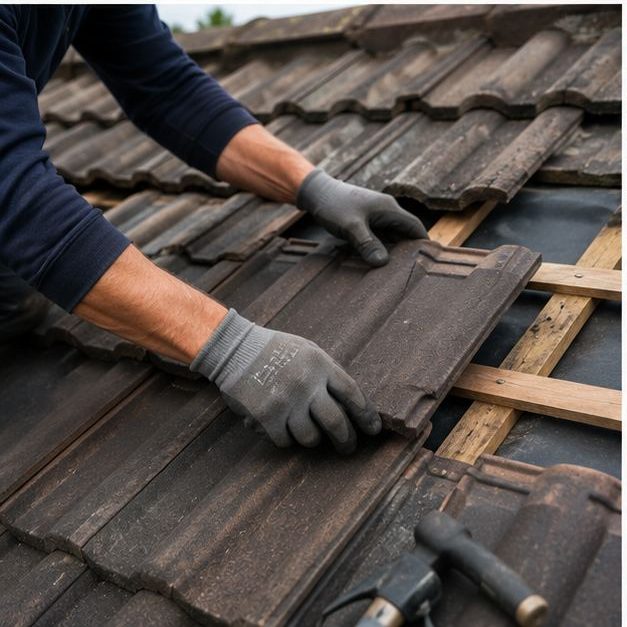
Each wet spell carries more water along the same route. Felt that was merely damp becomes sodden, timber begins to stain and soften, and plaster takes up moisture and eventually sags. Leaks also tend to grow, because a loose tile lets in rain that loosens its neighbours. What would have been a small repair can turn into a section of roof. Left alone, it rarely improves.
What speeds damage up
Wind-driven rain, a leak above insulation, a gap near a hip or chimney, and a roof that never really dries out between showers all make things worse. Garages and extensions attached to the house can feed water into the wall where roofs meet. If the drip is steady rather than occasional, treat it as more serious, even if the stain looks small.
- Steady or repeated dripping rather than one-off.
- Wet insulation holding water against timbers.
- Leaks beside chimneys, hips or valleys.
- Water running into walls under a roof junction.
Signs to watch for indoors
Check ceilings and the tops of walls, and the loft if you can reach it safely from the hatch. Look for brown rings, bubbling paint, a musty smell or a damp patch that returns after drying. Electrical fittings under a wet ceiling are a safety issue, so keep an eye on lights and switch off anything near water if in doubt.
- Brown rings or bubbling paint on ceilings.
- A musty smell in a bedroom or loft.
- Damp patches that return after drying.
- Dripping near a light fitting.
What to do while you wait
Move belongings, catch drips in a bucket, and photograph the damage with dates. Do not go onto the roof, and do not poke at the ceiling. Contact us so we can arrange a proper look; if the weather is dry, that is a good time to get the cause fixed before the next downpour. Dry weather is the best time to get the work done.
Fixing the cause, not the stain
A good repair deals with the source, then lets everything dry out before the ceiling is made good. We explain what we found, whether it is a few tiles or a wider problem, and what can wait. If the roof is worn in several places, we say so honestly rather than leaving you with a string of small call-outs.
Frequently Asked Questions
Can a leak stop on its own?
It may pause when the weather dries, but the cause is still there and will return with the next heavy rain. Wet materials may also stay damp inside. Treat a pause as a chance to get it fixed.
Is a slow drip less serious?
Not necessarily. A slow, constant drip can soak timber and insulation for a long time unseen. The visible amount is not a reliable guide to how much water is getting in. That is why we trace the source properly rather than guess.
Who should I tell about the leak?
Keep photos and notes of the damage with dates. If someone else is responsible for the building, tell them early. We can provide a written description of the findings to support any conversation.
Talk to our team about roof repairs in Bishopsworth
Every roof is different — the fastest way to get an accurate answer is a quick chat with our team.