
Birds and insects use gaps where mortar has cracked and fallen. A dry verge replaces mortar with fixed units that close the edge line, which leaves them far less to get into.
Look along the gable edge of an older house and you may see tufts of nesting material or insects going in and out of a gap. Downend has a lot of roofs with mortar verges that have aged, across terraces, semis and estates. A dry verge removes those gaps, though it helps to know what it can and cannot do. It is a tidy answer to an untidy problem.
Why mortar verges invite wildlife
As mortar cracks and drops away, it leaves holes along the very edge of the roof. Those openings lead into the space under the tiles, which is dry, sheltered and warm. Sparrows, starlings, wasps and bees find them quickly. Most are noticed only when droppings, nesting material or buzzing give them away. The verge is often the first part of a roof to be used this way.
What a dry verge changes
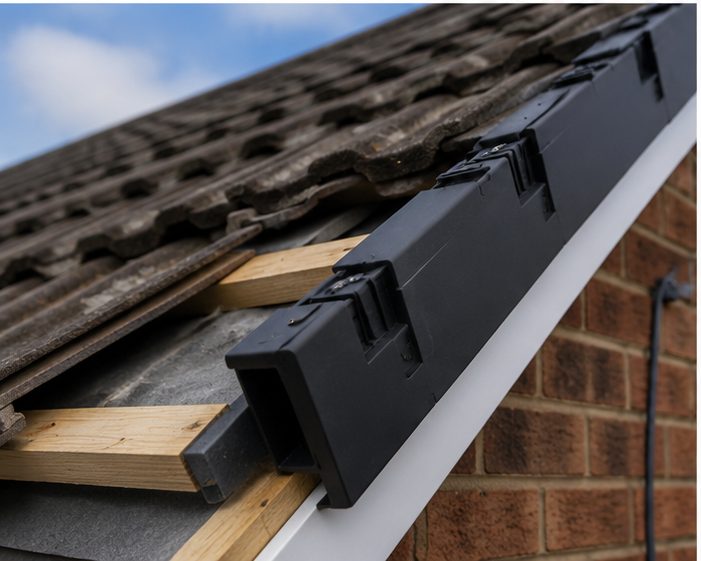
With a dry verge, mechanically fixed units and tile-end or cap pieces form the edge. There is no mortar to crack. The gaps that crumbling mortar creates are closed, so there are fewer places for birds to nest and insects to enter. The edge also stays tidy and weather-resistant, because nothing is relying on a bond that wears out. Fewer gaps also mean less rain getting under the edge.
If something is already in there
Closing an edge over an active nest is not something we would do blindly. We look at what is there first, deal with it properly and only then fit the new units. Wild birds are protected while nesting, so timing matters. Before fitting we consider these points: Handled properly, no creature is harmed and no nest is sealed in.
- Whether a nest or insect activity is present
- Damage already done to the tiles or felt
- The tile profile and which units fit
- Whether the rest of the roof is sound
What it cannot do
A dry verge is not a barrier against every creature, and it does not fix a roof failing elsewhere. Gaps at ridges, eaves or around vents are separate matters. It is a good way of dealing with the edge, and we tell you about anything else we see on the roof. We point out any such problems when we see them.
Signs to watch from the ground
Look for birds going in and out at the gable end, nesting material hanging from the edge, mortar crumbs on the ground, or insects clustering at a gap. Please do not go up or poke at it yourself. Call us for a proper look and we will explain what is happening and what to do. A quick photograph helps us see how bad the gaps are.
Frequently Asked Questions
Will a dry verge stop birds from nesting at the edge?
It closes the gaps they rely on, which makes nesting there much less likely. It does not affect nesting elsewhere on the house, but the verge itself becomes a poor place for it. It makes a real difference at the edge.
What about wasps and bees?
They have fewer ways in at the verge once the edge is closed with fixed units. If a nest is already inside, it needs dealing with first, and we can advise on that. We explain the options first.
Can I fit a dry verge over an existing nest?
No. It should be looked at first, since nesting birds are protected and the timing matters. We check what is there and plan the work around it. We would rather plan around it.
Talk to our team about dry verge systems in Downend
Every roof is different — the fastest way to get an accurate answer is a quick chat with our team.