
There is no safe amount of time to leave a roof leak. How quickly it does harm depends on the weather, the hidden path of the water and how well the timbers can dry. Here is how it plays out in Nailsea.
Water does damage from the moment it gets in, and it does not wait for a stain. In Nailsea the weather often arrives from the west across open levels, so a fault on that side of the roof can be tested hard and often. Leave it, and a few damp patches can turn into rotten timber and wet insulation.
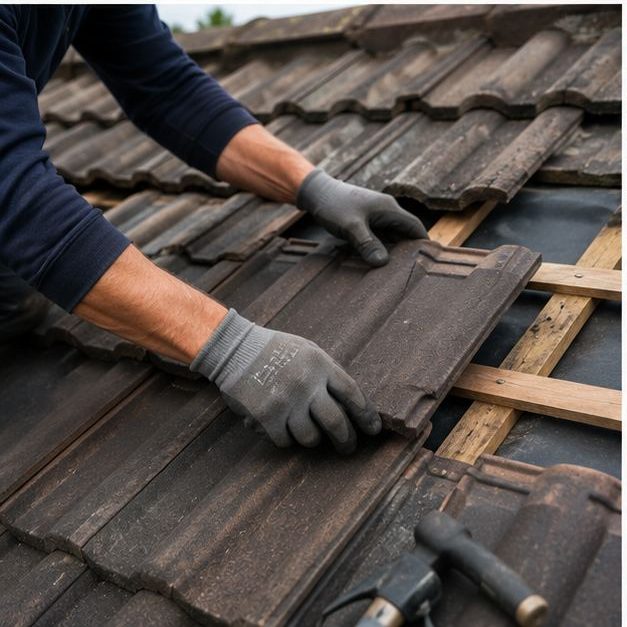
The clock starts before you see anything
Most leaks show well after they begin. Water runs down the felt, along battens and across rafters before it appears on a ceiling, and in a post-war roof with decent insulation it can soak into the insulation first. By the time paint bubbles or a stain spreads, the loft side has usually been damp for a good while, so the visible mark understates what has happened.
What makes it worse on an exposed roof
Frequent driving rain pushes water under tiles and up past joints that would cope in calmer weather. A small gap that only leaks in a gale soon leaks in ordinary rain, as the surrounding materials soften and the opening grows. Repeated wetting also leaves less time between showers for the timbers to dry, so decay can take hold.
- Wind-driven rain forced under tiles and flashings
- Short gaps between showers, so timber stays wet
- Small openings that widen as materials weaken
- Insulation soaked and compressed against rafters
What it harms
Damp timber loses strength, and rafter ends or wall plates that stay wet can rot. Wet insulation stops doing its job and holds water against the ceiling below. Plaster stains, peels and may drop. Wiring and loft fittings are at risk too. All of this turns a repair that might have been a few tiles into something larger.
Small leaks near chimneys, extensions and porches often cross several rooms before showing, so the wetted area is usually bigger than the stain suggests. That is also why we check the loft side of the ceiling and the neighbouring rooms, not only the spot where the stain first appeared.
What to do while you wait for us
Contain the drip, protect the room and take photographs with dates. Keep away from the roof and do not try to cover it yourself. If a ceiling is sagging, keep clear of that area and tell us when you call, so we can treat it as a priority. A torch look from the loft hatch is fine; stepping on boards or joists is not.
What we do
We trace the leak back to its entry point, rather than patching the stain. We then tell you whether it needs a quick fix to stop water, a proper repair, or a larger job, and in what order. That way the urgent work is done first, and anything that can wait is clearly separated, so you can plan without second guessing.
Frequently Asked Questions
Can a leak wait until the weather improves?
Sometimes a short wait is reasonable if the leak is small and contained, but it is better to have it checked and, if needed, made safe first. Dry weather does not repair a roof; it only hides the fault.
Is it worse if the leak only appears in storms?
It can be. A leak that only shows in a gale means a gap exists that wind pushes water through. Left alone it usually starts to show in ordinary rain as the opening and damage grow.
Will my insulation be ruined?
Wet insulation can be dried out in some cases, but if it has been soaked for a while it may need replacing. We check it during the visit and tell you what we see.
Talk to our team about roof repairs in Nailsea
Every roof is different — the fastest way to get an accurate answer is a quick chat with our team.