
Tiles rarely fail for one reason alone. Exposed weather, ageing fixings and movement in the structure usually combine, and knowing which is at work decides whether a few tiles or a whole slope needs attention.
A slipped tile is a symptom, not the whole problem. In and around Chipping Sodbury, exposed Cotswold-edge weather puts steady strain on coverings, whether they sit on an old stone-and-brick building on the main street or a newer estate roof. Understanding why tiles move or crack tells us how far the repair needs to reach.
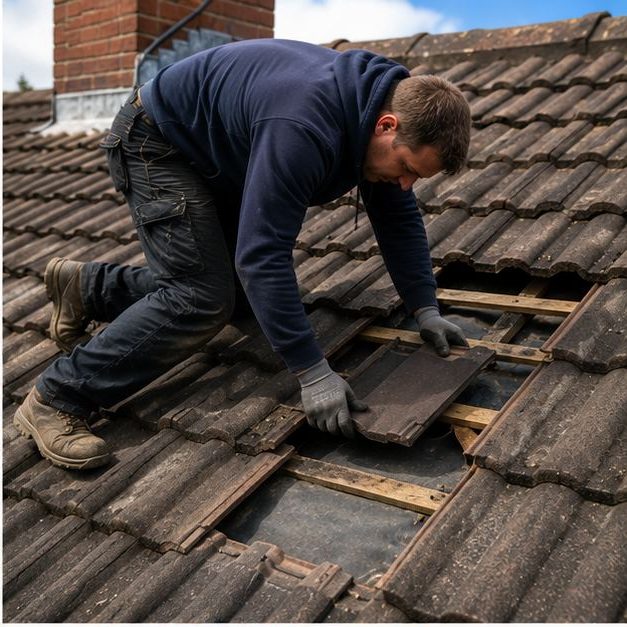
Wind working at the covering
On an exposed edge the wind does not need to be a named storm to do harm. Repeated gusts lift tiles slightly, break the seal of dust and moss between them and let them drift down the slope. Edge and ridge tiles take the worst of it, because air is forced over and around them as it passes the roof.
Fixings and battens that have given up
Most tiles hang on small nails or clips fixed to timber battens. When nails corrode, battens soften from damp, or the old fixing was never enough for the position, tiles slide even in modest weather. We often find that one slipped tile sits among several others held on by habit alone, which is why we check the neighbours.
- Rusted or snapped nails and clips
- Battens that are soft, split or sagging
- Tiles that were laid without enough fixing
- Underlay that has perished and lets tiles settle
Why tiles crack
Cracks come from water getting into the tile and freezing, from knocks during earlier work or falling branches, and from tiles that were already tired. Someone walking on a roof can crack tiles too, which is why we ask you to leave access to us. A cracked tile may hold for a while, then break in the next hard blow.
Movement, age and what lies beneath
Roofs move. Timbers dry out, walls settle and older structures flex with the weather, and tiles on a sagging section are pulled out of line. On older buildings the covering may simply be at the end of its working life, with several tiles failing together. A loft check for daylight, damp timbers and stained felt shows what the outside hides.
What we check and what we do
We look at the whole slope, the ridge, the verges and the gutter edge, then at the loft side. Where only a few tiles have failed we replace them and refix the neighbours. Where fixings or battens have failed over a wider area, we say so honestly and explain whether repair or re-roofing is the sensible route, in writing, before anything starts.
- Replace cracked tiles and refix loose ones
- Renew damaged battens and felt where exposed
- Re-bed ridge and hip pieces that have loosened
- Give a straight repair-or-replace opinion
Frequently Asked Questions
Can I just push a slipped tile back into place?
Please do not try. It means going onto the roof, and the tile will probably slip again if its fixing has failed. We refix it properly, check the neighbours and look for the reason it moved in the first place.
Will a few cracked tiles cause a leak?
They can, particularly if the felt beneath is old. Water may run along timbers and show up well away from the crack. It is worth having cracked tiles replaced before the next wet spell rather than waiting for a stain to appear.
How do I know if it is repair or replacement?
It depends on how many tiles are affected, whether battens and felt are sound and where the problems sit. Isolated damage points to repair. Widespread slipping, soft battens and tired felt point towards re-roofing, and we explain which applies after a proper look.
Talk to our team about roof repairs in Chipping Sodbury
Every roof is different — the fastest way to get an accurate answer is a quick chat with our team.