
Slipped and cracked tiles rarely have one cause. Age, fixings, movement and past foot traffic all play a part, and knowing which applies decides whether a few tiles or a larger area needs attention.
On the older terraces around Redcliffe, tiles and slates have been through a great many seasons of wind, rain and temperature swings. When one slips or cracks, it is a symptom. Finding the cause tells us whether a tidy local repair is enough or whether the surrounding roof is also on its way out.
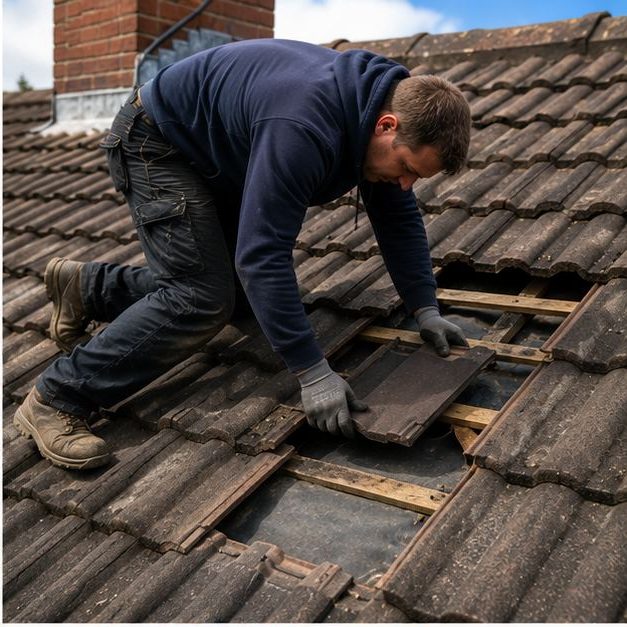
Fixings that have simply given up
Tiles are held by nails or clips driven into battens. Over time those fixings corrode, the batten around them softens, and the tile drifts downwards. You may notice a tile sitting proud of its neighbours, or a short gap showing a darker line beneath. Once one lets go, the ones beside it carry more load.
Wind plays its part too. Where the edge of a roof is exposed, gusts get under the tile and work it loose over several storms. That is why we look at the clips and nails as well as the tile that has moved.
Cracks from frost, age and brittle material
Water soaks into old tiles, freezes and expands, and a hairline becomes a split. Tiles that are very worn also flake on the surface. From the ground you may see chips lying in the gutter or a pale stripe across a tile. A single crack can be replaced, but widespread crazing points to a tired covering.
- Small fragments collecting in gutters or on lower roofs
- Lines or flaking on tiles seen with binoculars from the street
- Tiles that look lighter or rougher than their neighbours
Movement and pressure from outside
Roofs flex slightly in wind, and settlement in an old building can move the structure beneath. Branches, aerials and satellite dish fittings add knocks. Tight sites in Redcliffe also mean tradespeople have sometimes crossed the roof for other jobs, and a cracked tile is the usual souvenir. Wind lifting the edge can start slipping from the top down.
What we check before repairing
We look from the ground, then from proper access, and inside the loft for daylight, wet timbers and stained felt. The felt under a slipped tile matters as much as the tile. If it is torn or perished, water has been getting in unseen, and replacing the tile alone would hide a problem rather than cure it.
Repair, or something bigger?
Replacing a handful of matching tiles and refixing the rest is sensible when the roof is otherwise sound. If failures are spread across a slope, we say so plainly and explain why patching would only buy a little time. You get the choice laid out in writing, with the urgent items separated from the ones that can wait.
Ask for photographs or a clear verbal description of what we found, so you can see why the repair is proposed. A neat repair should leave the roof line even, the felt sound underneath and the surrounding tiles firmly fixed.
Frequently Asked Questions
Can I replace one slipped tile myself?
We would not recommend it. Roof work from ladders or the roof surface is risky, and a badly seated tile can slip again or damage its neighbours. Photograph it from the ground and call us for a proper look.
Will a cracked tile always cause a leak?
Not straight away, because the felt underneath may still be shedding the water. But a crack is a weak point, and over a wet season the felt and timbers can take damage that is costly to put right later.
Do replacement tiles match old ones?
Often they can be matched closely, using reclaimed or similar profiles. Colour weathers over time, so new tiles may look a touch different at first. We discuss the options on site and aim for a neat, sensible result.
Talk to our team about roof repairs in Redcliffe
Every roof is different — the fastest way to get an accurate answer is a quick chat with our team.