What we find on Warmley roofs
Older village buildings tend to have roofs that have been altered many times, with different coverings, patched flashings and uneven timbers beneath. A repair there starts with understanding what is underneath, because water travels along old timbers before it shows. Buildings of several ages sit close together here, so the roofs rarely follow one pattern.
Victorian houses bring chimney flashings, valleys and lead details that wear after a long time in the weather. When lead lifts or cracks, rain gets behind it, and the damp patch indoors can be a long way from the real entry point. East of Bristol the housing runs from village cottages to estate semis, and each needs its own approach.
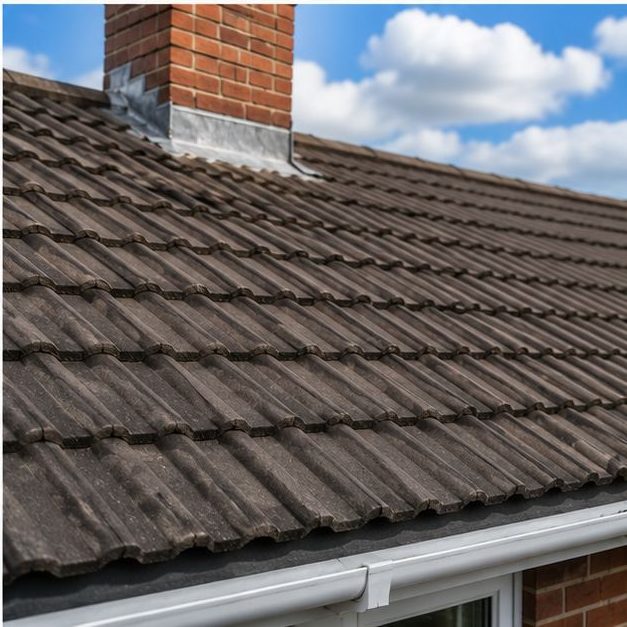
On the later estates the roofs are simpler, but ridges, verges and tile fixings still loosen. Some Warmley streets are leafy and near woodland, which means leaves in gutters and valleys, shaded slopes that hold moss, and the odd branch landing on the covering. A later estate house and an older village building call for different checks, even on the same road.
Roof repair jobs in Warmley
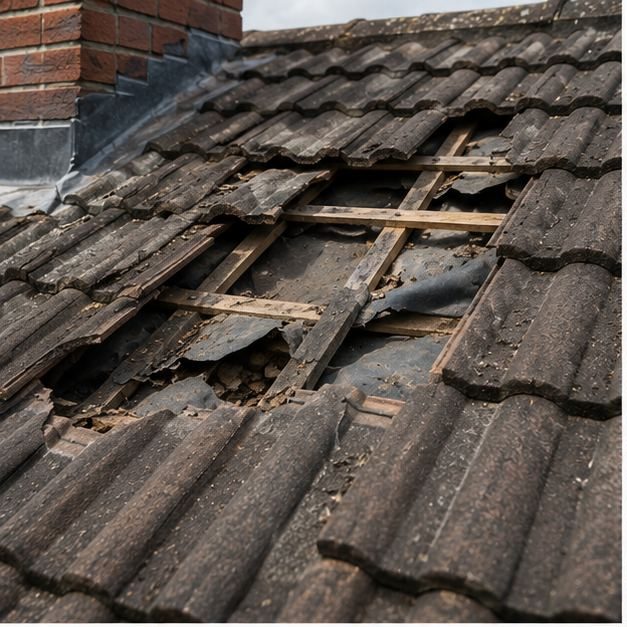
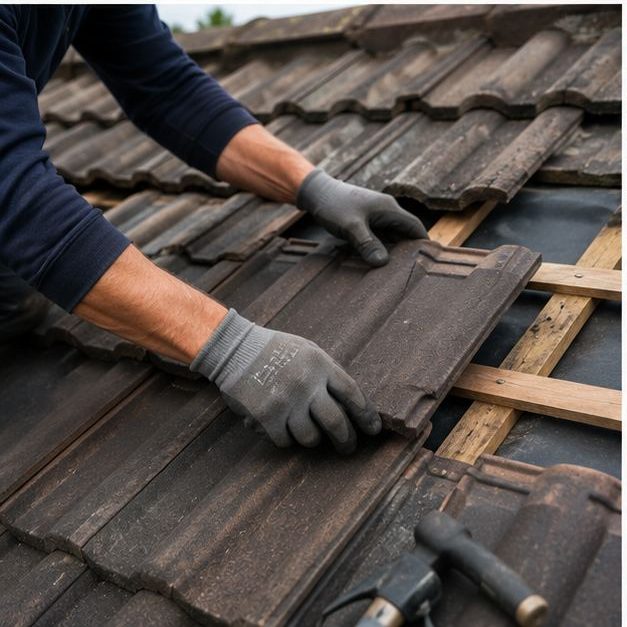
- Slipped, cracked and missing tiles. Tiles that have moved, split or gone are replaced and the courses around them checked so the problem does not spread.
- Broken and loose slates. Slates on older roofs are re-fixed or replaced with a close match, with the nails or clips checked at the same time.
- Ridge and hip re-bedding. Loose ridge and hip tiles are lifted and re-bedded so the top of the roof closes up against wind and rain.
- Lead flashings and valleys. Flashings round chimneys and abutments, and valley gutters, are renewed or re-dressed where they have lifted, cracked or been blocked.
- Verge and gutter-edge repairs. Roof edges where mortar has failed or tiles have loosened are repaired, so water cannot get in at the gable or eaves.
- Repair or replace advice. We give a straight view on whether a repair will hold or the covering is worn too widely to keep patching.
How we approach a Warmley repair
We start with the symptoms and trace back: loft first, then the slope outside. On older buildings we take extra care looking at timbers and fixings, because what is visible from the garden does not always tell the full story. The work is planned so the roof is left safe and weathertight at the end of each day.
Before work starts we explain what we have found, which items are urgent and what can wait, and agree the plan with you. If any element may need planning or Building Regulations checks — we advise before work starts. Leafy sites get their gutters and valleys checked too. The work is planned so the roof is left safe and weathertight at the end of each day.