Roof repairs on Bradley Stoke's planned-estate homes
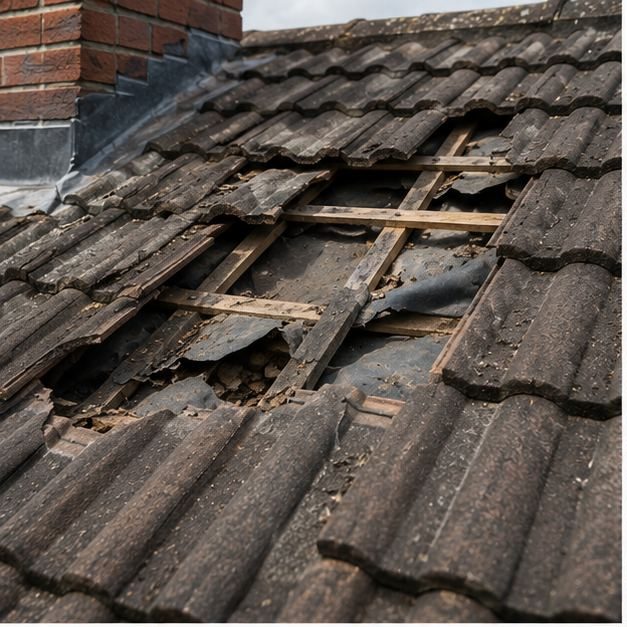
Concrete tiles are heavy and hard wearing, but they are held by clips and nails that loosen over time. On a Bradley Stoke estate house you tend to see the odd tile that has slid down, or a cracked one that lets rain onto the felt beneath it. Where a few have gone, the felt below is worth checking too, because it does the real waterproofing.
Gables are everywhere here, and each one has a short verge and a ridge end that takes the wind first. Mortar at those edges cracks and drops out, and the ridge tiles beside them can shift when the bedding behind them gives way. Left alone, the damage creeps along the edge of the roof.
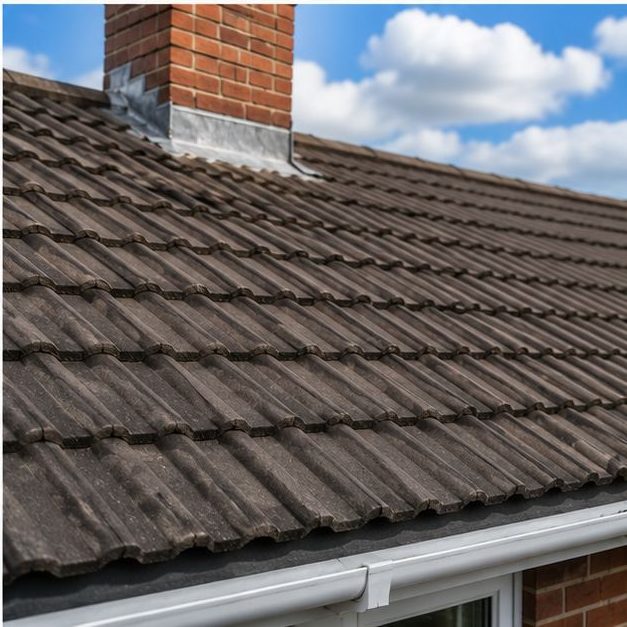
Porches and conservatories add small lean-to roofs against the main wall. The flashing where they meet the brickwork is a common leak point, and it often gets blamed on the tiles above when the flashing is the real culprit. We check each junction before blaming the tile field. A new strip of flashing often solves it.
What a Bradley Stoke roof repair can include
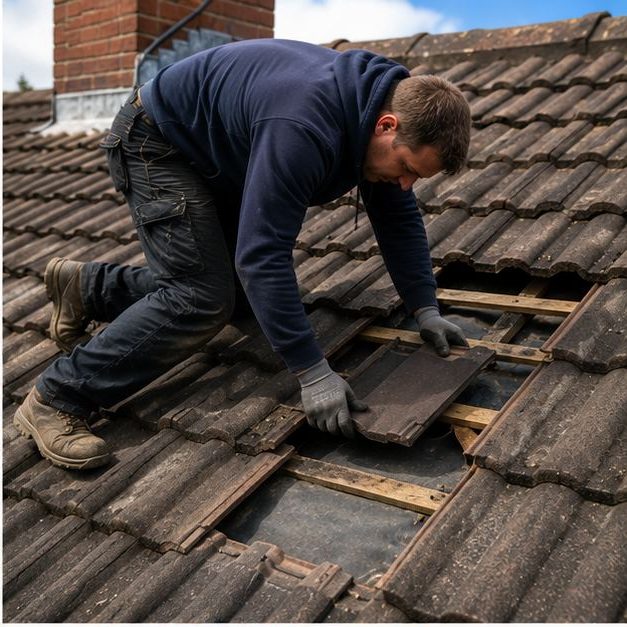
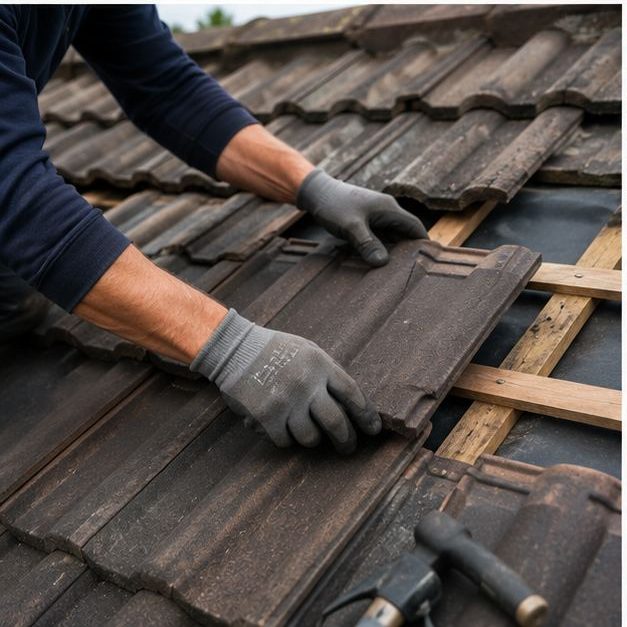
- Slipped and cracked tiles. Replacing concrete tiles that have slid, split or gone missing, and checking the felt and battens underneath for water damage.
- Ridge re-bedding. Lifting loose ridge tiles and bedding them back on properly so the top of the roof stops letting wind and rain in.
- Gable verge repairs. Rebuilding crumbled mortar at gable edges, or fitting a more durable edge detail where the old finish has failed.
- Lead flashing and abutments. Repairing or renewing flashings where the roof meets a wall, a porch roof or a conservatory frame.
- Leak tracing. Following damp patches back along felt and timbers to the actual opening, rather than patching where the stain shows.
- Storm-loosened coverings. Re-fixing tiles and edges that have lifted in high winds, and checking the neighbouring tiles before we leave.
How we approach a repair visit in Bradley Stoke
We begin with what you have noticed: a drip, a stain, a tile on the drive. Then we look at the roof from the ground and, where safe, from our own access, and check the loft side for damp timber, daylight or stained felt. We also look for daylight or damp timber at the eaves.
After that we explain what we found in plain terms. If a few tiles and a flashing will do the job, we say so. If the covering is failing across a wider area, we say that too, and you decide what happens next. Nothing is started until you have heard the options in plain language.