Roof Faults on Emersons Green Estates
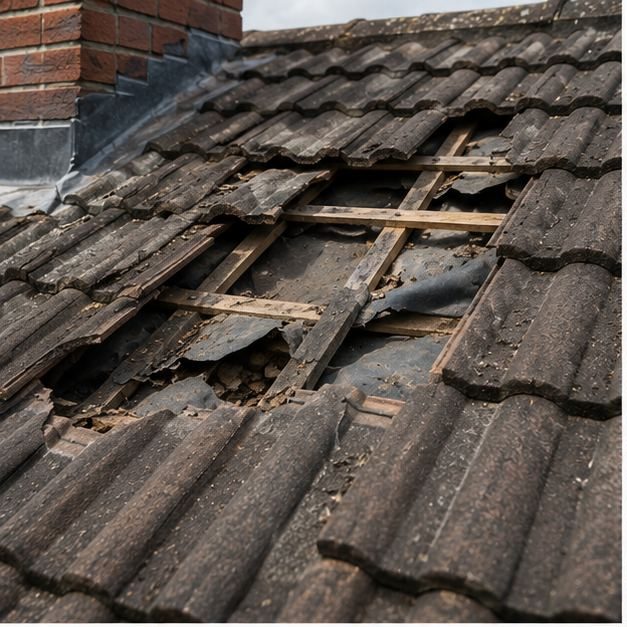
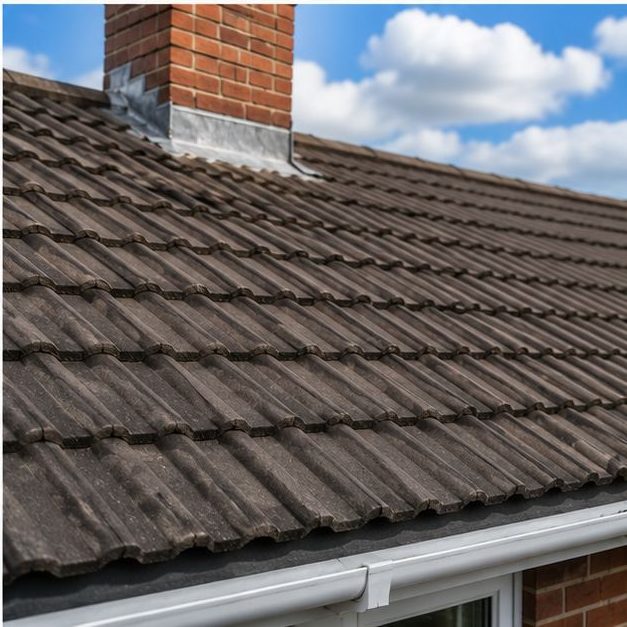
Concrete tiles on a newer estate are usually fixed in neat, regular courses, and when one fails the pattern around it often tells us why. A cluster of loose tiles points to fixings or battens; one cracked tile points to a knock or a fall of debris. Reading those patterns saves time and stops us replacing the wrong part.
Dry-fixed ridges and verges are common here, and they depend on clips and fixings staying tight. When the wind works at them over the seasons, a unit can lift or rotate, and rain then gets under the line and into the felt below. Checking the fixings first is how we avoid chasing the same leak twice.
Short verges mean less overhang to protect the gable wall, so water from a loose edge tends to reach the brickwork or the loft quickly. Housing of this kind has smaller roof slopes broken up by hips and valleys, and those junctions need a look. Valleys and hips on estate roofs also collect leaves and debris, which we clear while checking.
Emersons Green Roof Repair Services
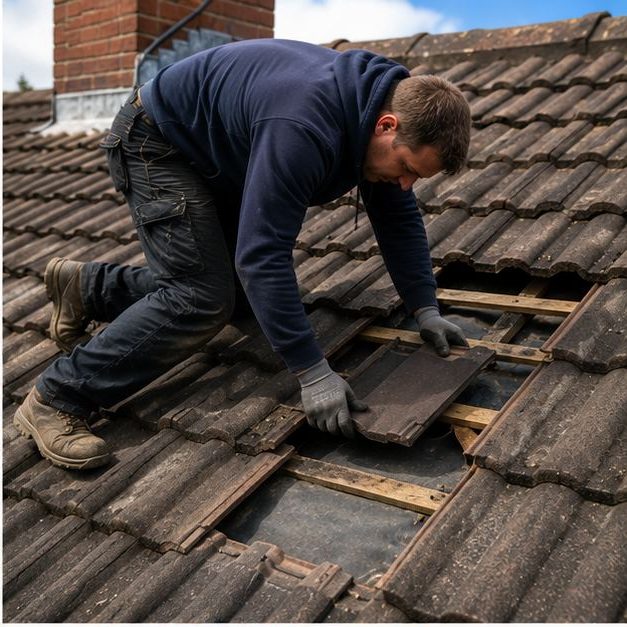
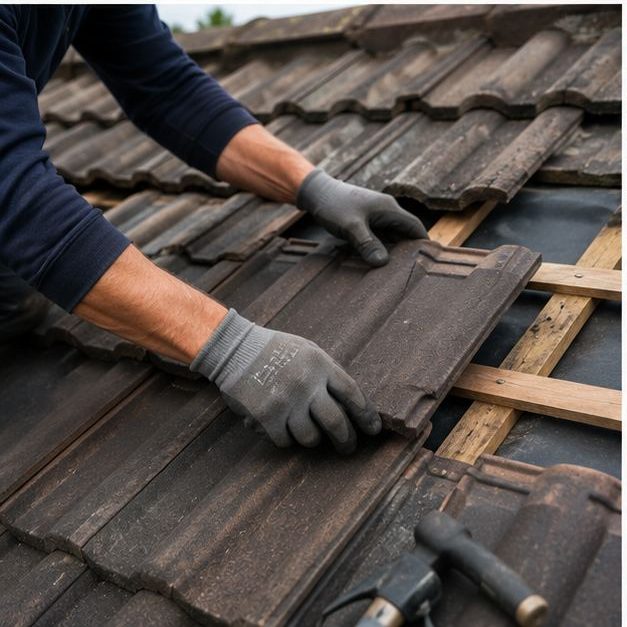
- Concrete tile replacement. Swapping cracked or missing concrete tiles for matching ones and re-securing the neighbouring tiles so the repaired area holds.
- Re-fixing loose and clipped tiles. Putting back tiles that have slipped on their battens and renewing clips and fixings that have worked loose over time.
- Dry ridge and hip repairs. Re-seating or replacing dry-fixed ridge and hip units that have lifted, shifted or lost fixings in strong winds.
- Verge unit repairs. Refitting loose or damaged verge pieces along the gable edge, where dry-fixed details on newer homes can come adrift.
- Valley and flashing repairs. Repairing lead or sheet flashing at valleys, abutments and chimneys, where modern roofs tend to meet at changes of plane.
- Leak tracing and felt checks. Following a stain back through the loft to find where water gets past the tiles and damages the underlay below them.
How We Work on Emersons Green Roofs
On an estate house we can usually see most of the roof from the street or garden, so the first check is from the ground, followed by the loft. We look for daylight at the edges, wet felt, damp battens and staining that shows where water has run.
Then we explain what we found in plain words. A small repair with matching tiles is often the answer on a newer roof, and we say so. If fixings or battens are failing widely, we explain that too, with the options laid out before you decide to go ahead.