What the Hill Does to Roofs in Kingsweston
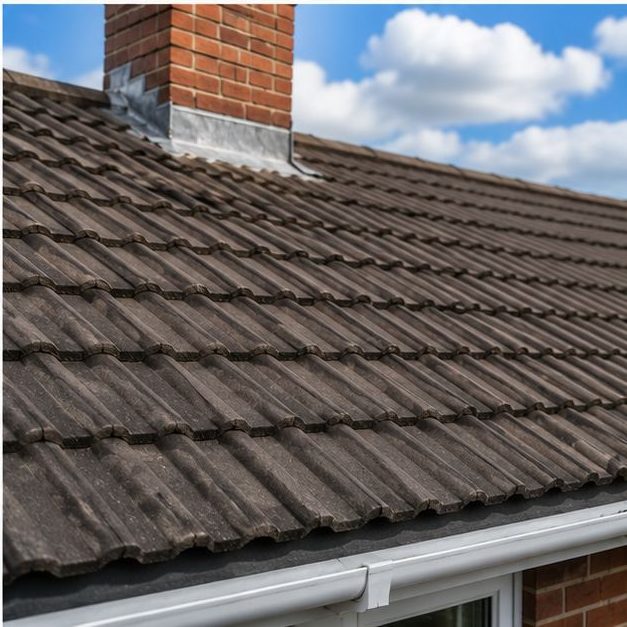
Much of the housing around Kingsweston Hill and the Lawrence Weston side is post-war, built as families of similar homes with plain concrete or clay tiled roofs. Those roofs are now old enough that the fixings, felt and bedding underneath have had a long time to tire. That matters because a roof laid in the post-war building years was not designed with hard, repeated exposure in mind.
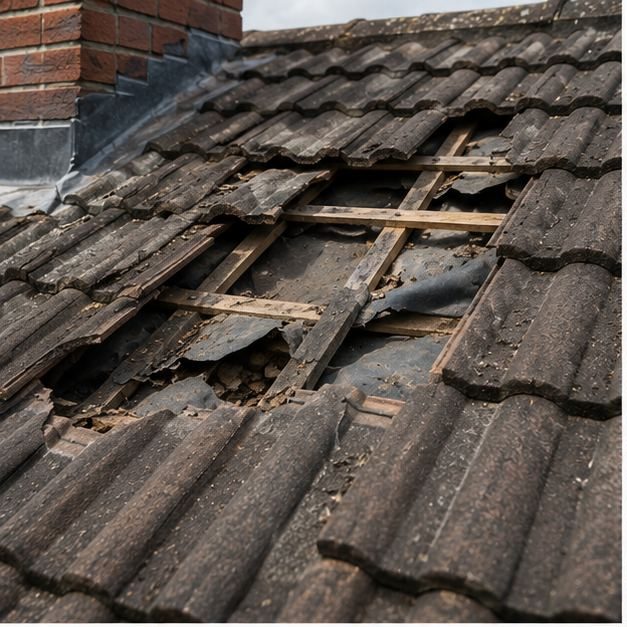
Open higher ground means wind arrives with nothing to slow it. It lifts tiles at the edges and the ridge first, breaks the mortar bedding, and drives rain sideways under laps that would stay dry in a sheltered street. Where a slope has been patched before, we often find the earlier repair has done nothing about the underlying fault.
A leak in a house like these rarely shows where it starts. Water follows the felt and rafters downhill before dripping through, so a damp patch low on a wall can come from a slipped tile near the ridge. So we look past the wet patch and check the lines of ridge, edge and flashing for anything that has shifted.
Roof Repairs We Carry Out in Kingsweston
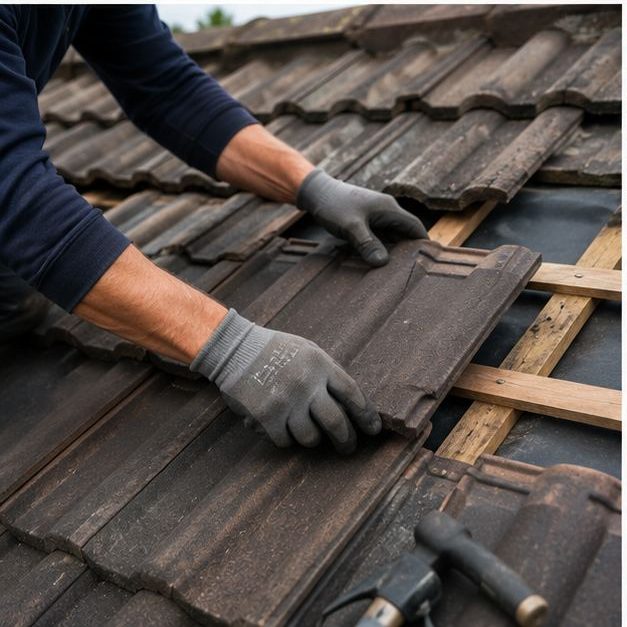
- Slipped and missing tiles. Replacing tiles that have slid, cracked or blown off, and checking the battens and felt beneath so the same gap does not open again.
- Ridge and hip re-bedding. Lifting loose ridge tiles and bedding them again properly, which is a common repair on exposed roofs once old mortar has cracked.
- Lead flashing repairs. Dressing or renewing lead around chimneys, walls and abutments where wind and movement have pulled it away from the brickwork.
- Verge and edge repairs. Making good the roof edge at gables and eaves, where gusts get under the covering and loosen it first.
- Storm damage repairs. Making a roof safe and watertight after a blow, then putting right the tiles, ridge or flashing that took the damage.
- Leak tracing. Following a stain back along the timbers and felt to the real source, rather than patching wherever the drip lands.
How We Approach a Repair in Kingsweston
We start from the ground and the loft. From outside we look at the roof line for gaps, dropped ridges and loose edges, and inside we check rafters and felt for damp. Then we go up for a close look. We show you photographs of what we find, so you can see the fault for yourself without leaving the garden path.
Before any work starts we explain what we found, show you where it is and say whether a repair will hold or whether the covering is tired across the whole slope. If replacement is the honest answer, we say so. If not, we repair only what needs it. Nothing extra goes on the list unless it is needed, and anything we spot that can safely wait is flagged as exactly that.