
Heavy rain driven in off the Severn Estuary finds weak points that stay hidden in calmer weather. Here is how leaks on Portishead roofs usually start, and how the real source gets traced before anything is repaired.
A roof that stays dry in a drizzle can still leak badly when a squall arrives sideways. On the exposed edge of the estuary, rain does not simply fall onto a roof. It is pushed up under laps, into gaps and behind flashings. This guide explains what is usually going on and what we look at first.
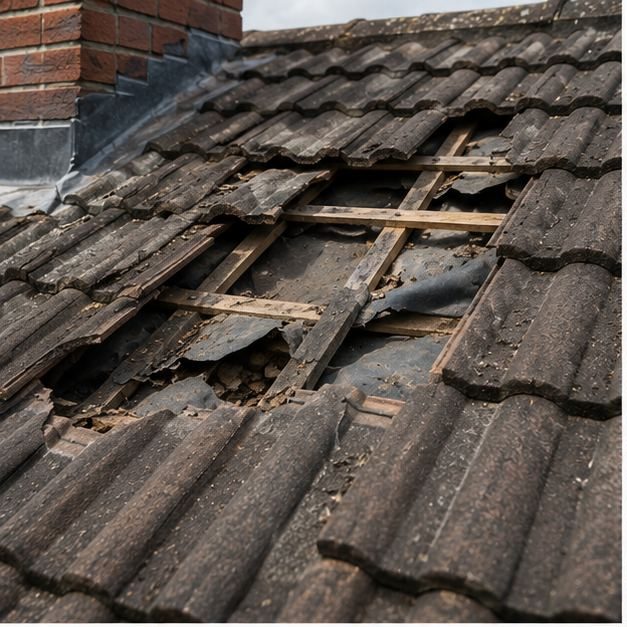
Wind-driven rain behaves differently
On a calm day, water runs down the slope and off into the gutter. In a strong westerly it travels sideways and even upwards, so it reaches the underside of tiles, the edges of slates and the joints around chimneys that an ordinary shower never touches. Leaks that only appear in a storm are very often this kind.
Where the water really gets in
The stain on your ceiling is rarely under the hole. Water runs along rafters and down the felt before it finally drips, so the mark can sit well away from the source. Usually the culprit is one of a short list of weak spots on the roof.
- Slipped, cracked or missing tiles and broken slates
- Worn or lifted lead flashing at chimneys and walls
- Ridge and hip mortar that has cracked or fallen away
- Blocked or failing valleys and gutter edges
What salt air does to a roof
Sea air is hard on the metal and mortar parts of a roof. Fixings corrode, mortar crumbles sooner and lead can thin where the weather is at its worst. On older seafront houses and on the open edges of the larger modern estates, these small failures build quietly until a heavy downpour exposes them.
Because the signs are slow, owners often notice only the first brown mark on a ceiling. By then the felt and timbers around it have been taking water for a while, so it is worth acting promptly instead of waiting to see whether it dries out by itself.
Checks you can safely make indoors
From the landing hatch, use a torch to look for daylight through the roof, dark or damp timbers and stained felt. Note where ceiling marks appear and whether they spread after wind as well as rain. Stay off the roof itself. Photographs and a note of the weather on the day help us a great deal.
- Daylight showing through the roof covering
- Dark, damp or soft timbers near the eaves
- Stained or sagging felt under the tiles
- Ceiling marks that grow after windy rain
What we do about it
We trace the leak from the loft outwards, then confirm it from outside, so the repair goes where the water really enters rather than where it shows. We will tell you plainly whether a repair is enough or whether the covering is tired across the whole roof. Ask for the cause in simple words and a written description of the work.
Frequently Asked Questions
Why does my roof only leak in a storm?
Because strong wind pushes rain sideways and upwards into places that stay dry in normal weather, such as under tile laps, behind flashings and at exposed edges. The opening may be small, which is why the leak looks like it comes and goes.
What should I do while waiting for a repair?
Put a bucket or tray under the drip, move belongings away and open a loft hatch if you can do so safely from inside. Do not go onto the roof or try to patch it. Ring us and we will arrange a proper look.
Can a small leak really cause much damage?
Yes, because it keeps soaking timbers and insulation out of sight. Rot and damp can spread long before a ceiling stain shows. Dealing with a leak early usually keeps the repair small and protects the structure beneath.
Talk to our team about roof repairs in Portishead
Every roof is different — the fastest way to get an accurate answer is a quick chat with our team.