
On older terraces, small faults get expensive by being ignored. A routine look at the roof catches them while they are still simple jobs and not wet-ceiling emergencies.
The least costly roof repair is usually the one done before the water gets in. On Easton's older terraces a loose tile, a blocked gutter or a worn flashing is minor on the day it starts and damaging a winter later. Routine checks keep the small things small, and tell you what can wait.
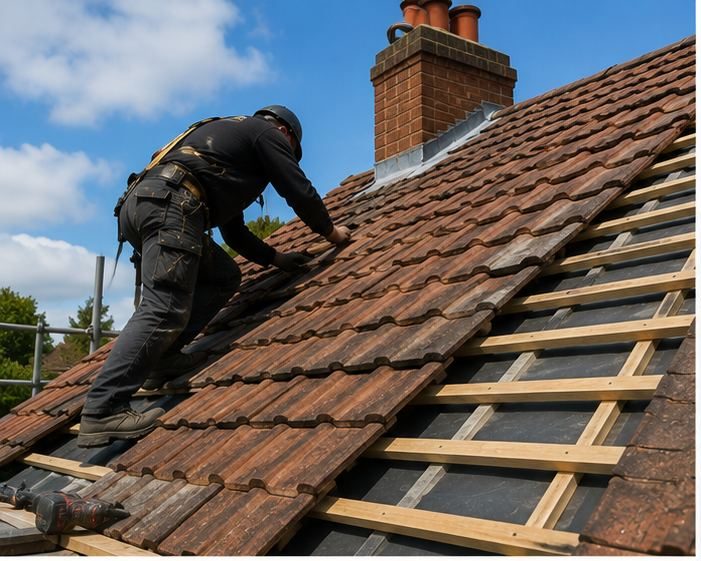
Small faults grow quietly
A slipped tile lets rain onto the felt, the felt lets it onto a timber, and months later you notice a stain. By then the timber, the insulation and the plaster have all been affected. Dealing with the tile when it first moved means one small job in place of several linked repairs and decorating. Timber that stays damp can need replacing, and that is where a small fault turns into a bigger bill.
What a routine check looks at
A good maintenance visit covers the whole roof, not just the visible fault. We look at the covering, ridge and hips, flashings and valleys, gutters, fascias and any flat sections, and we note what is urgent and what can wait. You get a clear picture, not a pile of work you are pressured into. Photographs help you see what we mean without needing to be there.
- Slipped, cracked or missing tiles and slates
- Worn bedding at the ridge and hips
- Lead flashings and valleys and surrounding areas
- Gutters, downpipes and fascia boards
- Flat roof outlets and joints
Gutters and moss
Blocked gutters overflow onto walls and soak the eaves, and moss holds moisture against the covering. On shaded terraces the build-up is faster. Clearing gutters and removing moss are routine jobs that protect the fascia, the rafter ends and the brickwork below, and they are far less disruptive than repairing the rot they cause. Tidy gutters also protect the paint and brickwork around the eaves.
After storms and cold spells
Wind can loosen coverings and frost can open weak points, so it is worth a look after severe weather. From the ground you can spot sagging gutters, tiles out of line and debris on the ground. Do not go on the roof yourself; call us and we will make a proper inspection. Check after stormy weeks, and note anything that has moved.
Planning, not panic
Regular checks let repairs be planned around your diary and the weather instead of dealt with in a rush. They also tell you when a roof is approaching the point where repair stops making sense, so you can prepare. That is how maintenance saves money: by giving you time and information. Roofs left alone for a long time tend to need several jobs at once, which is harder to plan.
Frequently Asked Questions
How often should a roof be looked at?
There is no fixed rule. Older roofs, shaded roofs and roofs with flat sections benefit from regular checks, and it is sensible to look after major storms. We can suggest a sensible pattern after seeing yours.
Is maintenance worth it on a roof that seems fine?
Often, yes. Many faults cannot be seen from the street. A check from above and in the loft finds early signs, and even a clean bill of health tells you where the roof stands.
Will you try to sell me a new roof?
No. If it needs small repairs, that is what we write up. We tell you what is urgent, what can wait and what we would watch, and we put it in writing so you can decide in your own time.
Talk to our team about general roofing services in Easton
Every roof is different — the fastest way to get an accurate answer is a quick chat with our team.