
Small roof faults rarely stay small. Here is why a regular look at the roof tends to head off bigger jobs, and what a sensible check covers.
A roof that is looked at now and then usually costs less over time than one that is ignored until it leaks. That is not a promise of any figure, just how roofs behave. In Henbury, where older stone houses and cottages sit among inter-war and post-war estates, the aim is the same: catch things while they are minor.
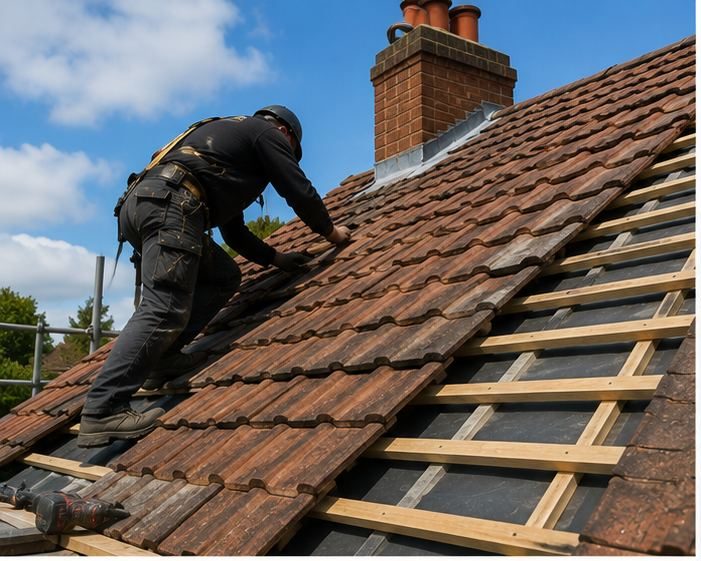
Why small faults grow
A single slipped tile lets water onto the felt, and the felt carries it onto the timbers. A loose piece of lead lets rain run behind a chimney. Left for a season or two, a minor repair turns into rotten battens, a stained ceiling and a much larger job. Catching it early keeps the work small.
What a sensible check includes
We look at the whole roof from the ground first, then the loft, then the roof itself if needed. That covers tiles or slates, ridges and hips, lead flashings, chimneys, gutters, fascias and verges. We also look for moss build-up that holds water against the covering. If you cannot see the whole roof from the ground, a roofer can look more closely and report back to you in plain terms, with photographs where that helps.
- Ridge and hip bedding for cracks or movement
- Lead flashings lifting or splitting
- Gutters and downpipes clear and fixed firmly
- Fascias and soffits sound and ventilated
Things you can do yourself, safely
From the ground you can watch for tiles on the lawn, gutters overflowing and stains on ceilings or in the loft after heavy rain. A pair of binoculars is better than going near an edge. Keep notes and photos, and call us if anything changes. Please leave all roof work to a roofer.
After storms and seasonal changes
Strong wind loosens coverings and ridge beds, and autumn leaves fill gutters and valleys. A quick look after a rough spell often shows up damage that would otherwise sit unnoticed. We can say what is urgent and what can wait, so you are not rushed into work that is not needed. Bear in mind that sheltered roofs and exposed ones age differently, so a check suited to the house is better than a fixed routine.
- Loose or displaced tiles after high winds
- Leaves and silt blocking gutters in autumn
- Stains in the loft after prolonged rain
Getting good value from a roofer
A sound approach is a written description of what was found and what is proposed, with the urgent items separated from those that can wait. That lets you plan, and it stops small fixes being bundled into one big job. Ask us for that clear picture of the roof before agreeing anything.
Frequently Asked Questions
How often should a roof be checked?
There is no single rule. Roofs of different ages and exposure need different attention. A look after a severe storm, and a periodic inspection in between, is a sensible habit, and we can advise on what suits yours. We can advise after a look.
Is moss removal part of maintenance?
It can be. Heavy moss holds water against the covering and can block gutters. We assess whether it is causing harm or is just cosmetic, and do not recommend removal where it does not help.
Can maintenance prevent a full re-roof?
It cannot stop age, but it can deal with faults before they spread, so the roof lasts as long as it reasonably can. When replacement is due, we will say so plainly. A tidy, early repair is nearly always the better route.
Talk to our team about general roofing services in Henbury
Every roof is different — the fastest way to get an accurate answer is a quick chat with our team.