
Roofs fail slowly, then suddenly. A regular look at the ridge, flashings, gutters and flat sections of a Kingswood home keeps small faults from becoming big bills.
The roofs on Kingswood's estates, terraces and semis have been standing a long time, and many have a garage or extension roof attached as well. Each has its weak points. Maintenance simply means finding those weak points early, while a repair is small. It also gives you a clear view of what is urgent and what can wait.
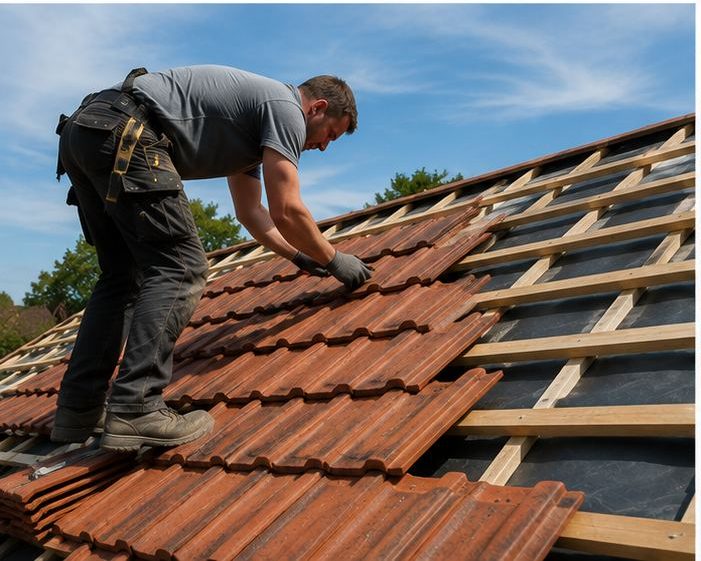
Where small faults start
On a hipped roof, the usual starting points are the ridge and hip bedding, the lead where it meets a chimney or wall, and gutters that are blocked or loose. Each one lets in a little water, which creeps on to felt and timber. A short visit now beats replacing wet timber later. The ridge on a hipped roof is a particularly long run to keep an eye on. Terraces share runs of gutter and flashing, so a fault can affect a neighbour as well,.
What a routine look covers
A visit covers the tiles, ridge and hips, flashings, chimneys, gutters, fascias and any flat roofs. We also look into the loft for damp, daylight and stained felt. You receive a plain explanation of the findings, with photographs where useful, and a simple list of what to deal with now and what to watch. We note anything that can wait, so that you are not asked to act on everything at once.
- Tiles, ridge and hips checked along every slope
- Lead flashings and chimney junctions examined
- Gutters, fascias and soffits looked over
- Garage and extension flat roofs included
Gutters and moss
Blocked gutters overflow onto walls and boards, and moss holds moisture against tiles. Clearing gutters and removing moss are routine jobs that prevent much bigger ones. We assess whether moss removal is needed rather than doing it by default, and explain how it is done. Keeping the roof clear means water runs where it should and not into the walls.
Garage and extension roofs
Flat sections often get forgotten because nobody sees them. Blocked outlets, ponding, splits and lifting edges can sit unnoticed until a ceiling stains. Including them in a routine look catches small repairs early, when a patch will do, and avoids a full re-cover. Edges, joints and outlets are checked at the same time.
Making it routine
A check every so often, and after severe weather, is enough for most roofs. After a storm, look from the ground for tiles on the lawn or a sagging gutter, and call us for a proper look rather than going up. A written note after each visit builds a useful record.
Frequently Asked Questions
Does maintenance really save money?
In most cases yes, because small repairs are quick and cause little disruption, while neglected faults damage felt, timber and ceilings. Catching them early keeps the work small and the surprises few. Predictable small jobs are far easier on a household budget than emergencies.
What is the first thing to check?
From the ground, look at the gutters and the ridge line, and check the loft ceiling for damp. Those checks catch most early problems, and anything unusual is worth a call. If anything looks different, call us for a proper look.
Is it worth including a garage roof?
Yes. Flat garage roofs have edges, outlets and joints that wear, and they are easy to forget. Checking them with the main roof catches faults while they are still small and straightforward. They are easy to forget until a stain appears indoors.
Talk to our team about general roofing services in Kingswood
Every roof is different — the fastest way to get an accurate answer is a quick chat with our team.