
Small roof faults cost little to put right and a lot to ignore. Here is how regular checks catch problems early and what we look at on homes exposed to westerly weather.
Roofs in Shirehampton sit in the path of the westerly wind, so small faults appear sooner than they might on a sheltered street. A slipped tile or a split flashing is a minor job when found early. Left alone, water gets in, timbers soften and the bill grows. A regular look keeps small things small.
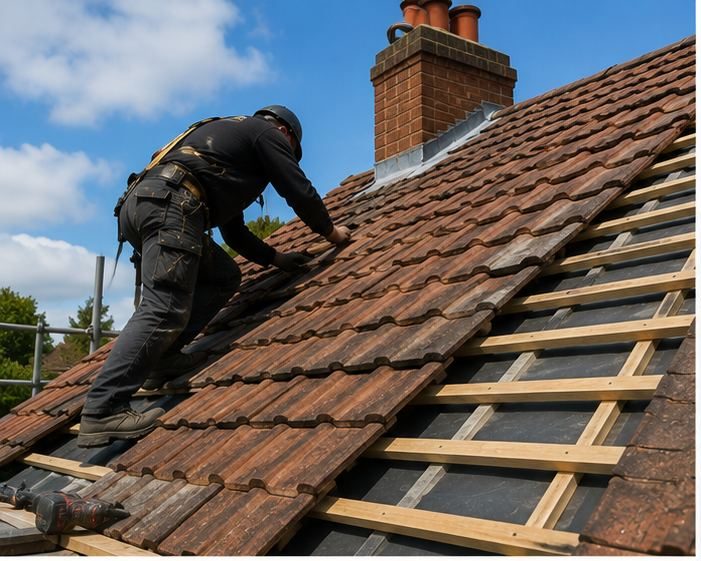
Why small faults grow
Water takes the easy route. A single missing tile lets rain wet the felt, then the battens, then the rafters, and by the time a stain appears indoors the damage has often been under way for some time. Dealing with the tile is quick. Dealing with rotten timber and a ruined ceiling is far more involved.
Felt and battens that stay wet through a winter lose strength, and insulation that gets damp stops working. Early attention protects all of that, which is where the saving comes from: you are paying to fix a fault, not to repair what the fault damaged.
What a regular check covers
We look at the whole roof, pitched and flat, along with the gutters, fascias, chimneys and any roof windows. The aim is to spot slipped or cracked coverings, lifted ridge and hip sections, tired flashings, blocked outlets and moss build-up, then tell you what is urgent and what can wait.
- Tiles, slates, and the condition of ridge and hip
- Lead flashings, valleys and chimney junctions
- Gutters, fascias and soffits along the eaves
- Flat roof outlets, joints and upstands
After the wind
After a strong westerly blow, loosened tiles and displaced ridge pieces are common, and they are easy to miss from indoors. A look from the ground, and a proper inspection when something seems wrong, means damage is found before the next heavy rain, not after it has soaked through.
Gutters and the roof edge
Blocked gutters push water back under the lowest tiles and onto fascia boards, which rot where they stay wet. Keeping them clear and checking the joints saves boards and rafter ends from damp. From the ground you can watch for overflow marks and green growth, then call us if something looks wrong.
Fascias and soffits deserve the same attention, since they hold the gutters and protect the rafter ends. A board that is starting to soften can often be dealt with before the eaves behind it are affected, and before a scaffold-sized job turns up.
Working with a roofer you trust
Ask for a clear written note of what was found, what was done and what to watch. A sensible roofer separates urgent faults from ones that can wait, so you can plan the work. Regular attention is not about finding jobs; it is about keeping a sound roof sound and spotting trouble early.
Frequently Asked Questions
How often should a roof be checked?
There is no fixed interval that suits every house. A check after severe weather, and a general look when something seems different, is sensible. Older roofs and exposed edges are worth looking at more often than sheltered ones.
Can I check the roof myself?
Only from the ground, or from inside the loft. Look for slipped tiles, sagging gutters, damp patches and daylight in the loft. Stay off the roof itself and call us if anything looks wrong, so we can take a proper look.
Does maintenance really prevent big repairs?
Often it does. Most large jobs start as small faults that went unnoticed. Replacing a few tiles or renewing a flashing is far simpler than dealing with rotten timbers and damaged ceilings some time later.
Talk to our team about general roofing services in Shirehampton
Every roof is different — the fastest way to get an accurate answer is a quick chat with our team.