
You cannot climb up and inspect a roof, and you should not. You can still judge a job from the ground, the loft and what the roofer tells you. Here is what to look for.
After roofing work, most owners have little way of knowing how good it was. That is understandable, and it is not an invitation to go up and look. There is plenty you can judge safely: the lines from the street, the state of the loft, the tidiness of the site and how clearly the work was explained.
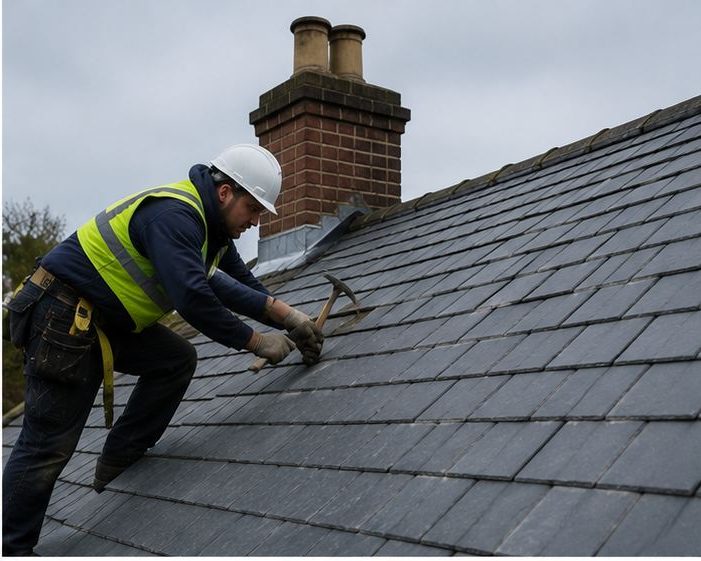
Check the description against the work
A sensible roofer gives you a written description of what is to be done before starting. Afterwards, compare it with what was actually carried out. If the job was to re-bed a ridge and renew lead at the chimney, the finished roofline should show both. Anything that changed along the way should have been explained to you at the time, not left for you to discover.
Look from the ground
Stand back across the road or in the garden and look at the roofline. Tiles should sit in straight, even courses. The ridge should run level, with no gaps or loose pieces. Gutters should sit neatly along the eaves and not sag or leave obvious drips. Binoculars from a safe spot on the ground can help if you want a closer look at chimneys and edges.
- Even rows of tiles with no gaps or lifted edges
- A level ridge with neat, consistent pointing
- Lead dressed tight at chimneys and walls
- Gutters straight and joints dry after rain
Check the loft
If you can reach the loft safely, look for daylight, stains and wet timbers. After the first heavy rain, check again. Dry, clean timbers and felt that is not sagging are a good sign. New damp marks suggest something has been missed. On houses with a rear flat roof, look at the ceiling beneath it for new marks, too.
The state of the site
A tidy job leaves the property as it found it: no broken tiles in the yard, no mortar on paths, no debris in the gutters. Tools and scaffold should go cleanly, any damage should be mentioned by the roofer before you find it, and the gutters should be left clear of slate chips, mortar and moss. On narrow terraced streets and shared access, courtesy to neighbours is part of doing the job well.
What to ask for at the end
Ask the roofer to explain what was done, what was found and what, if anything, still needs attention later. Photographs of the work in progress are useful, particularly of areas you cannot see once finished, such as the felt, flashings and boards.
A good roofer is happy to answer questions, and we always are. If something on the finished job does not look right to you, say so while the crew and the access equipment are still in place, rather than weeks later.
Frequently Asked Questions
Should I go up and check the roof myself?
No. Roofs are dangerous, and walking on them can cause damage. Judge the work from the ground, the loft and the room below, and ask the roofer to show you photographs of what they did.
What if it leaks again after the work?
Contact the roofer promptly, and describe when and where it appears. A fresh leak is not always the repair itself failing, so a second look at the roof is needed. A sensible roofer returns to investigate and tells you what they find.
How soon after the work can I judge it?
The roofline shows straight away, but the real test is the first heavy rain or strong wind. Check the loft and ceilings after it, and report anything you notice quickly while the cause is still easy to trace.
Talk to our team about general roofing services in Lawrence Hill
Every roof is different — the fastest way to get an accurate answer is a quick chat with our team.