
A terraced street needs more than one roofing answer. The main roof, the rear addition and the details between them each have their own requirements. Here is how we think about matching roofing to a property.
Lawrence Hill has Victorian terraces, later blocks and many rear extensions, so one property can carry two or three types of roof. The right answer for the main pitch is rarely the right answer for a flat section behind it. The aim is a roof that suits the building, its position and how it is used.
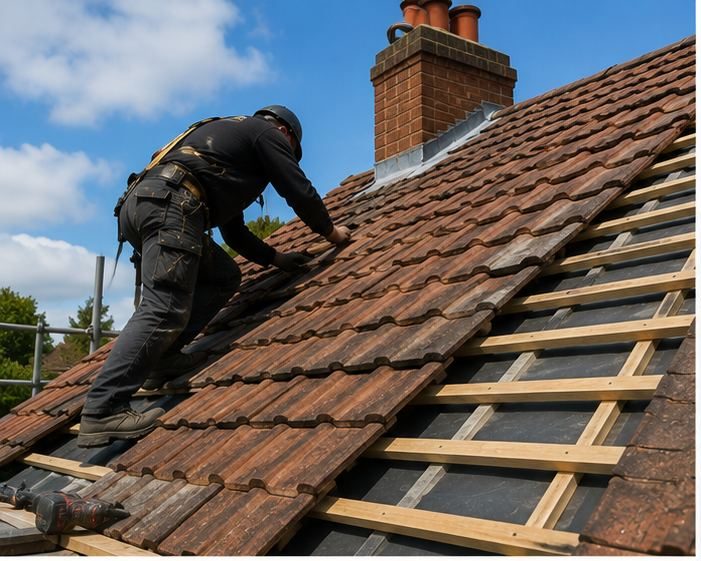
The main pitched roof
On a Victorian terrace the original pitched roof is usually the biggest area, and a replacement or repair should respect its shape. Tiles or slate are chosen to suit the pitch, the loading the timbers can take and the look of the street. We look at the roof as a whole first, to see whether a repair is enough or the covering needs renewing.
Rear extensions and flat roofs
The flat section over an extension needs a different approach. Single-ply rubber, fibreglass and felt systems each suit different shapes and details. A roof with many upstands and corners might do better with a system that can be moulded round awkward junctions. Falls, insulation and edge trims matter just as much as the covering itself.
- Single-ply rubber for larger, simple shapes
- Fibreglass for tight corners and awkward outlines
- Felt systems where a traditional build suits
- Falls and outlets planned from the start
Later blocks and mixed roofs
Not every building here is a Victorian terrace. Later blocks may have lower-pitched roofs, different tile types or shared structures, which changes what can be fitted and how access is arranged. A roof that serves several homes needs coordination as well as materials. We explain what is possible on your particular building rather than offering one standard solution, and we say so if shared structure or neighbouring roofs affect the choice.
The details that make a roof last
Ridge and hip work, lead flashings, chimneys, gutters and fascias all affect how well the covering performs. A new surface laid beside tired details will leak at the weakest one. We include those items in the assessment so the whole roof works as one. That also tells us what is urgent and what can safely wait, so you can plan the work in a sensible order instead of reacting to the next leak.
How to decide
Think about how long you intend to stay, how much maintenance you are happy with and whether any other work, such as a loft room or an extension, is planned. Tell us, and we will suggest something that fits. Planning or Building Regulations checks may apply in some cases, and we advise before work starts.
Frequently Asked Questions
Is slate or tile better for an older terrace?
It depends on what is on the roof already, what the timbers can carry and how the street looks. Matching the existing material is often the sensible route. We assess the roof and explain the reasons for our recommendation, including what the timbers can carry and what the street looks like.
Should the flat roof and main roof be done together?
Not necessarily. They are separate systems with their own condition. Doing them together can save on access and mess, but if only one needs work, we say so. We advise on what is worthwhile now and what can wait, and we separate the two in writing so you can compare them clearly.
Can you tell me what is wrong without going up?
We can learn a lot from the ground and from the loft, including damp, staining and daylight through the covering. For a firm answer we inspect the roof itself with proper access, and explain what we find clearly.
Talk to our team about general roofing services in Lawrence Hill
Every roof is different — the fastest way to get an accurate answer is a quick chat with our team.