
There is no fixed timetable, but a roof benefits from regular attention. Here is when to look, what you can check from the ground, and when to call us for a proper inspection.
A roof works hard and rarely complains until water gets in. A regular look catches small faults while they are still small jobs, which is far better than waiting for a stain on the ceiling. Barton Hill has older Victorian roofs, later houses and many flat extensions and outbuildings, each with different weak points and different needs.
A sensible rhythm
Many people have a roof checked once a year, ideally before winter, and again after any severe storm. An older roof, or one with known problems, may deserve more frequent attention. A newer roof can go longer between inspections, but it still pays to glance at it from the ground now and then.
Triggers that mean look sooner
Some events should prompt a check straight away, regardless of the usual rhythm. Storms, a leak, work on a neighbouring roof, or falling debris all count. Some events should prompt a check straight away, regardless of the usual rhythm. Storms, a leak, work on a neighbouring roof, or falling debris all count, and they are worth a call even if the damage looks small.
Moss, blocked gutters and visible damage are quieter signals, yet they point to problems building up. Do not wait for the next scheduled check if you see them. Moss, blocked gutters and visible damage are quieter signals, yet they point to problems building up slowly over time. Do not wait for the next scheduled check if you see them; a short visit now often prevents a larger repair later.
- After high winds or heavy rain
- When tiles, slates or mortar fall into the garden
- If a ceiling stain appears or grows
- Before and after any scaffold or building work
What you can check yourself
From the ground, look for slipped or missing tiles, dips in the roofline, sagging gutters, vegetation and debris. Inside, check the loft or top ceilings for daylight, damp patches and stained timbers. Do not climb onto the roof or lean ladders against it. If something looks wrong, photograph it and call us.
What an inspection covers
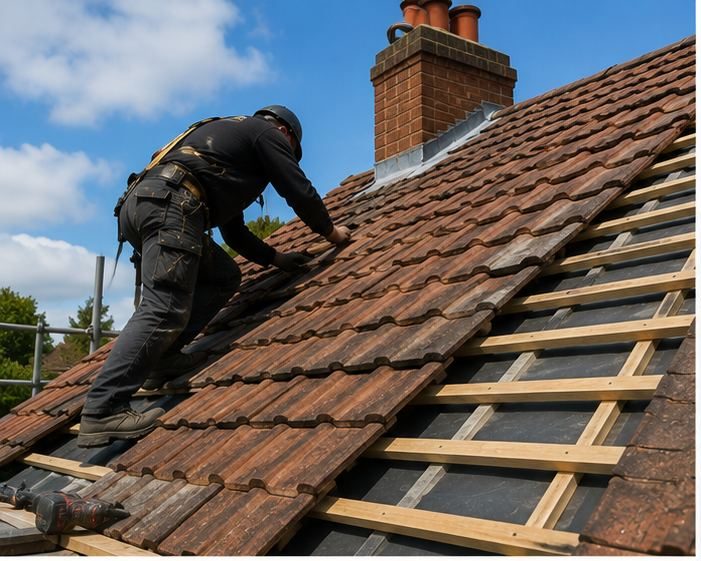
We look at the whole roof, not just one spot. That means tiles or slates, ridge and hip pieces, verges, lead flashings, chimneys, gutters and fascias, and any flat roofs on extensions or outbuildings. We explain what is urgent and what can wait, so you can plan sensibly instead of reacting to emergencies.
Flat roofs and outbuildings
Flat roofs deserve extra attention because they are easy to forget. Ponding, blisters, splits and blocked outlets can build slowly. Garages and extensions are often out of sight from the house. We look at them as part of the same inspection and tell you honestly if they need work soon.
Frequently Asked Questions
Is an inspection needed if there are no leaks?
Yes, ideally. Many roof faults are invisible from inside until they cause damage. A regular inspection spots slipped tiles, tired flashing and blocked gutters before they let water in. It also gives you a written record of the roof's condition to refer to later.
Do I need an inspection after every storm?
Not after every breeze, but after a severe storm it is wise, especially for older roofs. Check from the ground first and call us if you see anything out of place. A quick look from the ground is a sensible first step, and we can do the proper check from there.
Will an inspection always lead to work?
No. Often we find the roof is sound, or only needs a minor tidy. We tell you plainly what is needed, what can wait, and what needs no attention at all. Either way you end up knowing exactly where the roof stands, which is the point of looking.
Talk to our team about general roofing services in Barton Hill
Every roof is different — the fastest way to get an accurate answer is a quick chat with our team.