
There is no single interval that suits every roof. Age, exposure and recent weather all matter. Here is how to decide when your Horfield roof is due a look and what that look should include.
Most roof problems start small and quiet. A slipped tile or a worn flashing does little at first, then damp reaches timber. Horfield has terraces, semis and extended houses of many ages, so one fixed schedule would not suit them all. Instead, it helps to understand what triggers an inspection and what you can watch for yourself.
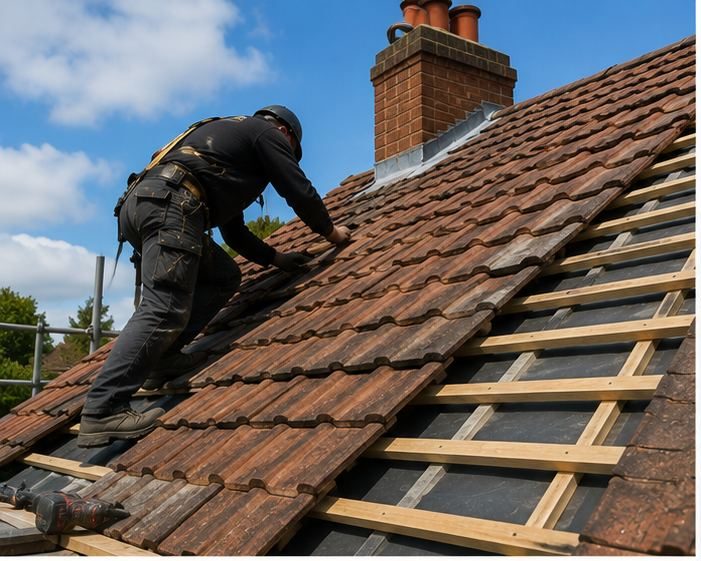
What decides the timing
Age is the first factor. An older roof with tired fixings and felt wants attention more often than a newer one. Exposure comes next, as open aspects take more wind and rain, and roofs near trees collect debris and shade. Alterations also matter. Extensions, dormers and flat sections add joints and flashings, which are where faults tend to start, so houses with several roof types gain from more regular checks.
Trees nearby, a history of leaks and the last time anyone looked at the roof all feed into the decision. Each of those makes an earlier look more sensible. If you cannot remember when it was last checked, that is usually reason enough for an inspection.
Check after the weather, too
A routine look is useful, but a look after severe weather is just as valuable. After heavy wind or sustained rain, walk round the house and check from a safe distance for gaps, slipped tiles, hanging gutters and debris. Inside, look in the loft for daylight or damp patches, and check upstairs ceilings for new stains. Keep to the hatch and do not step across the joists.
- Gaps or lifted tiles from the ground
- Gutters overflowing or hanging loose
- Stains on ceilings or walls inside
- Daylight or damp timbers in the loft
- Moss or debris building up in valleys
What a proper inspection covers
A good inspection looks at the whole roof, not just the one spot you point to. We check coverings, ridges and hips, valleys, lead flashings, chimneys, gutters, fascias and any flat sections, and photograph what we find so you can see it. We also look at the loft for the signs that show how the roof is performing from beneath.
Urgent and not urgent
The best outcome of an inspection is a clear list. Some items need doing soon, such as a broken tile over a bedroom. Others can wait and be planned, such as ageing mortar or worn sealant. We tell you which is which and why. That avoids both extremes: ignoring a developing fault, and paying for work you do not yet need.
Keeping a record
Keep notes and photographs from each inspection, with dates. They show how quickly things are changing and help you compare one visit with the next. If larger work is recommended, it may need planning or Building Regulations checks — we advise before work starts.
Photographs taken from the same spot each time make comparison easy and give a clear picture when a problem develops. Dates saved with each picture help too, and keeping them in one folder saves hunting for them later when somebody asks what the roof looked like.
Frequently Asked Questions
Do I need an inspection if nothing seems wrong?
It is sensible to have older roofs checked now and then even without symptoms, because many faults are invisible from below until damp has done its work. Newer roofs need it less often, but weather events are a good prompt.
Can I inspect the roof myself?
You can look from the ground, with binoculars if you have them, and check the loft from the hatch. Please do not go onto the roof yourself. It is unsafe and can damage tiles. Call us for a proper look.
What do you do during an inspection?
We examine every part of the roof from safe access, check the loft side where possible and note the condition of coverings, flashings, gutters and fascias. You get a plain explanation of what is urgent and what can wait.
Talk to our team about general roofing services in Horfield
Every roof is different — the fastest way to get an accurate answer is a quick chat with our team.