
There is no single date to circle on a calendar. This guide explains when a roof on a Lockleaze semi, terrace, porch or garage is worth inspecting, and what a proper look covers.
Roofs on Lockleaze's post-war estates are simple in shape, which makes them easy to forget until something drips. A regular look catches small faults while they are still small. There is no fixed schedule that suits every house, so it is more useful to know when a check makes sense and what it should include.
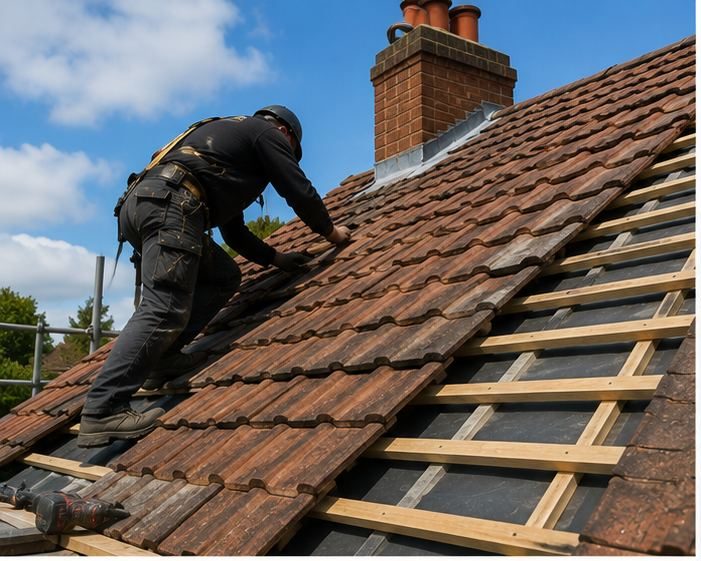
A routine look, now and then
Most roofs benefit from a proper inspection at sensible intervals, and more often as the covering ages. A professional looks closely at ridge, hips, verges, flashings and gutters, none of which you can judge reliably from the street. Between visits, you can look from the ground and from inside the loft for clues, without going on the roof.
After storms and unusual weather
Heavy wind, hail, snow or a long wet spell are all good reasons for a check. Falling branches and flying debris can crack tiles or lift ridge pieces, and the damage may not show until the next downpour. A quick look from the garden afterwards tells you whether to call.
If you see tiles on the lawn or hear something loose, do not wait for the next routine inspection. If you notice any of those signs after weather, ring us promptly so a small fault does not spread. Wind-driven rain can also push water under a tile that looked fine before the storm, so a second look is sensible.
Before you buy, sell or build
A roof inspection is worth having when you are buying a house, before a loft conversion, or when you plan to add a roof window. It sets out what is sound, what is tired and what can wait. The same goes for flat roofs on garages and porches, which often get less attention than the main roof. These moments are when an honest assessment of the roof saves guesswork later.
- Buying or selling a property with a tired roof
- Before a loft conversion or extension
- After a leak or damp patch appears
- When the roof covering is clearly weathered
What an inspection covers
We look at the whole roof: coverings, ridge and hips, verge edges, lead flashings, chimney junctions, gutters and fascias, and flat roof joints and outlets. We also check the loft for daylight, damp timbers and stained felt where it is accessible. You get a plain explanation of what is urgent and what can wait. Where we find a fault, we show you where it is and what it means for the roof.
What you can do between inspections
Keep gutters clear from the ground where safe, look at the roofline after weather, and check the loft and top-floor ceilings for stains. Never climb up, jet-wash the roof or scrape moss yourself. If anything looks different, take a photograph and call us for a proper look at the roof as a whole. A few photographs taken from the garden each season build a handy record.
Frequently Asked Questions
Do I need an inspection if nothing looks wrong?
A routine inspection is still sensible, because many faults cannot be seen from the ground. Slipped tiles, tired flashings and soft fascias can be developing for some time before any water shows. A short look settles it.
Can I inspect the roof myself?
Only from the ground and from inside the loft. Please do not go on the roof or use a ladder at the roof edge. Photographs and notes from the ground help us a lot when you call.
Does an inspection mean work is needed?
Not at all. Often it confirms that the roof is sound and gives you something to compare against later. If work is needed, we explain what is urgent, what can wait, and what the options are.
Talk to our team about general roofing services in Lockleaze
Every roof is different — the fastest way to get an accurate answer is a quick chat with our team.