
Timber fascias on Lockleaze's post-war homes eventually give up. Here are the signs it is time to replace them with UPVC, and the signs that a repair or repaint will do.
Wooden fascias and soffits on the estate houses around Lockleaze have been through many winters of rain, sun and repainting. At some point the paint stops protecting the board and the timber starts to go. Knowing when to replace rather than patch saves money on scaffold and time. Here is what to look for.
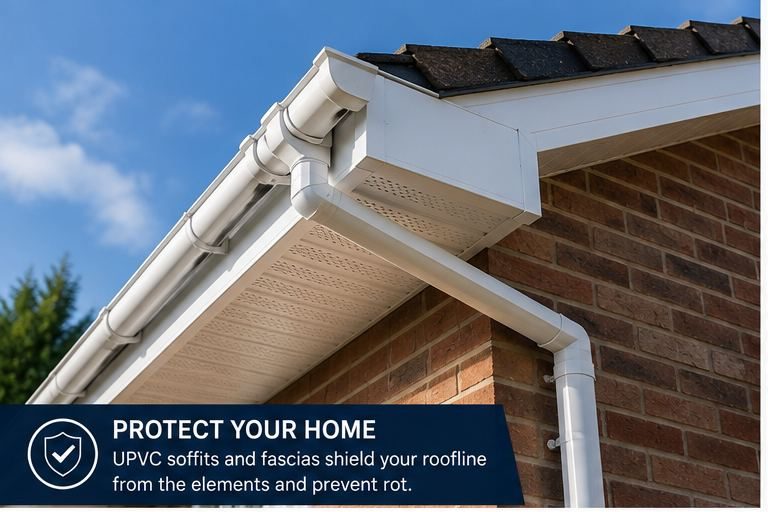
Look from the ground
You can learn a lot standing on the pavement. Peeling or flaking paint, dark stains running down from the gutter joints, and boards that look wavy or split at the ends all suggest water has been sitting on the timber. A gutter that sags between brackets can mean the fascia behind it is too soft to hold them firmly.
- Paint blistering or flaking back to bare timber
- Soft, spongy or crumbling edges on the board
- Gutters sagging or pulling away at the joints
- Soffit boards bowed, stained or with gaps
Why timber fails at the eaves
The fascia sits at the point where water runs off the roof, so any leaking gutter, blocked joint or overflow lands straight on the board. Wet timber that rarely dries rots from the bottom edge and the back, often out of sight. Porch and garage fascias suffer in the same way, and are easy to forget until a section falls.
When repair is enough
If the damage is limited, with sound timber beneath and only the paint tired, a repair and repaint can be reasonable. The catch is that repainting is a repeat job, and each time you need access to the roof edge. If the boards are mostly solid but one section is bad, we can say which parts need replacing. We tell you honestly which camp your boards fall into, even when that means a smaller job.
When replacement is the better choice
If rot has reached the board in several places, if the soffit is sagging, or if you are already paying for scaffold to fix the gutters, replacing the lot with UPVC makes sense. UPVC is cleaned rather than painted and is very low maintenance, which is a real saving on a house you want to leave alone.
At the same time we can refit or replace gutters and add vented soffit boards or vent strips so the roof space can breathe. That means one set of scaffold, one visit to the roof edge, and a finish that is very low maintenance once fitted, without painting.
Checking before we decide
When the old boards come off, we look at the rafter ends and eaves behind them. Sound rafters stay and are fixed to; rotten ends need dealing with before new boards go on. That honest look is why we advise on site rather than quoting blind. Older homes may also need extra care with what the existing soffit boards are made of before they are disturbed.
Frequently Asked Questions
Can I just paint over rotting fascias?
Paint will cover the problem briefly but not stop it. Rot continues underneath, and the board loses strength. If the wood is soft, replacement is the more honest option than another coat. A fresh coat only hides it for a short while.
What colours does UPVC come in?
White is the most common, with darker shades and wood-effect finishes available too. We can talk through what suits the house and its neighbours, and what your gutters and windows already look like.
Does replacing fascias mean new gutters too?
Often, because gutters have to come off to fit the new boards. If the old ones are sound they can be refitted, but if they are cracked or sagging, replacing them at the same time avoids paying for access twice.
Talk to our team about UPVC fascias and soffits in Lockleaze
Every roof is different — the fastest way to get an accurate answer is a quick chat with our team.