
No roof needs a visit on a fixed day, but most benefit from regular attention. This guide explains when to have a Longwell Green roof inspected and what a proper inspection covers.
Tiled roofs on Longwell Green's later 20th-century estates tend to look fine for a long time, and then a fault shows up all at once. Regular inspections catch the quiet faults first. There is no set date that suits every house, so it helps to know the occasions that call for a check and what it should involve.
Routine checks as the roof ages
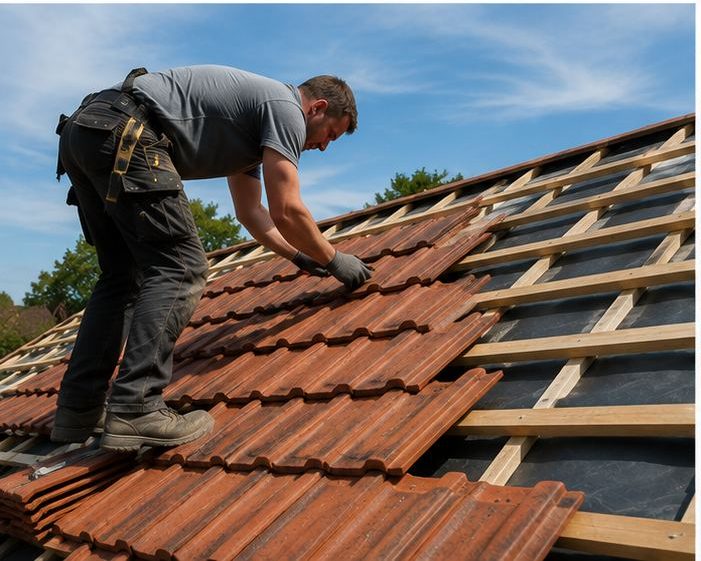
A newer roof may need only an occasional look, while a weathered one deserves attention more often. A professional examines the ridge, hips, verges, flashings, valleys, gutters and fascias, none of which you can judge from the street. A fresh pair of eyes also notices changes, such as lichen creeping in, that you may have stopped seeing. The point of a visit is to give you facts about the roof, not a sales pitch.
After storms and heavy weather
Strong winds, heavy rain, hail or snow are all good reasons for a look. Tiles can crack or slip and ridge pieces can lift, without anything showing inside until the next downpour. A walk round the garden after the weather, with a camera, tells you whether it is worth ringing.
The same goes for flat roofs on garages and extensions, where splits and ponding can appear after a hard frost. Even a thin layer of ice or a heavy frost can open a flat roof joint that looked tight, so a quick check afterwards is worth the effort.
Before you buy, sell or build
A roof inspection is sensible when buying or selling, before a loft conversion or roof window, or after you notice a damp patch. It tells you what is sound, what is tired and what can wait. That information helps you decide what to budget for, and prevents surprises further down the line. It also leaves a record you can refer back to.
- Before buying or selling a house
- Before a loft conversion or extension
- After a new stain on a ceiling
- When moss, lichen or gaps are spreading
What a proper inspection includes
We look at the entire roof: tiles, ridges and hips, verges, lead work, chimneys, gutters and fascias, and flat roof surfaces and outlets. Where we can, we check the loft for daylight, damp timbers and stained felt. You get a plain verdict on what is urgent and what is not, with photographs where it helps.
What you can do yourself
Look from the ground, keep an eye on the loft and top-floor ceilings, and watch for slipped tiles or dripping gutters. Never go up on the roof, use a ladder at the eaves or try to jet-wash or scrape moss. Photograph anything odd, note the date, and call us for a proper look.
Frequently Asked Questions
Is an inspection worthwhile if the roof seems fine?
Yes, because many faults develop quietly. Worn flashings, slipping ridge pieces and failing felt can all be in progress long before water shows. An inspection catches them while they are still small. Small faults are far easier to put right early.
Do I have to be there?
Not necessarily, though it helps if you can show us where you have noticed anything. We can look from outside and, with your agreement, inside the loft. It also helps us to know the roof's history.
Will an inspection lead to unnecessary work?
It should not. We explain what is urgent, what can wait and what needs nothing. If the roof is sound, we say so, and you have a record to compare against later. You decide what happens next.
Talk to our team about general roofing services in Longwell Green
Every roof is different — the fastest way to get an accurate answer is a quick chat with our team.