
The right interval depends on the roof: its covering, its age, its details and what weather it has faced. Here is how to judge, and what a proper inspection should cover.
Redfield terraces carry a mix of pitched roofs, bay window tops, chimneys and rear extension roofs, all on one house. Each ages in its own way and each needs checking. Because these roofs sit above tight streets and small yards, many problems are hard to see from below.
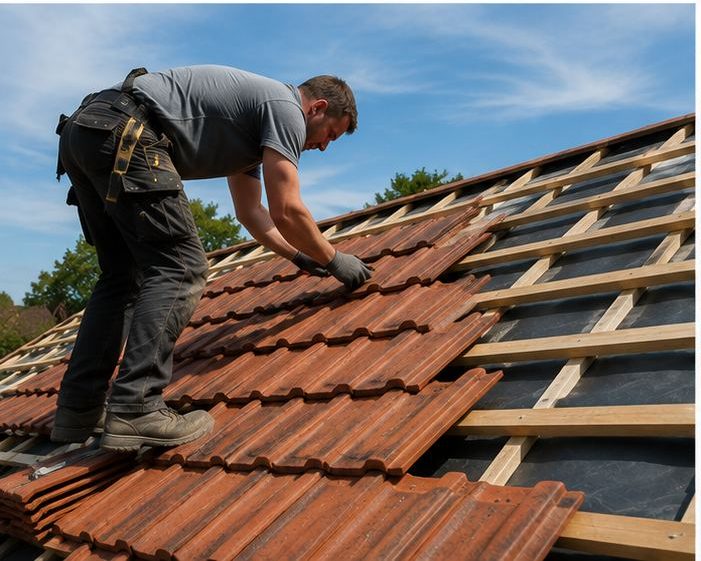
What affects how often
Older coverings, exposed positions and complicated roofs need more regular looks than newer, simple ones. A roof with a bay top, a chimney and a flat-roofed extension has far more places for water to enter than a plain slope. Recent repairs, storms and nearby building work also change what is sensible.
Trees in neighbouring yards, shared gutters and party-wall flashings add to the list, because they can be affected by someone else's property as well as your own. A conversation with the neighbours about shared parts is often useful, and we can look at both sides of a party wall where that is helpful.
When to check without waiting
Certain events call for an inspection straight away, whatever the usual interval. After a severe storm, when buying or selling a house, after work by another trade nearby, or when a stain, damp patch or draught appears, it is time to have the roof checked.
- After a severe storm or long wet spell
- Before buying or selling the property
- After work near the roof by other trades
- When stains, damp or draughts appear indoors
What you can do safely
From the street, a yard or a window, look for slipped tiles, sagging gutters, plants growing from the roof or chimney, and debris on flat roofs. Inside, check top-floor ceilings and the loft with a torch for damp, daylight or stained felt. Take photographs. Never climb up to look more closely.
What a proper inspection covers
We look at the whole roof, not only the area of concern. That includes the main slopes, ridges, valleys, chimneys, flashings, bay tops, gutters, fascias and the flat roof over any extension, plus the loft or ceilings beneath. You get a plain explanation of what is urgent and what can wait.
Access on terraces can be awkward, so we say how we will reach each part before we start, and whether we need to come through the house to reach a rear slope or an extension roof. We also tell you how long the visit is likely to take.
Making the most of an inspection
Ask what was found, ask for photographs, and ask what would happen if nothing is done. A good inspection gives you a clear list of recommended work, in order of importance, without pressure. Keep the notes, so you can see how the roof changes over time and spot trends early.
Ask also how soon any recommended work should be done, and what signs to watch for in the meantime, so you are not left guessing between visits. A clear answer to those two questions is the sign of an inspection done properly.
Frequently Asked Questions
Do newer roofs need inspecting?
Less often than older ones, but not never. A storm, a failed detail or a blocked outlet can affect any roof, so an occasional check, especially of flat roofs and flashings, is sensible.
Is a check from the ground good enough?
It tells you something, but it cannot show everything. Flat roofs, valleys and flashings are hard to judge from below. A proper inspection from safe access plus a loft check gives a much fuller picture.
Will an inspection always lead to work?
No. Often the answer is that the roof is fine, or that only a small repair is needed. We tell you honestly what we find and what is worth doing now, later or not at all.
Talk to our team about general roofing services in Redfield
Every roof is different — the fastest way to get an accurate answer is a quick chat with our team.