
There is no single interval that suits every roof. Age, exposure and recent weather decide how often it needs a trained look.
Roofs here face more than most. Many in Westbury-on-Trym sit exposed on slopes, mature trees overhang them and the houses range from old stone buildings to villas and inter-war semis. A regular inspection catches small faults before they become leaks, and it helps you plan rather than react.
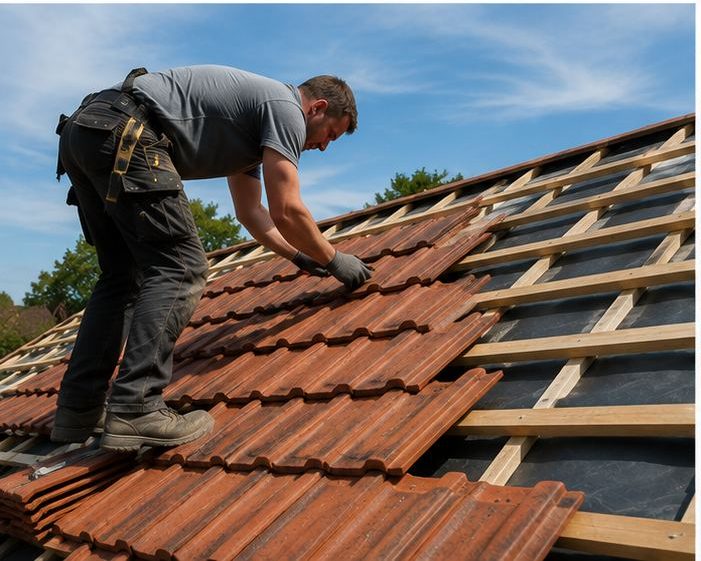
What makes a roof need looking at more often
Older coverings, exposed slopes and trees close to the house all raise the odds of faults. Flat roof sections and lead work also deserve regular attention. A recent roof in a sheltered spot can go longer between checks. We give an honest view on the interval for your roof rather than a blanket schedule.
A large villa with several slopes, valleys and chimneys has more places for faults than a small semi, so even if the roof is sound, more of it needs checking. Size and complexity count as much as age, and we weigh both.
After storms and changes
Certain events call for a check whatever the usual interval. A strong storm, tiles found on the ground, a damp patch on a ceiling, a fallen branch or work nearby that might have disturbed the roof all justify a prompt inspection. Buying or selling a house is another good moment.
- After strong winds or heavy storms
- When tiles or slates are found in the garden
- If a ceiling stain or damp patch appears
- Before buying or selling a property
What an inspection covers
We look at the whole roof: coverings, ridge and hip lines, chimneys and lead, verges, gutters, fascias and any flat sections. We look inside the loft for daylight, damp timbers and stained felt. You receive a plain explanation of what is urgent and what can wait, with photographs where they help.
Where we find something, we keep to what is real. A roof with a few loose tiles does not need a new covering, and we say so. Equally, if the roof is near the end of its useful life, we explain the signs and the likely options.
Why exposure matters
On open slopes, wind works at edges and ridges all the time, so small weaknesses open into gaps sooner. Trees drop leaves into valleys and gutters, which back up in wet weather. These ordinary pressures mean exposed roofs are worth watching more closely than sheltered ones.
What you can do yourself
From the ground, glance up after bad weather for gaps, uneven lines or debris. Check ceilings and the loft for new stains or damp. Never climb up to look closer or clear anything. If something seems off, call us and we will take a proper, safe look.
Frequently Asked Questions
Is an inspection needed if nothing seems wrong?
It is sensible for older or exposed roofs, because many faults are invisible from the ground until water comes through. A look can catch them early. For a newer roof in good order, the interval can be longer.
Can a roofer inspect without a full survey?
Yes. A roof inspection looks at coverings, details and the loft, and gives you a plain report. It is not a structural survey, but it tells you the condition of the roof and what to do next.
Should I clear gutters myself?
Please do not go up a ladder to the gutter if you are not confident, as it is easy to fall. We can clear and check gutters and outlets during a visit and tell you if anything needs repair.
Talk to our team about general roofing services in Westbury-on-Trym
Every roof is different — the fastest way to get an accurate answer is a quick chat with our team.