
Neither answer is right for every roof. The decision rests on how widespread the faults are and what lies underneath the covering.
Old roofs in Westbury-on-Trym range from stone buildings in the historic core to large villas and inter-war semis, and many sit exposed on the slopes. Repair or replace is a fair question for any of them. The honest answer comes from what the roof is actually doing, not from a rule.
When repair is the right call
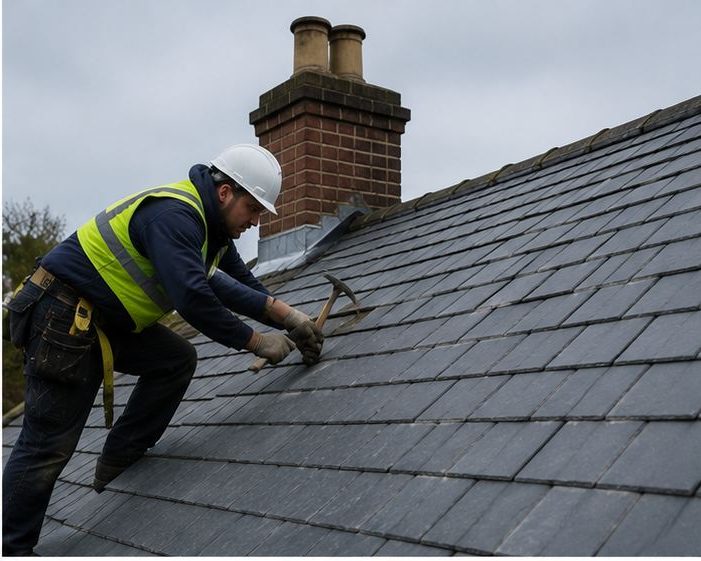
If the faults are few and local, such as some slipped tiles, a failed section of ridge bedding or a worn flashing, and the felt and battens beneath are sound, repair makes sense. It deals with the problem at a sensible scale and leaves the rest working. We say so when that is all that is needed.
Stone and slate roofs in the older village core can often be repaired for a long time with sympathetic materials, provided the structure underneath is sound. We do not assume that an old roof must go, and we say so plainly.
Signs that point towards replacement
Widespread slipping or cracking, tiles or slates failing in many places, soft or rotten battens, perished felt and repeated leaks in different spots suggest the roof as a whole is tired. Patching then becomes a string of call-outs that never finishes.
- Faults spreading over most of a slope
- Felt perished or battens soft when examined
- Leaks recurring in new places after repairs
- Covering brittle, flaking or losing its fixings
What we look at before advising
We examine the covering from the roof, then the loft for daylight, damp timbers and stained felt. We check lead work, chimneys, verges, ridges and gutters. The aim is a whole-roof view, so the advice reflects the real condition and not just the spot that sparked the call.
Where we do recommend replacement, we explain why, show what we found, and describe what the new roof would involve, including edges, ridge, flashings and gutters. That detail makes it easier to compare options and to judge what is really needed.
Exposure and trees
Exposed roofs take more wind, and mature trees add debris and shade. A covering that has done well may still be nearing its limit when it is repeatedly stressed. Where replacement makes sense, we can discuss improving edges and fixings with dry verge or better flashings, as part of one plan.
Making the decision with confidence
Ask for a written description of what was found and what each option involves, including what could be hidden under the covering. A roofer who explains clearly, shows photographs and says what is urgent and what can wait is helping you decide, not pushing you. We work that way.
Frequently Asked Questions
Can I repair now and replace later?
Often, yes, if the repair is sound and the rest of the roof is not at breaking point. We explain what you can expect and where the next problems are likely, so you can plan rather than be surprised.
Will you always recommend replacement?
No. If a repair is enough, we say so plainly. Recommending a full replacement where a repair would do is not honest, and we would rather you get the right work done at the right scale for your roof.
How do I judge a quote for either option?
Compare what is described, not just the total. Check that it covers the same materials, access, and the treatment of felt, battens and flashings. A clear written description makes comparison fair, and it shows you what each roofer actually intends to do.
Talk to our team about general roofing services in Westbury-on-Trym
Every roof is different — the fastest way to get an accurate answer is a quick chat with our team.