
Soffit vents let fresh air move through the loft, carrying away the warm, damp air that otherwise condenses on cold timbers. Without them, a roof can quietly rot or grow mould from inside.
Soffits are the boards that close the underside of the eaves, and on a lot of Yate houses they run along the front and back of tidy estate roofs. A solid, unvented board looks neat but can leave the loft stagnant. A vent in the soffit gives the roof space a way to breathe.
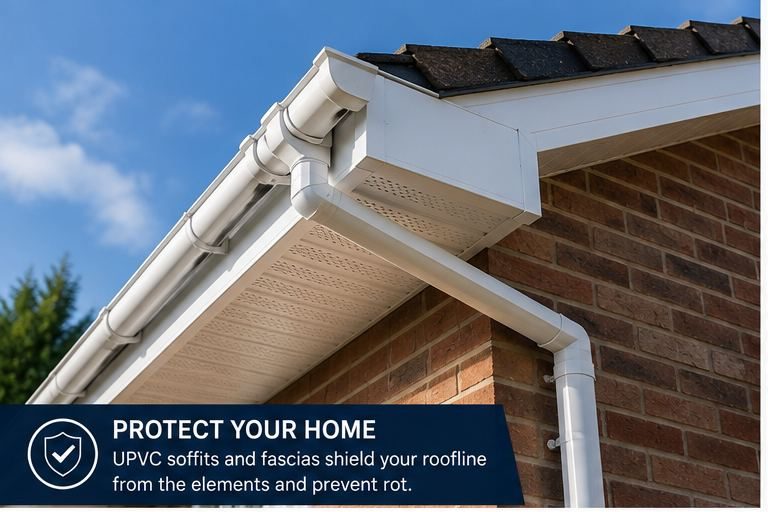
Where the damp air comes from
Everyday life puts moisture into the air: cooking, showers, drying washing. Warm air rises through the ceiling into the loft, where it meets cold timbers and felt and condenses. In a well-vented roof, that moisture is carried out. In a sealed one, it settles on rafters, felt and insulation. Kitchens and bathrooms on the upper floor of a modern estate house send a lot of moisture upwards, so the roof space needs somewhere to send it.
How vents work
Air enters low at the eaves through the soffit, rises under the roof covering and leaves higher up through ridge or other vents. This gentle flow keeps the loft cool and dry. Soffit vents can be small round discs, long vented boards or a narrow strip behind the fascia, depending on the eaves and what looks right. Because air enters low and leaves high, blocking either end undoes the other, so we look at both.
What happens when the loft cannot breathe
Without airflow, the same moisture keeps building up, and the signs are often mistaken for a roof leak. Insulation laid right to the eaves can also block the airflow path if it is not kept clear, so we check that gap too. Typical signs are listed below.
- Black mould on rafters or the underside of the felt.
- Damp or clumped insulation in the loft.
- Rusty nail tips and fixings in the loft.
- Musty smells coming from upstairs rooms.
- Condensation dripping onto timbers in cold weather.
What we check on site
Before fitting anything, we look at the existing eaves, the rafter ends and how the loft is insulated. We check whether insulation has been pushed against the felt at the edge and whether existing soffit boards are what we expect before disturbing them. Then we choose the vent type that suits the roof and how the eaves are built. Where the loft has been boarded or heavily insulated, we may suggest simple measures that keep the air path clear from eaves to ridge.
Fitting vented soffits with new boards
When we replace fascias and soffits, vented soffit boards or vent strips go in as part of the job. That is an easy time to put right a roof space that has been stuffy for a long time. We refit or replace gutters at the same visit, and we explain the airflow in plain terms.
Frequently Asked Questions
Do all soffits need vents?
Most pitched roofs benefit from some form of ventilation, and soffit vents are the usual way to provide low-level air. Whether yours needs them depends on the roof design, other vents and how the loft is insulated, which we check.
Will vents let birds and insects in?
Properly made vents have fine mesh or small slots that keep birds and insects out while letting air pass. Damaged or badly fitted vents are where problems start, so the type and fixing matter.
Can I add vents without replacing the soffit?
Sometimes, with disc vents cut into existing boards. But if the boards are tired or the fascia is being replaced anyway, it is usually neater and better to fit vented boards or strips as part of the job.
Talk to our team about UPVC fascias and soffits in Yate
Every roof is different — the fastest way to get an accurate answer is a quick chat with our team.