
A damaged fascia can look like a cosmetic fault, but it often sits at the start of bigger trouble. This guide explains what goes wrong and why central Bristol buildings are no exception.
The fascia is the board along the ends of the rafters that carries the gutter. When it fails, the gutter can sag, water spills where it should not, and the roof edge is left open. On older terraces in Old Market, a small fault here can quietly spread.
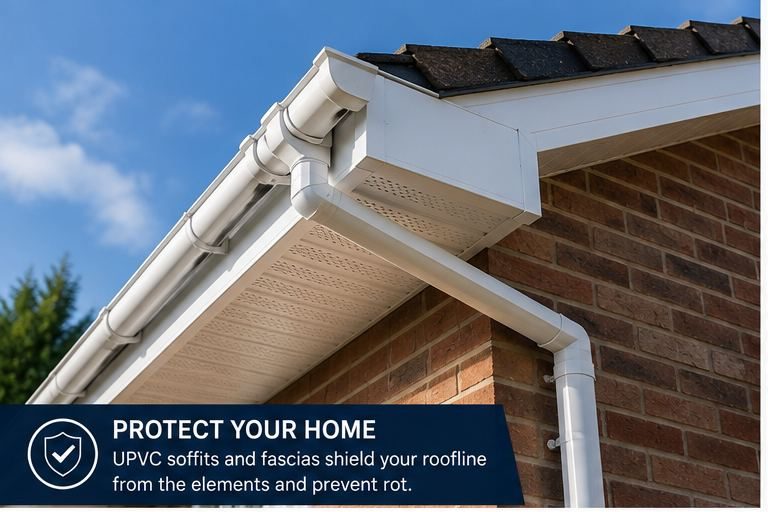
What the fascia actually does
Besides holding the gutter, the fascia protects the ends of the rafters and helps close the eaves. If it is rotten, split or pulling away, water runs behind it instead of into the gutter. That soaks the rafter ends, the wall head and sometimes the ceiling below.
The effect is gradual. A small gap this season becomes a damp rafter end the next, which is why a quick look at the roofline now is far better than a bigger repair later, once the timber behind has started to soften and the gutter has dropped.
Gutters that no longer work
A fascia that has softened cannot hold screws properly, so the gutter slips out of line. Water then overflows or pools in the wrong place, and runs down the wall. Stained brickwork, green patches and damp inside an upper room are all common results of a gutter held by a failing board.
Open eaves and unwelcome visitors
Gaps along the roofline invite wind-driven rain, birds and insects into the roof space. Rotten soffit boards behind can let the same in from underneath. Once inside, they leave nests, damp and droppings, and block the ventilation that the roof needs to stay dry.
What we check from the ground
We start by looking along the roofline from below, with proper access arranged for a closer inspection where it is needed. Standing back on the pavement shows a lot, particularly on terraces where every neighbour's roofline can be compared. We are watching for the following signs.
- Paint peeling, bubbling or flaking on timber boards.
- Gutters sagging, leaking at joints or pulling away.
- Dark staining or soft areas on the board.
- Gaps between the fascia and the wall or roof.
Putting it right
Replacing the fascia, soffit and gutter together is usually the neatest fix, because the rafter ends can be checked and the roof space ventilated at the same time. UPVC is very low maintenance and is cleaned rather than painted. On older buildings we check what existing soffit boards are made of before disturbing them.
Because older buildings differ so much, we look at the eaves as a whole, not just the board that happens to be failing. That avoids fixing one length only to find the next one has gone, and it lets us tell you what is likely to need attention soon.
Frequently Asked Questions
Can a bad fascia cause a leak inside?
Yes, indirectly. Water running behind a failed fascia can soak the rafter ends and the top of the wall, then show as damp on an upper ceiling or wall. The stain you see may be some way from the real fault.
Is it enough to patch a rotten board?
Occasionally, if the damage is small and the timber behind is sound. Where rot has spread or the gutter will not stay fixed, patching tends to be a short-term answer and replacing the run is more sensible.
Do I need scaffolding for this?
Usually some form of safe access is needed, especially on taller central buildings. We arrange it as part of the job and plan around pavements, neighbours and narrow streets, so that the work is safe, tidy and as little trouble to others as possible.
Talk to our team about UPVC fascias and soffits in Old Market
Every roof is different — the fastest way to get an accurate answer is a quick chat with our team.