
Older roofs across Old Market can often be repaired, but not every one. This guide explains how we separate a roof with a local fault from one that is failing as a whole.
Old Market has plenty of roofs that have been patched, re-pointed and altered over many decades. Whether to keep patching depends on how much of the covering is still sound, not on how old the building looks. We look at the whole roof first, then give you a straight answer on what is worth saving.
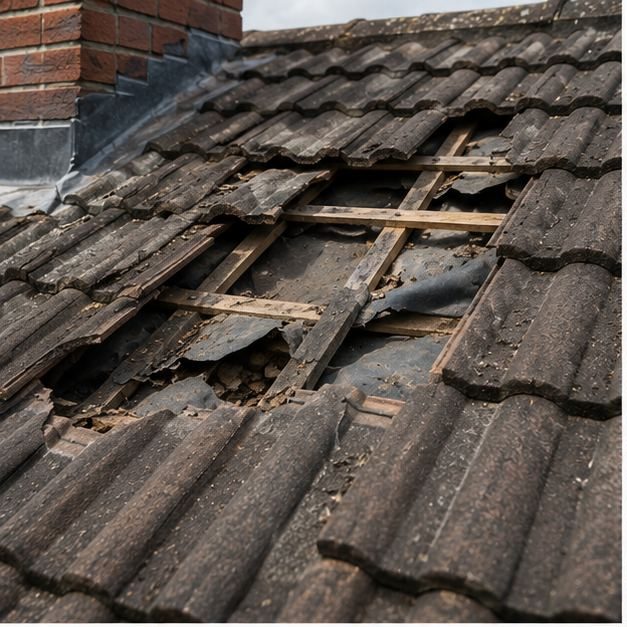
Why age alone does not decide it
A Georgian or Victorian terrace roof can carry on perfectly well if the timbers are dry and the covering is mostly intact. A newer roof on a flat block can be beyond saving if water has been getting in unnoticed. We judge condition, not appearance, and that means looking at the structure underneath as well as what shows from the street.
Signs that point towards replacement
Repairs make sense while faults are isolated and the surrounding roof is sound. When problems keep appearing in different places, the roof is usually telling you something about its overall state, and further patching tends to chase leaks around rather than end them. These are the signs we take seriously.
- Fresh leaks appearing in new spots after each repair.
- Large areas of tiles or slates crumbling, flaking or sliding.
- Rotten or sagging timbers visible from the loft.
- Daylight showing through the covering in several places.
- Felt that is torn, brittle or soaked through.
What the loft tells us
From inside the roof space we look for damp stains, dark patches on rafters, soft timber and light where there should be none. Water travels along timbers before it drips, so a stain in a bedroom ceiling may sit well away from the actual defect. Loft access in older buildings can be awkward, and we plan for that.
Where access to the loft is tight, we say so before we start and work out how to see the timbers properly. A quick glance is not enough to judge an old roof, and we would rather take the time than guess at what is hidden.
Parapets, gutters and tight access
Many buildings here have parapet walls and hidden gutters behind them, and these are common places for slow leaks. Repair is often right when only the lead or the gutter lining has failed. Narrow streets and shared walls affect how we get materials up, which can influence whether a partial or full job is more sensible.
Questions worth asking any roofer
A good answer should be specific to your roof. Ask what exactly is failing, whether the repair deals with the cause or only the symptom, and what the roof will need next. We put the reasoning in plain words so you can decide without pressure.
If we recommend replacement, you should be shown why, with photographs where possible, and told which parts are being kept. If we recommend repair, you should hear what it will and will not deal with, so there are no surprises later on.
- What is the cause of the fault, not just where it shows?
- Can the work be done in stages if needed?
- How will access be arranged and the site kept tidy?
- What would you advise leaving alone for now?
Frequently Asked Questions
Can a patched roof still be worth keeping?
Often yes. If the structure is dry and the covering is largely sound, targeted repairs can sensibly extend its working life. We tell you honestly where the limits are, and flag any areas that are likely to need attention next.
Will you tell me if replacement is not needed?
Yes. If a repair will do the job properly we say so. We would rather fix the real fault than sell more work than the roof needs, and we explain what we found so you can see the reasoning.
Should I get the roof looked at before it leaks?
It is worth it if the roof is old, has been repaired before, or you have noticed slipped tiles, stained ceilings or overflowing gutters. Catching a small fault early usually means a smaller job, and you can plan rather than react.
Talk to our team about roof repairs in Old Market
Every roof is different — the fastest way to get an accurate answer is a quick chat with our team.