
A tired fascia does not always need a full replacement, but patching a board that is rotten behind the paint wastes everyone's time. Here is how to judge which route suits a St Pauls house.
Fascias on older terraces and converted houses in St Pauls have often been painted over many times, which hides what lies underneath. Some boards are sound and need only attention. Others look acceptable from the pavement and are soft all the way through, and the difference only shows on a close inspection.
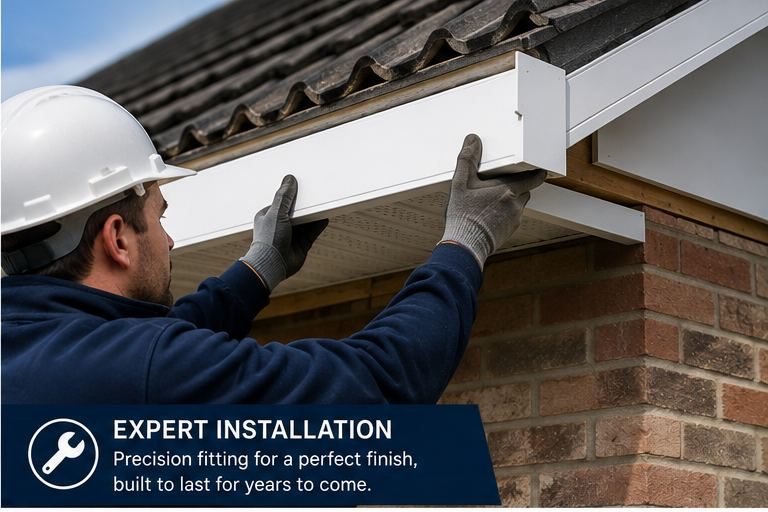
What a repair can do
If a board is solid and only a short stretch is damaged, that stretch can sometimes be cut back and a new section joined in, with the paintwork renewed. This suits localised rot, perhaps below a leaking joint, and a run where the rest of the timber and the rafter ends are firm.
In dense streets it is easy to miss a failing board, because the eaves are seen from a narrow angle. We look at the whole run, including parts that are hard to see from your own front door. Photographs taken from the ground rarely tell the whole story.
Signs a board is beyond repair
Soft, flaking or crumbling timber, boards that have split along their length, and fixings that no longer hold are all warning signs. When rot has crept along the board, patching it only moves the join to the next weak spot, and the repair rarely lasts as long as it should.
- Timber you can press a thumbnail into
- Paint blistering over damp wood
- Gaps opening where boards meet
- Gutters sagging because fixings have pulled out
What we check before deciding
Before agreeing a repair we look at the rafter ends behind the board, the soffit and the gutter. Water that has rotted the fascia usually reached the rafters too. We also note whether the house has a vented soffit, since poor airflow in the roof space can cause damp at the eaves.
If rot has reached the rafter ends, we explain what can be cut back and what needs to be strengthened, and we talk you through it before going ahead, so there are no surprises when the old boards come off. Our aim is that you know exactly what is behind each board.
Why UPVC replacement is often chosen
Where boards are failing along the run, new UPVC fascias and soffits are a sensible answer. They are cleaned rather than painted, so the repeated repainting at height stops. We remove the old boards and gutters, repair any rafter ends, fit new boards with proper ventilation, and refit or replace the gutters.
Getting the decision right
Ask any contractor to explain, in writing, why they recommend repair or replacement, and to confirm how they will check the rafters. On older homes we also check what existing boards are made of before disturbing them. An honest answer may be a small repair now with replacement planned for later.
- A written description of what is proposed
- What will happen if rotten rafter ends are found
- How access and scaffold will be arranged
Frequently Asked Questions
Is it worth repainting a tired fascia?
Only if the timber underneath is sound. Painting over damp or soft wood hides the problem for a short while. We test the board first and tell you honestly whether paint will help or only delay replacement.
Do I need scaffolding for a fascia repair?
Almost always, either a scaffold or a suitable access tower, because work at the eaves has to be done safely. We arrange this beforehand and explain how it will fit around the house and its neighbours.
What finish can new fascias have?
White is the usual choice, with darker finishes and wood-effect options also available. The choice depends on the look of the house and the street, and we show you what is possible before the order is placed.
Talk to our team about UPVC fascias and soffits in St Pauls
Every roof is different — the fastest way to get an accurate answer is a quick chat with our team.