
Replacing the boards at the roof edge is more than a swap of old for new. Here is the sequence of work on a Downs villa, from scaffold to refitted gutters.
Victorian and Edwardian villas around the Downs often have generous eaves and deep fascia boards that have been painted many times. Replacing them is a planned job with several stages, and the stage that matters most is the one nobody sees: checking what lies behind the old boards once they come away.
Getting safe access
The roof edge is high, so scaffolding is needed. On villas with tall gables and bay windows it takes thought to arrange, and we plan the layout before work begins. Good access means the work is done safely and the boards fit properly all the way along the run.
Mature trees close to the house can restrict where the scaffold goes and may need branches kept clear of the boards, so we look at that early, talk it through with you and agree the layout before anyone starts work. You will also know in advance how long the scaffold stays and who to speak to.
Taking off the old boards and gutters
The old fascias, soffits and gutters are removed section by section. On older houses we check what the existing soffit boards are made of before disturbing them, and take the right care if anything calls for it. The old gutters come off as well, since they hang from the boards being replaced. Anything unexpected is explained to you before we carry on.
- Gutters and downpipes taken off first
- Old fascia and soffit boards removed
- Debris and old fixings cleared as we go
- Eaves exposed so everything behind can be seen
Checking the rafter ends and eaves
With the boards off we inspect the rafter ends, the wall plate and the eaves. This is where water damage shows. Rotten rafter ends are cut back and strengthened, and any gaps where birds or insects have been getting into the roof space are dealt with. New boards should go onto sound timber, not onto decay.
Fitting the new boards
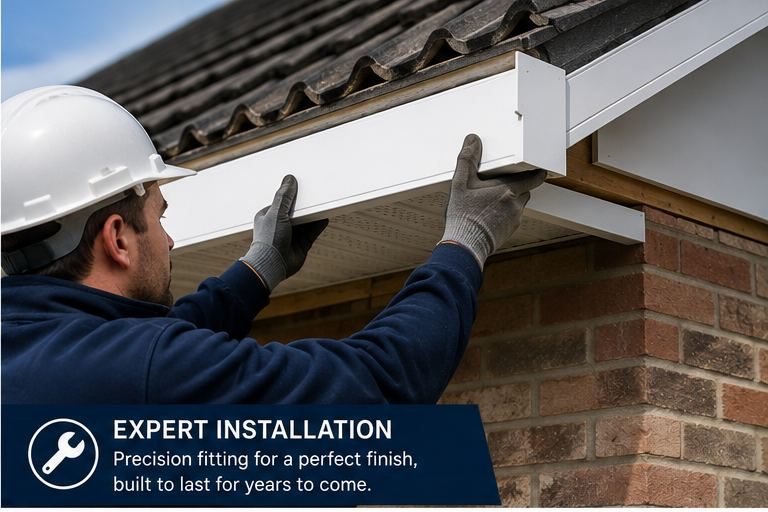
New fascias and soffits are fixed, with ventilated soffits or vent strips so air can move through the roof space and keep the timbers dry. UPVC is very low maintenance and is cleaned, not painted. It comes in white, in darker finishes and in wood-effect options that suit a villa's character.
Bargeboards at the gables are done in the same way, so the whole roof edge matches, and the corners where boards meet are finished neatly so wind and rain cannot get in behind them over the seasons. Each run is checked for level and alignment before the next is fixed, which keeps the finished line straight.
Gutters and finishing
Gutters and downpipes are refitted or replaced and set to a gentle fall so they drain properly. We check the joints and outlets, clear the site and run water through the system if conditions allow. You should end up with a roof edge that looks neat, drains well and needs little attention.
Frequently Asked Questions
Will the work make a lot of mess?
Some noise and dust are unavoidable while old boards come off, but we clear as we go and leave the site tidy. Scaffolding and access arrangements are explained to you before any work starts, so nothing comes as a surprise.
Do I need to be at home?
Not for all of it, but we need to agree access to the property and the garden, and it helps if someone can talk through any rotten timbers found once the old boards are off and the rafter ends are exposed.
Can I keep the same colour?
White is the most common choice, but darker finishes and wood-effect boards are available too. We can talk through what would suit the house and the street before the boards are ordered, and show you what is possible.
Talk to our team about UPVC fascias and soffits in The Downs
Every roof is different — the fastest way to get an accurate answer is a quick chat with our team.