
A dry verge replaces the mortar line along a gable with neat fixed units. Here is what that does to the look of a Victorian or Edwardian gable and how it behaves in wind.
Gable ends on villas near the Downs are on show, and the verge is the line that frames them. A mortar verge ages visibly, with cracks, stains and dark patches, while a dry verge gives a cleaner outline. It also behaves differently in the exposed conditions that open ground brings.
The look of an old mortar verge
A traditional verge has a bed of mortar along the edge, holding the last row of tiles and filling the gap to the wall. Over time it cracks, stains and sheds pieces. On a handsome villa gable the ragged edge can look neglected, even when the rest of the roof is in good order.
That mortar line also changes colour with weather and algae, which can look uneven against the tiles, and a repaired section rarely matches the old bedding. A dry verge avoids that patchwork look from the start. On a gable that faces the street, you notice it every time you come home.
What a dry verge looks like
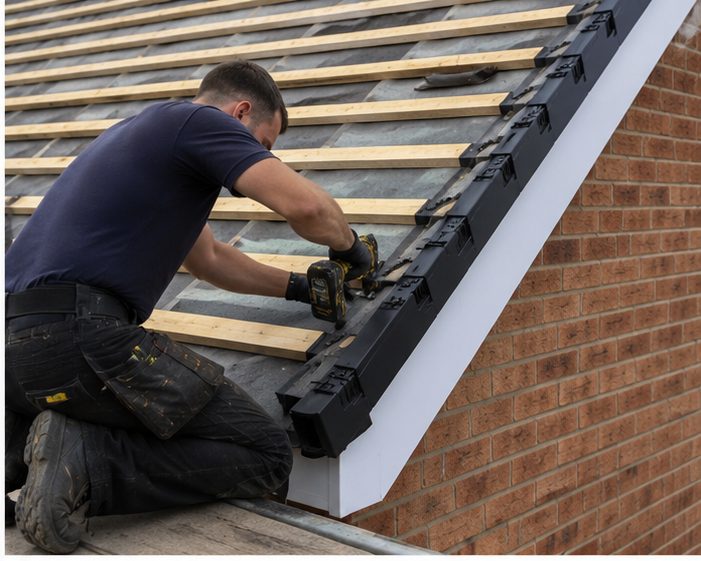
A dry verge presents a continuous, tidy edge, with verge units finishing the tiles and cap or end pieces shaping the ends of the courses. There is no wet mortar line to crack. The result is a neat, even outline that sits quietly along the gable and frames the roof without drawing attention.
Matching the tile and the house
The units come in profiles and colours to suit different tiles, so the new edge should blend with the existing roof. Matching depends on what is on the roof, and compatibility with the tile profile is checked on site. On a period villa we pay attention to how the verge meets the walls and the eaves.
- Colour matched as closely as possible
- Profile compatible with the existing tiles
- Neat meeting of the verge and the fascia
- Clean finish at the ridge and the eaves
Performance in the wind
The edge is held by mechanical fixings, not mortar, so it resists the wind at the gable much better. This matters on exposed roofs where gusts pull at the edge tiles. Birds, insects and weather are kept out of the roof space by the end pieces.
Fixings follow the tile maker's guidance, and we check the batten and the undercloak beneath before fitting anything, so the new edge is fixed to sound timber and holds against the wind for the long term. It is a sturdier, plainer solution than a bed of mortar that has to be repaired again and again.
When it makes sense
A dry verge makes sense where mortar has failed, on a re-roof or as a repair, and where you want a gable edge that stays neat with little attention. It is not a cure for a roof failing elsewhere, and any work may need planning or Building Regulations checks — we advise before work starts.
Frequently Asked Questions
Will a dry verge look modern on a period house?
It looks tidy rather than modern, and the units can be chosen to suit the tile. Many owners find the clean line fits a villa well, but we talk through the finish before work starts.
Does it change the colour of the edge?
The units are made in colours to match common tiles, so the edge should blend in. Some difference is possible with older, weathered tiles, which we point out beforehand so there are no surprises once the work is done.
Is the edge more secure in strong wind?
Yes. Mechanical fixing holds the edge tiles down far better than aged mortar, which is why dry verges suit exposed gables. They still need the roof beneath to be sound, and we check that on site first.
Talk to our team about dry verge systems in The Downs
Every roof is different — the fastest way to get an accurate answer is a quick chat with our team.