
Swapping an old roof window for a new one is often straightforward, but the flashing and the opening decide how neat and watertight it will be.
Roof windows fitted when Bradley Stoke was first built have now been in place a long time. Seals fail, frames tire and leaks begin. Replacing the window is usually possible, and it is often easier than a first-time installation, but the size, the flashing and the state of the surrounding roof still need checking.
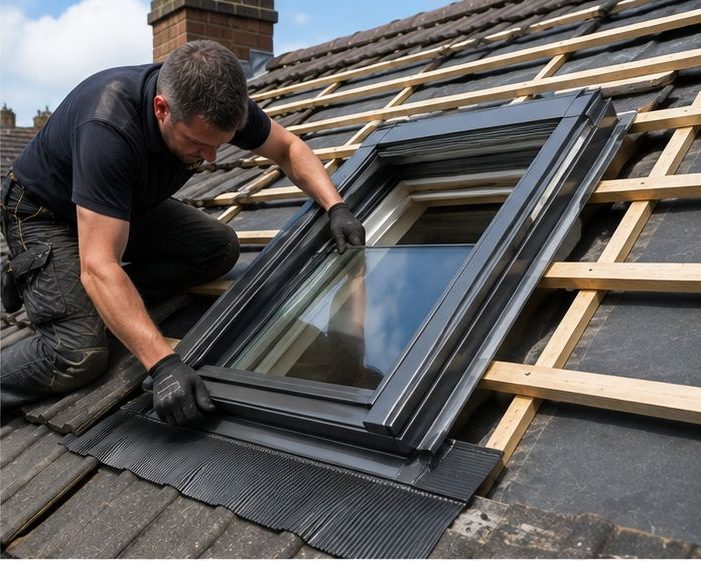
Why replace rather than patch
A misted pane means the sealed unit has failed, and that cannot be repaired from outside. Frames can warp, handles seize and seals perish. If the old window leaks, the cause is more often the flashing, the sealing or the roof covering around it than the glass. We establish which before deciding what to replace.
Windows put in during the original build are now old enough that handles, seals and frames are all tired together, so a replacement often tidies up several small annoyances at once, such as draughts, rattles and condensation on the glass.
Matching the new window to the opening
Many roof windows come in standard sizes, so a new window can often drop into the existing opening, which saves disturbing the structure. If the old window is an unusual size, the opening may need altering, and rafters might need trimming and doubling up. A tape measure in the loft and a look at the old frame tell us a lot.
Where a size match is not possible, we explain the alternatives, including a slightly different size with new flashing. That may mean opening the lining a little wider, or trimming a rafter, and we agree any change with you before the work starts.
- Frame size and fixing points
- Condition of rafters around the opening
- Tile profile and flashing kit needed
- Lining and insulation around the frame
New flashing every time
The flashing is the part that keeps water out, and it should be matched to the roof covering. Reusing a worn kit around a new window defeats the purpose. We fit a fresh flashing kit suited to your tile, lay it properly with the tiles around it, and check the edges that tie in with the rest of the roof.
Inside the loft room
Inside, we check the lining, insulation and vapour control around the opening. Damp patches or mould near an old window can be condensation, not a leak, and a better-sealed new unit can help with that. If the plaster is damaged, it may need making good, which we agree with you in advance.
Questions worth asking
Ask whether the quote includes new flashing, how any size difference will be handled and how the inside will be left. Ask what will be done to protect your loft room while the roof is open. Some alterations may need planning or Building Regulations checks, and we advise before work starts.
Frequently Asked Questions
Do I have to replace the whole window if the glass has misted?
Misting means the sealed glazing unit has failed. Depending on the age and the model, the whole window is usually the more dependable route, because the seals and frame are of a similar age and the flashing is due a look anyway.
Can a new window go in the same hole?
Usually, if it matches the old frame size. Standard sizes help. If the old window is non-standard or the opening is damaged, we adjust the opening or change the size, and explain the effect on the flashing and lining.
Will replacing it stop the leak?
Only if the window was the cause. Leaks are often from flashing, sealing or the surrounding tiles. We investigate before work starts, so the new window is not asked to cope with a fault that sits in the roof.
Talk to our team about VELUX and roof window installation in Bradley Stoke
Every roof is different — the fastest way to get an accurate answer is a quick chat with our team.