
Yes, two roof windows can often sit side by side, but a pair is a bigger opening than it looks. The structure, flashing and finish all need planning together.
A pair of roof windows can flood a loft room with light, and it is a popular choice for older houses and estate homes alike. Henbury has both, so the roof structure varies. Fitting two together is usually possible, but it is a different job from fitting one, and it starts with what is in the roof.
What a pair does to the roof structure
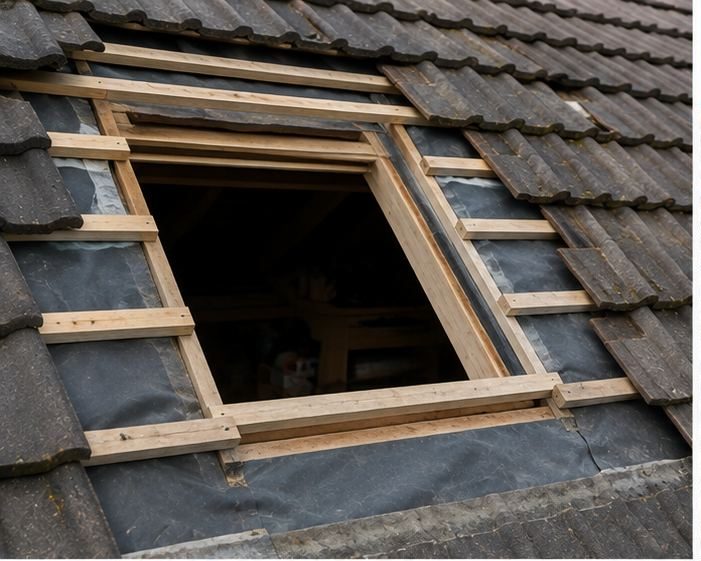
Each window needs an opening cut between rafters. Two windows side by side take out more timber, so rafters may need trimming and doubling up around the opening to carry the load. We look at the spacing, size and condition of the existing timbers in the loft before promising anything. The size and spacing of the timbers in each roof tell us how much strengthening a pair is likely to need.
Matching flashing for the pair
A window is matched to a flashing kit for the type of roof covering. Two windows set together need a combined flashing, or a carefully joined pair, so water cannot sneak between them. This is the detail that decides whether the pair stays dry, so it needs the right kit and careful fitting. Fitting them together neatly, rather than as two separate jobs, is what keeps the join between them watertight.
- Flashing kit chosen for your roof covering
- Joint between the two units sealed and drained
- Tiles cut and dressed neatly to the frames
Spacing, size and what the room needs
The gap between the windows, their height up the slope and the headroom in the room all count. Placed too low and the view is of the floor; too high and the light is wasted. On older houses the roof slope and the ceiling line often limit the choice, so we measure inside as well as out. We can talk through what light you want from the room and how the furniture will sit under the slope, so the pair ends up where it is actually useful.
Lining, insulation and vapour control
The inside is as important as the outside. The opening needs a proper lining, insulation around the frames and vapour control so that warm moist air does not condense on cold surfaces. Skimping here leaves misting, damp reveals and a window that never quite feels right.
Plaster finishes and decoration are usually done afterwards, once the units are in and weathertight. Allow for that when you plan the room, and ask what will be left for you or another trade to finish. Ask what will be left for you or another trade to finish.
- Insulation fitted tight around the frames
- Vapour control sealed at the edges
- Neat lined reveals ready for finishing
Before you decide
Ask for the plan in writing: window sizes, how the rafters will be dealt with, the flashing arrangement and how the work will be protected from rain while the roof is open. Roof windows may need planning or Building Regulations checks — we advise before work starts.
Frequently Asked Questions
Do I need two separate openings or one big one?
That depends on the product and the rafter layout. Some pairs share a single wider opening with a combined flashing, others use two separate openings with a joined flashing. We choose on site after looking at the rafters.
Will two windows make the room colder?
Not if the lining and insulation are done properly. Modern roof windows are well insulated, but the surrounds must be insulated and sealed as well, or you will feel the draughts and see condensation.
Can the second window be added later?
Sometimes, if the first was placed with that in mind. Otherwise the first window's flashing and trim may need altering. It is far easier to plan a pair at the start if you think you will want one.
Talk to our team about VELUX and roof window installation in Henbury
Every roof is different — the fastest way to get an accurate answer is a quick chat with our team.