
The two common roof window types open in different ways, and the right one depends on the room, the pitch and who uses the space. Here is how to choose.
Loft conversions are everywhere in Henleaze, and nearly all of them need decent roof windows. Choosing between centre-pivot and top-hung comes down to headroom, view, reach and how the room is used. Neither is better in every case. This guide describes how each works and how we would decide for a typical Edwardian, inter-war or bungalow loft.
How a centre-pivot opens
A centre-pivot window turns on a hinge about halfway up the sash. The lower half swings outwards and the upper half moves inwards, which lets you reach the outside pane from indoors for cleaning. It works well for lower roof windows, where you can reach the handle at the bottom, and it gives a generous opening for fresh air. Reach, view and ventilation pull in different directions, which is why the choice is personal.
How a top-hung opens
A top-hung window is hinged at the top and opens outwards like a canopy, often with a restricted opening at the base. It gives a better view when seated, and can be placed higher on the slope. The pane is harder to clean from inside, and the opening feels less airy in a small room. Both ends of the sash move, so furniture below matters.
- Hinged at the top and projecting outwards
- Suits higher placement in steeper roofs
- Good for views from a desk or bed
- Cleaning the outer pane is harder
Matching window to room
In a Henleaze loft conversion with a low eaves wall, a centre-pivot lets you reach the handle without standing on furniture. In a bungalow loft or a dormer-style space where the window sits higher, top-hung can give clearer headroom beneath. Pitch matters too, since a very shallow roof can limit how far a sash opens safely. Cleaning and curtain or blind fitting differ too.
Practical points before ordering
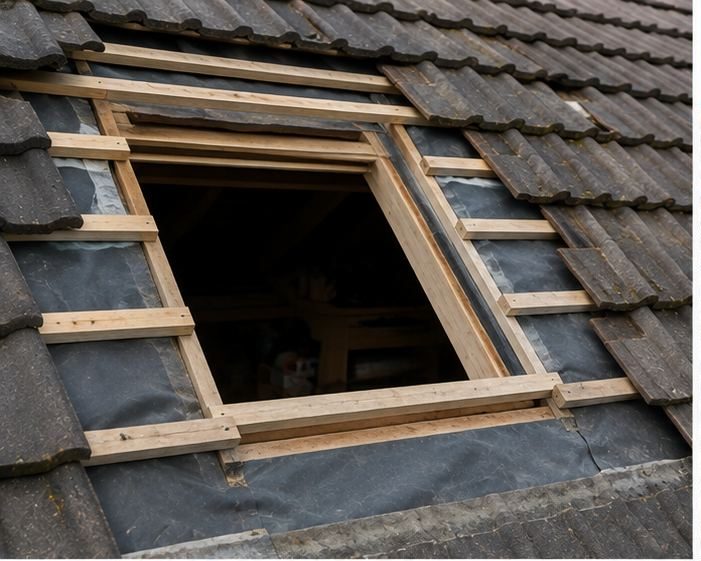
Whichever type is chosen, it must be paired with the right flashing kit for the roof covering. Rafters may need trimming and doubling up, and the opening needs a proper lining, insulation and a vapour control layer to prevent condensation. We measure on site rather than ordering from a drawing, because tiles and rafter spacing vary between houses, and a good fit keeps the window watertight. We note all of this on the written description.
- Roof covering and flashing kit compatibility
- Rafter spacing and structural changes
- Lining, insulation and vapour control
- Reach to handle from inside the room
How we help you decide
We stand in the room, look at floor height, furniture positions and the slope, and talk through how you will use it. Where work may need planning or Building Regulations checks, we advise before work starts. You then get a clear written description naming the window type, size and finishing details. Colours and linings are agreed at the same time.
Frequently Asked Questions
Which type is better for ventilation?
Centre-pivot windows tend to give a wider opening and more airflow when set low enough to reach. Top-hung opens less at the base but can still ventilate well. Room size and position matter more than type alone. Both work well when they suit the room.
Can I swap an old window for a different type?
Often yes, but the new window must fit the existing opening or the rafters adjusted to suit. We check the structure and flashing before agreeing, so you know whether it is a straight swap or more. It depends on the structure.
Are both types fine in a bungalow loft?
Yes. Many bungalow lofts use either, and the choice follows the slope, the height of the sill and how you want to use the room. We recommend based on what we see in the loft itself.
Talk to our team about VELUX and roof window installation in Henleaze
Every roof is different — the fastest way to get an accurate answer is a quick chat with our team.