
Glass is rarely the problem. When a VELUX or similar roof window drips, the cause is usually the flashing, the seals, condensation or the roof around it.
A wet reveal or a drip beside a roof window is alarming, especially in a converted loft you use every day. Across Henleaze, plenty of roof windows were fitted during loft conversions and have aged since. This guide explains the four usual causes, how we tell them apart, and what each fix involves, so you can describe the problem accurately.
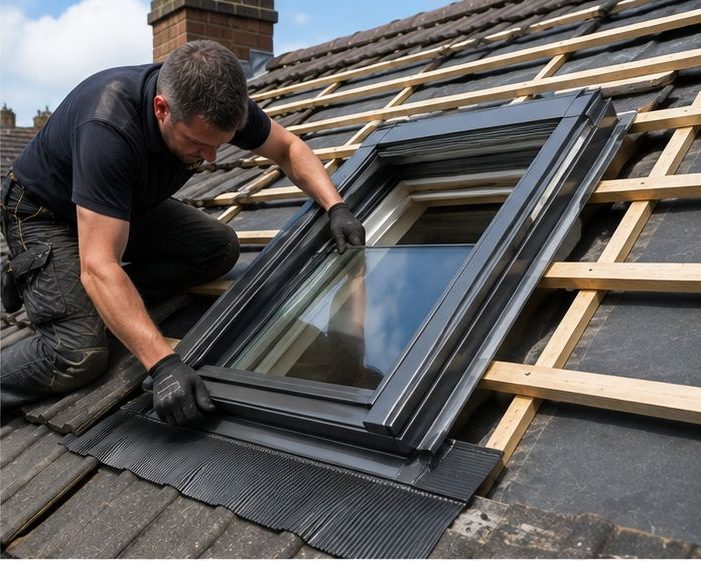
Flashing and installation faults
Every roof window sits in a flashing kit made to suit the roof covering. If the kit was the wrong type, was bent, or the lead and soakers around it have lifted, water gets in beside the frame. This is the most common source, and it often appears after heavy or wind-driven rain, running down the lining before it shows. Clear detail makes tracing it much quicker.
Seals and the sash
Rubber and sealing strips around the sash can perish or sit out of position. Water then passes the seal and runs into the lining. Misting between the panes is a different matter: that points to a failed sealed unit, where moisture has got between the layers of glass and the pane needs replacing rather than repairing.
- Perished or displaced seals or pushed out of position
- Failed sealed unit with misting between panes
- Hinge or catch out of alignment
- Sash that no longer closes tightly
Condensation that looks like a leak
Drips on the inside of the frame in cold weather are often condensation. Warm, damp air from a bathroom or bedroom meets cold glass or frame and runs down. Poor insulation or vapour control around the opening makes it worse. If the drips come on cold mornings and not during rain, this is the likely cause.
The roof covering around the window
Sometimes the window is fine and the surrounding tiles or slates are the problem. A cracked tile above the frame, a gutter piece that has failed or a build-up of leaves can send water into the lining. To help us, note whether it leaks in heavy rain, after wind, or only on cold mornings, and photograph the stain from inside. Do not go out onto the roof to check.
- Cracked or slipped tiles above the window
- Debris collecting on the upper flashing
- Damaged lead apron below the frame
What we do
We inspect the lining, the frame and the flashing from safe access, and test where we can. Repairs range from refitting flashings and seals to replacing the sash or the whole window, and renewing insulation and vapour control. We explain the cause and the fix. Where work may need planning or Building Regulations checks, we advise before work starts.
Frequently Asked Questions
Is my leaking VELUX window past repair?
Not usually. Most leaks come from flashing, seals or the roof around the window, all of which can be fixed. Replacement makes sense when the frame is damaged, the glass has failed or the window is very old.
How do I tell condensation from a leak?
A leak shows up during or after rain, often with staining on the lining. Condensation appears on cold mornings, is on the inside surfaces, and clears when the room warms up. Photos and timing notes help us tell them apart.
Why is there moisture between the panes?
That means the sealed unit has failed and the gap between the glass layers is no longer closed. It cannot be wiped away. The pane or the whole window needs replacing, but it is usually not a roof leak.
Talk to our team about VELUX and roof window installation in Henleaze
Every roof is different — the fastest way to get an accurate answer is a quick chat with our team.