
The two common roof window types open differently and suit different rooms. This guide compares them for tall terraced houses and tight loft spaces, and covers what we check before choosing one.
Choosing a roof window is mostly about how you want to use the room. A centre-pivot turns on a central axis, while a top-hung swings outwards from a hinge at the head. On a terrace with a steep roof and a narrow loft, the difference shows up in headroom, view and ease of cleaning.
How a centre-pivot opens
A centre-pivot window rotates around a pivot point near the middle of the frame. You hold the handle at the top and tilt the sash, so the lower half moves into the room while the upper half goes outside. It is a familiar and compact design. The sash can usually be turned right round for cleaning the outer glass from inside, which is handy where outside access is awkward.
How a top-hung opens
A top-hung window is hinged at the top, with the handle at the bottom, and the sash swings outward and upward like an awning. This gives a wider opening at the lower edge, which makes it easier to lean out slightly and see over the roof. It suits positions where the window sits lower on the slope and you want a clear view and a good flow of air.
- Centre-pivot: handle at the top, sash rotates
- Top-hung: handle at the bottom, sash lifts outward
- Centre-pivot suits high positions on the slope
- Top-hung suits lower positions and views
What the room tells us
Fitting depends on the pitch, the room height and where the furniture goes. A bed beneath the window, or a desk, changes what you want to reach. Tall terraces often have a steep roof, which gives more headroom near the window than a shallow-pitched one does. We look at where you stand when you open it and choose accordingly.
What we check on the roof side
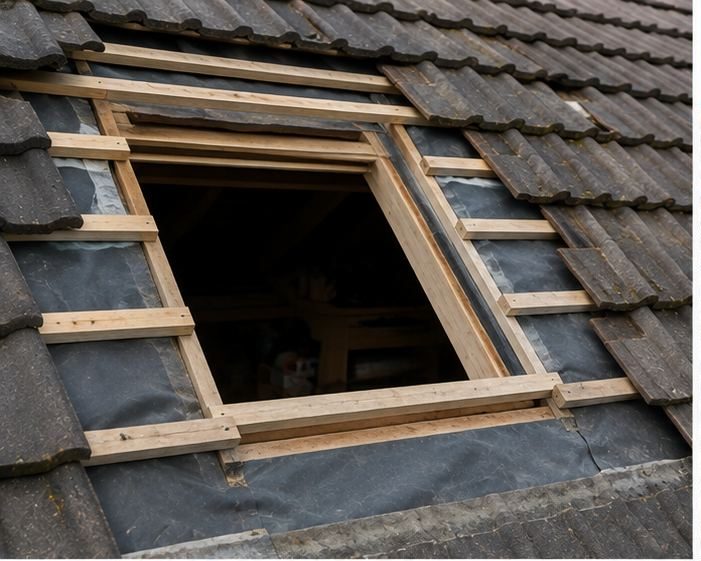
Whichever type is chosen, the window is matched to a flashing kit for the roof covering, because slate, plain tile and larger concrete tile all need different details. Rafters may need trimming and doubling up around the opening, and the lining and vapour control around it need to be done neatly. A good fit is as much about the flashing and the lining as the window itself.
Questions to settle before ordering
Think about who will open it and how often, whether you need a view while sitting, and how much you value being able to clean it from inside. Also consider blinds and curtains, since the way the sash moves changes how those hang. Planning rules or Building Regulations checks may apply in some cases, and we advise before work starts.
Frequently Asked Questions
Is a top-hung window better for a bedroom?
It can be, particularly if you want a view or more air at the lower edge. A centre-pivot is just as good for letting in light and ventilation. The better choice depends on the position of the window and how you use the room.
Can I swap one type for the other when replacing an old window?
Often yes, but the frame sizes and flashing kits differ, so we check the opening and the roof covering first. In some cases the opening needs minor adjustments, which we explain before ordering anything.
Do both types leak less than the other?
Neither is more likely to leak if it is fitted with the right flashing and sealed properly. Problems usually come from the surrounding flashing or the roof covering, not the type of opening. Correct fitting matters more than choosing between them.
Talk to our team about VELUX and roof window installation in Lawrence Hill
Every roof is different — the fastest way to get an accurate answer is a quick chat with our team.