
Both types give light and air, but they open differently and behave differently in wind. This guide compares them for post-war semis and bungalows, and shows what decides the right choice.
Post-war homes in Lawrence Weston often have a loft or a dark upstairs landing that would benefit from a roof window. The two common types are centre-pivot and top-hung. They look similar from the outside but open in different ways, and on exposed ground that difference is worth understanding.
The centre-pivot
A centre-pivot window turns around a central axis. You push the sash from the top, and it rotates so the bottom swings in while the top swings out. In wind, a well-fitted sash sits flat to the roof when closed, and the compact movement is easy to control. The sash can also be rotated to clean the outer pane from inside, a real advantage when you cannot reach the roof.
Think about which side of the house the window faces as well. A window on the side the weather arrives from sees more wind and rain, so careful fitting and a sensible choice of opening matter more there, as does a decent stay.
The top-hung
A top-hung window is hinged along its upper edge, with the handle at the bottom. It swings outward and upward, opening a wide gap at the base. This suits positions where you want a view, or fresh air at a lower height. In gusty conditions, the open sash catches the wind, so a stay or a restrictor is worth having.
- Centre-pivot: rotates on a central axis, compact movement
- Top-hung: hinged at the head, opens outward
- Centre-pivot is easier to clean from inside
- Top-hung gives a better view when open
Which suits which room
In a bedroom under a steep slope, a centre-pivot placed high will light the room well without needing to lean over a bed. For a landing or stair, either works. For a low position where you stand and look out, top-hung is usually more comfortable. Bungalow lofts with a lower ceiling often benefit from the extra clearance a top-hung gives.
What stays the same
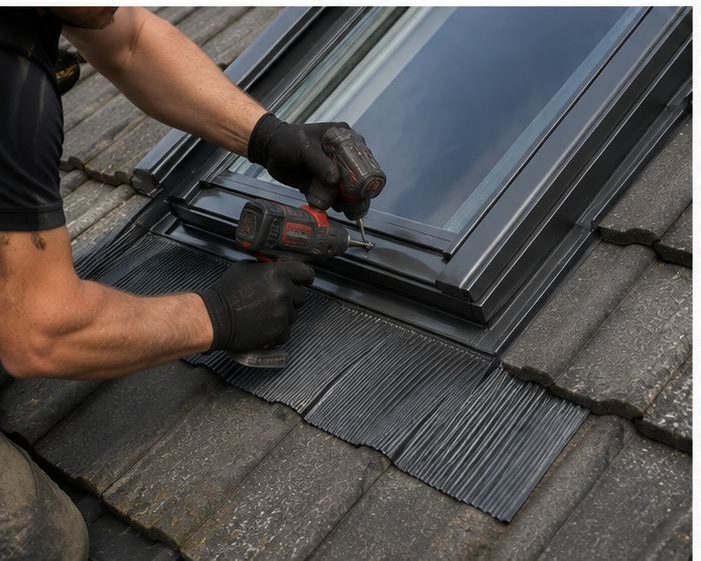
Neither type removes the need for the right flashing kit for your roof covering. Concrete tiles need a flashing designed for them, and the opening must be framed properly with rafters trimmed and doubled where needed, and a good lining with insulation and vapour control. Those details decide whether it stays dry, more than the style of opening.
Practical points to settle
Think about blinds, reach, security and how often you open it. Also consider that wind off open ground can push on an open sash. We will go through the choice with you after seeing the room and the roof. Planning or Building Regulations checks may apply in some cases, and we advise before work starts.
Frequently Asked Questions
Which type is better in windy areas?
Both are made for weather, and both are secure when closed. A centre-pivot is a little less exposed when open, because less of the sash projects. Either can be fitted with restrictors if you like to leave it ajar.
Can I fit one in a roof with concrete tiles?
Yes. The window is matched to a flashing kit designed for the roof covering, so concrete tile roofs are well catered for. We check the tile profile on site and confirm which kit applies.
Does a top-hung window need more headroom?
Slightly more in front of the window, because the sash opens outward from the bottom. Rooms with very low walls beneath the window may suit a centre-pivot better. We measure the space and advise on what will be comfortable.
Talk to our team about VELUX and roof window installation in Lawrence Weston
Every roof is different — the fastest way to get an accurate answer is a quick chat with our team.