
A roof window brings light in from above, which is often stronger than a wall window of the same size. How much it adds depends on size, position and the room itself.
Many Filton homes have loft space under hipped roofs, from inter-war semis to post-war houses and bungalows. Turning that space into a bright room often rests on roof windows. Light is the main reason people want them, so it is worth understanding how much a window will add and what changes the result.
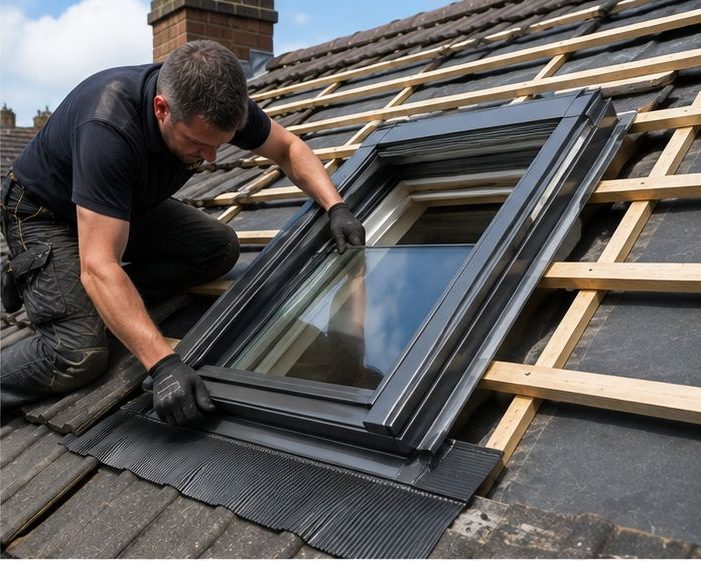
Why roof windows give strong light
A window in the slope looks at the open sky, not at the side of a wall or a neighbouring house. Daylight enters from above and spreads across the room. As a result, a roof window usually gives more light than a vertical window of the same glass area, especially in rooms with small or no wall windows.
Size and number
Larger windows give more light, but size has to suit the rafter spacing and the roof structure. Two smaller windows can light a room more evenly than one large one, and can be easier to fit between rafters. The room's floor area decides how much glass you need. We measure the room and the roof and talk through the options. Spacing the windows also helps with ventilation.
- One larger window for a broad bright area
- Two smaller windows for even light
- Positioning high on the slope for deep rooms
- Matching size to rafter spacing
Position and pitch
A window placed high in the slope lets light reach deep into the room. One set low gives a view out but less spread. The pitch of the roof changes the angle at which light enters. On a hipped roof the hip slope can hold a window too, which can bring light to a corner that a gable window cannot. Hips can hold a window too.
What else affects daylight
Surrounding trees, neighbouring buildings, the direction the roof faces and the colour of the walls inside all change how bright the room feels. Lining and splayed reveals around the window help spread light into the room. Blinds control glare and heat, and are worth planning in from the start. Light colours on the walls and ceiling make a visible difference.
Beyond light
A window brings ventilation and a view as well. It also needs a proper flashing kit matched to the roof covering, with rafters trimmed and doubled, plus lining, insulation and vapour control. Fitting a new opening may need planning or Building Regulations checks — we advise before work starts.
A quick sketch of the room, with furniture marked, helps us place the window where the light is most useful. We can then explain the structural work involved, so the result looks right, works from the first day and fits within what the roof structure can take.
Frequently Asked Questions
Is a roof window brighter than a wall window?
Generally yes, because it faces the sky. For the same glass size it usually lets in more light, and spreads it further across the room. Rooms with small wall windows notice the biggest change.
Will more than one window help?
Often. Two windows set apart give a more even spread and let you ventilate better. We look at your rafters and the room layout and suggest what fits. We help you work out placement.
Can I add a roof window to a bungalow loft?
In many cases yes, if there is usable roof space. The window sits in the slope and the room is lined to suit. We assess the roof, the structure and the access before advising.
Talk to our team about VELUX and roof window installation in Filton
Every roof is different — the fastest way to get an accurate answer is a quick chat with our team.