
A roof window can transform a dark loft room, but how much light it brings depends on size, pitch, position and what is around it. We explain what matters.
Loft rooms in Hillfields semis and short terraces are often dim, with small gable windows or none at all. A roof window sits in the slope and catches light from the open sky, which is stronger than light through a wall window. How much it adds depends on several things we can talk through before any work starts, so you pick sensibly.
Why roof windows give more light
A window in the roof faces the sky instead of a neighbouring wall or fence. That means it receives light from overhead, which spreads further into the room. Even a modest window can brighten a whole loft space, especially where there is no other opening. We prefer to talk about brightness in plain terms, rather than quote numbers. That alone often settles the question for a dark room.
What affects how much light arrives
The size of the window and the number of them matter most. Position on the slope, the direction the roof faces, shade from nearby buildings or trees, and the pitch of the roof also play a part. A south or west slope usually brings more light than a north one. The lining around the opening makes a difference too. A wide, light-coloured splay bounces light into the room rather than absorbing it. We look at the room before suggesting a size.
- Window size and number of windows
- Which way the roof slope faces
- Nearby buildings and trees casting shade
- Splay and colour of the lining around the opening
Placement in a Hillfields home
On a typical semi, one window in each side of a loft room gives balanced light. On a terrace, a window on the rear slope may be the only choice. Higher placement lets light fall deep into the room, while lower placement gives a view. We look at where beds, desks and furniture will go before marking the opening. Furniture drives much of this decision.
Glazing and blinds
Glazing choices affect light and warmth: clear glass keeps the room bright, while certain finishes cut glare. Blinds let you adjust the light on sunny days. Good insulation and vapour control around the frame also keep the opening comfortable and dry, so condensation does not spoil the room. These small choices shape how the room feels day to day.
What the work involves
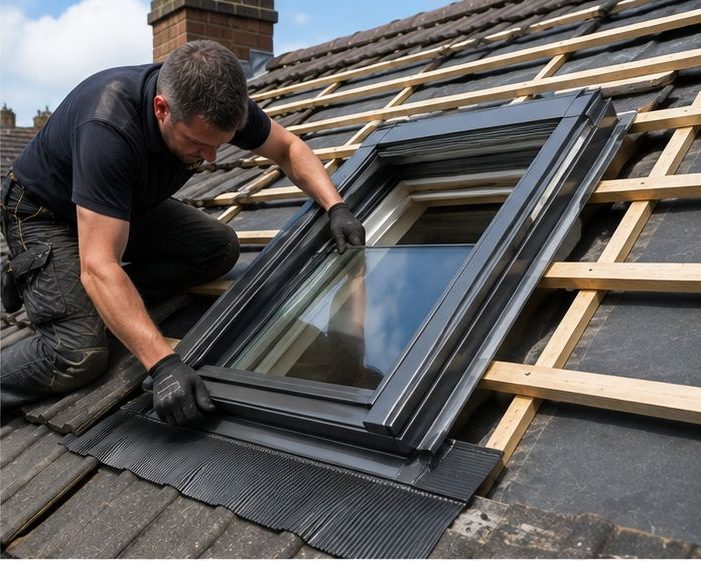
Fitting a roof window means cutting the opening, trimming and doubling up rafters if needed, fitting the right flashing kit for the roof covering, and lining and insulating inside. Where work may need planning or Building Regulations checks, we advise before work starts. We measure on site before ordering. A site visit comes before any order is placed.
Frequently Asked Questions
Can a roof window light a room with no other windows?
Yes. Many loft rooms depend on roof windows alone. Size and number are chosen so the room feels bright and has enough ventilation, and we talk through what suits the space. We advise on size to suit your room.
Does a north-facing roof window still help?
It does, though the light is softer and more even than from other directions. For a bedroom or study that can be ideal, as it avoids harsh glare and strong sun. Light changes through the day.
Will more than one window make the room too hot?
Rooms in the roof can warm up in summer, so glazing choices, blinds and ventilation matter. Opening windows on opposite slopes helps air move through. We discuss shading as well as light. Good ventilation makes a real difference.
Talk to our team about VELUX and roof window installation in Hillfields
Every roof is different — the fastest way to get an accurate answer is a quick chat with our team.