
Replacing a roofline is a tidy sequence of jobs, and knowing the order helps you plan around it. This is what happens on a typical Hillfields semi or terrace.
Fascia and soffit replacement is one of the most visible improvements you can make to a house, and on the inter-war and post-war semis and short terraces of Hillfields it often takes a few days. Here is what the work involves, from access to the final tidy, and what we check along the way so the new roofline lasts.
Access first
The roofline sits at the eaves, so safe access comes before anything else. Scaffold is normally put up along the front and back, and on a terrace or semi it may need to cross shared boundaries, which we talk through beforehand. Garages with low roofs may need less, but the principle is the same. Clear scaffold access also means the work is done safely and carefully.
Removing the old roofline
The old gutters come off first, followed by the fascias and soffits. As boards are taken away, we inspect the rafter ends, wall plate and eaves. Damp or decayed timber is treated or repaired before anything new goes on. On older homes, we check what existing soffit boards are made of before disturbing them, and take the right precautions. Nothing new is fitted until the timber behind is sound.
- Gutters and downpipes removed and set aside for disposal
- Old boards taken off carefully
- Rafter ends inspected for damp or rot
- Eaves cleared of debris and nests
Fitting the new boards
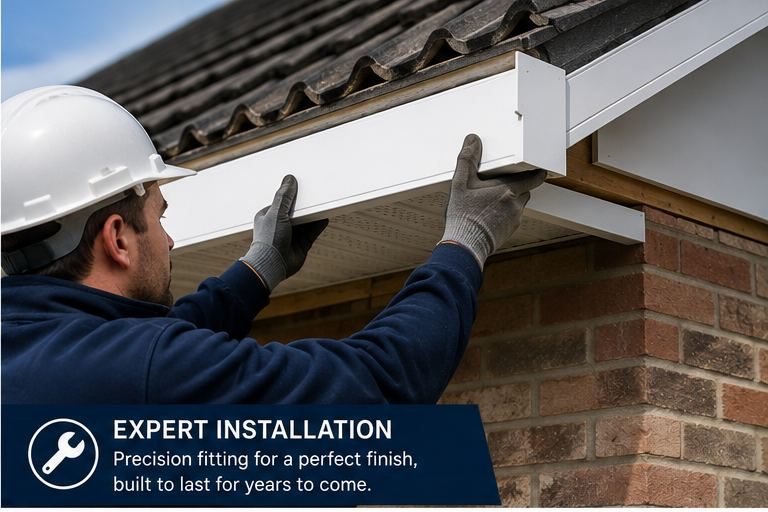
New fascia boards are fixed across the rafter ends, level and tight to the roof edge. Soffits close the underside, with vented boards or vent strips so the roof space can breathe. Bargeboards at gable ends are done in the same style. Joints are neat and trims finish the corners. UPVC is very low maintenance and needs cleaning, not painting. Fixings are chosen to suit the rafters and the board type.
Gutters and finishes
New gutters and downpipes go on once the boards are fixed, set to the right fall and joined securely. We discuss white, darker or wood-effect finishes in advance so the roofline suits the house. On a short terrace the colour should sit well with neighbours, though the choice is yours. Downpipes are checked for flow at the same time.
Tidying and checking
At the end we check gutter joints with water, make sure vents are clear, and remove scaffold, old boards and debris. Where work may need planning or Building Regulations checks, we advise before work starts. Ask for a written description that lists boards, soffits, vents, gutters and finishes. A tidy site at the end matters to us.
Frequently Asked Questions
How long does a fascia and soffit job take?
It depends on the size of the house, the amount of rot found and the weather, so we do not give a fixed figure. We tell you what the job involves and agree a plan before the scaffold goes up. That keeps expectations realistic.
Do I need to be at home?
Not for much of it. We need access to the property for some checks and for water or power if required, and we will talk through arrangements beforehand. Garages and side access should be kept clear.
Will you replace the gutters too?
Usually yes, since gutters are fixed to the fascia and have to come off. New gutters match the new boards. If your existing gutters are sound, we can discuss refitting them, but fresh ones normally make sense.
Talk to our team about UPVC fascias and soffits in Hillfields
Every roof is different — the fastest way to get an accurate answer is a quick chat with our team.