
Misting on a roof window has two very different causes: moisture inside the glass unit, or condensation on the room side. One needs a new unit, the other needs better air movement.
A roof window that clouds over is annoying, particularly in a loft bedroom or a landing where it is the main source of light. Frenchay homes range from older cottages with converted lofts to modern estate houses with roof windows in the slope. The first job is finding out which kind of mist you have.
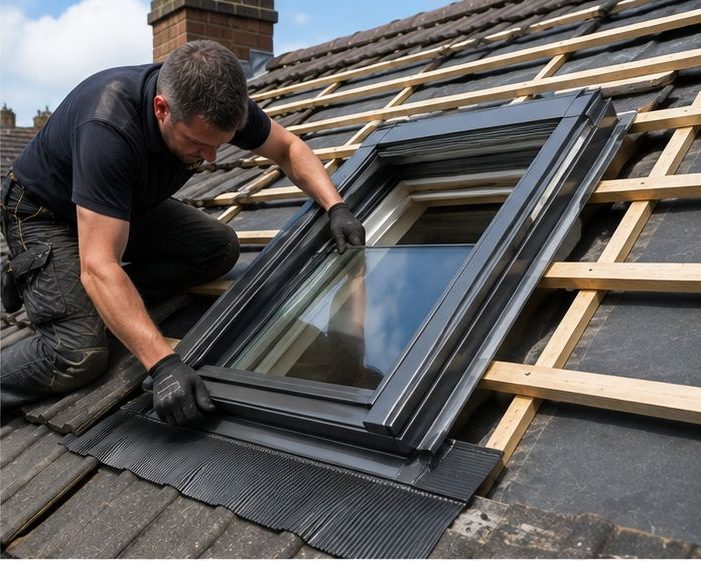
Which side is the mist on?
Wipe the glass on the room side. If the mist wipes away and returns after a cold night, it is condensation from the room air. If it stays, and sits between the panes where you cannot touch it, the sealed unit has failed and moisture has got into the gap. The two are separate problems with separate fixes.
Older roof windows in converted lofts, which are common in cottages and larger houses, may also have frames and seals that have aged along with the glass. In that case, replacing the whole window can make better sense than renewing one part of it.
Failed sealed units
A double-glazed unit is sealed at the edges to keep dry air between the panes. When the seal fails, damp air creeps in, leaving a permanent haze or water marks that cleaning cannot reach. This shows more strongly on cold mornings. We check it carefully.
The cure is a replacement glazed unit, or sometimes a replacement window if the frame is old. The old glass cannot be dried out and re-sealed to a good standard. Replacing the unit is a short job once the part is made to fit.
Condensation on the room side
Warm, moist air from cooking, bathing and drying clothes meets the cold glass and turns to water. Roof windows in bedrooms and bathrooms are especially prone, as is any room with little ventilation. Poor insulation around the frame makes the glass colder and the problem worse.
A window that mists only in the coldest weather is usually telling you about humidity, while one that stays misted in all conditions points to the sealed unit. Noting when it happens helps us diagnose it quickly and avoid unnecessary work.
- Opening the window or its vent briefly each day
- Extractor fans working in kitchens and bathrooms
- Lining and insulation intact around the opening
- Not drying washing in the same room
When it is the flashing, not the glass
Sometimes what looks like misting is dampness from a leaking flashing or a failed seal at the frame, with water finding its way inside the lining. If you see staining on the reveal, damp timber or drips, the roof covering around the window may be involved. We check both the window and what surrounds it.
What we do about it
We look at the unit, the frame, the flashing, the lining and the room's ventilation, and tell you which of them is to blame. Replacing a sealed unit, resealing, improving insulation or adding ventilation can each be the right answer. We explain the reason, so you do not pay for a repair that was not the problem.
Frequently Asked Questions
Can a misted unit be fixed without replacing it?
Cleaning does not work because the moisture is sealed inside. The unit or window normally needs replacing, though we check first that it really is a failed seal and not just condensation. We check which it is first.
Does condensation mean the window is faulty?
Not necessarily. Condensation on the room-side glass is usually about humidity and ventilation. If it keeps happening, better airflow, a warmer room and good insulation around the frame often help. Airflow often solves it.
Could the roof around the window be leaking?
Yes, it can be. Leaks at roof windows usually come from the flashing, sealing, condensation or the surrounding covering, and rarely the glass. We inspect the opening and the roof together to be sure.
Talk to our team about VELUX and roof window installation in Frenchay
Every roof is different — the fastest way to get an accurate answer is a quick chat with our team.