
A dry verge is not only for new roofs. In many cases it can replace failed mortar on a roof that is already standing. This guide covers when it works and what is checked first on a Portishead home.
Where a gable roof meets the open air, the traditional mortar edge takes a battering. Near the estuary, wind and salt make cracked, crumbling verges a common sight. The good news is that a dry verge can often be fitted without redoing the whole roof. Here is what that depends on.
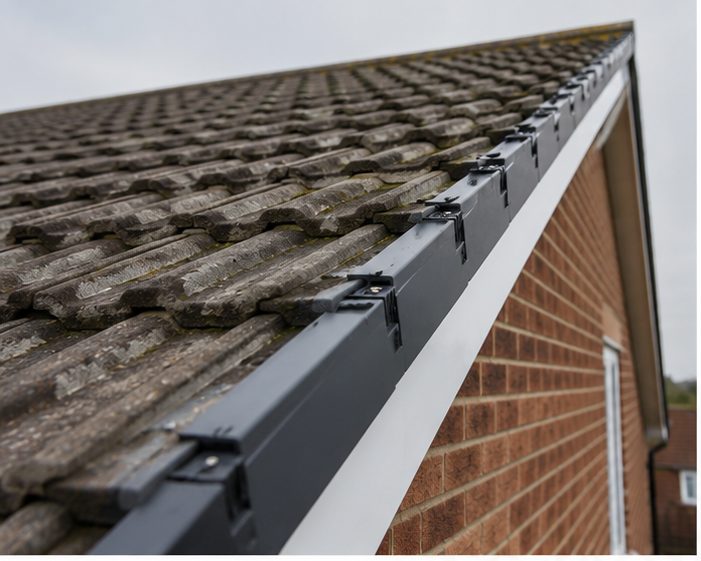
What changes on an existing roof
On an existing roof, the old mortar and any loose tiles along the gable edge are removed. Dry verge units are then fixed along the edge with tile-end and cap pieces, held mechanically rather than bedded in wet mortar. The rest of the roof is left as it is.
Because the existing tiles stay in place, disruption is modest compared with a full re-roof. Access to the gable is arranged first, and the old verge is taken off in sections, so the roof is never left open to the rain for long while the new units go on.
The tile profile is the main question
Dry verge units are made to suit particular tile shapes. Whether one fits your roof depends on the profile of the tiles, and whether the roof edge has the overhang and support it needs. We check that on site and tell you if a particular system suits or not.
Condition of the edge matters
Fitting a new verge to a poor edge simply moves the problem. We look at the tiles and battens nearest the gable, the state of the felt and the bargeboard or wall below. Any rotten batten or broken tile at the edge is dealt with first so the units sit firmly.
If the edge has already let water in, you may find damp bargeboards or soft battens beneath. We point these out as we go rather than hiding them under a tidy new finish, and we explain what is needed before the edge is closed up again.
- Cracked or missing tiles along the gable edge
- Rotten or loose battens under the verge
- Damp or damaged bargeboards and eaves
- Mortar falling onto paths or the drive
What it will and will not fix
A dry verge gives better wind resistance at the roof edge, leaves no mortar to crack and helps keep weather, birds and insects out. It is not a cure for a roof failing elsewhere, such as slipped tiles on the main slope. We tell you honestly when the wider roof is the real concern.
Fixing and planning
Units are fixed according to the tile maker's guidance. Work like this may need planning or Building Regulations checks — we advise before work starts. Ask for a written description of what will be removed, what will be fitted and how the edge will be finished.
Frequently Asked Questions
How do I know if my verge mortar has failed?
Pieces of mortar on paths or the drive are the typical first sign. From the ground you may also see cracks, gaps or a verge that looks uneven. Ring us for a proper look rather than going up yourself.
Can a dry verge be fitted to just one gable?
Yes. It is often done as a repair on whichever gable edge has failed. We check the tile profile on each side, as different roof slopes sometimes need different treatment, and we explain what we find.
Will a dry verge look very different?
It gives a cleaner, more modern edge with the tile-end finish rather than a mortar line. The units come in colours matched to common tiles. We can show you options before work starts.
Talk to our team about dry verge systems in Portishead
Every roof is different — the fastest way to get an accurate answer is a quick chat with our team.