
A dry verge replaces the mortar strip at a gable with a neat, even edge. For Filton's older houses the change can be striking, so it helps to know what you will see.
Many Filton houses have gable ends, on inter-war semis, post-war terraces and newer infill alike. The verge, the edge of the roof where it meets the gable, is one of the first things the eye picks up. A dry verge changes how that edge looks. Here is what to expect, and what to think about before deciding.
The old mortar edge
A traditional verge has a ribbon of mortar along the edge, sitting on the end tiles and pointing up to the gable. Over time it weathers unevenly, cracks, stains and loses pieces. On a street of similar houses the difference between one tidy edge and one broken one is easy to see from the pavement, and it tends to age the whole house.
What a dry verge looks like
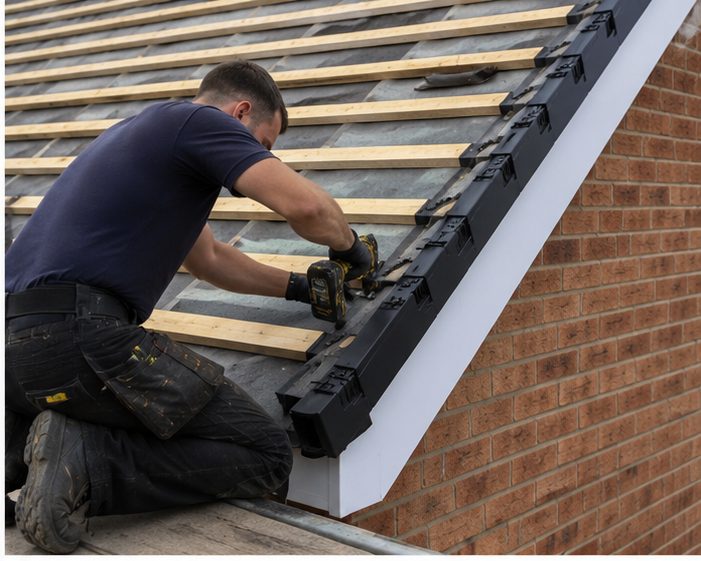
Instead of mortar, a dry verge has moulded units that run along the edge in a straight, continuous line. Tile-end pieces and caps finish the top and bottom. The edge looks crisper and more regular, with a shadow line that gives a defined finish. There are no crumbling patches or pointing to colour match. On a gable that has been through many repairs, the effect can be quite a change.
- A straight, even line along the gable
- Crisp edge with a defined shadow
- No patched or mismatched mortar
- Tidy finish at the ridge and eaves
Colour and profile
The units come in colours that suit common tiles, so the edge sits well with the rest of the roof. Whether a particular unit works depends on the tile profile, which we check on site. Where tiles have weathered, a new edge in a standard colour may look slightly fresher than the surrounding field of tiles for a while.
Looks versus function
The tidier look is a bonus. The real gain is that the edge is held down mechanically and there is no mortar to fall off, so it is better against wind and keeps weather, birds and insects out. We do not recommend the system just for appearance if other roof faults need dealing with first.
What to think about before you decide
Look at the gable from the street and note the edge. Check for mortar on the ground below. Ask us how the finished edge would look on your tiles and what else the roof needs. Changes to the appearance of a roof may need planning or Building Regulations checks — we advise before work starts.
Colour and finish are worth settling before work starts. A short conversation about the tiles you already have, and how the new units will sit beside them, avoids any surprise or disappointment when the scaffold comes down and the edge is on show to the whole street.
Frequently Asked Questions
Will a dry verge look out of place on an older house?
Usually not. The units are designed to follow the line of the tiles, and on a house with a failing mortar edge the result generally looks neater. We explain how it will look on your roof before agreeing the work.
Does the colour of the units match my tiles?
Units come in several colours made to suit common tile types. We match as closely as we can on site, and tell you if the match will be slightly different from weathered tiles. Ask to see the colour options on site.
Can I keep the mortar look but have it last?
A mortar verge can be rebedded, but it will crack again over time. If you prefer the traditional look we can discuss it, and explain how it compares with a mechanical system. We are happy to talk it through on site.
Talk to our team about dry verge systems in Filton
Every roof is different — the fastest way to get an accurate answer is a quick chat with our team.