Dry Verge Repairs on Filton Roofs
Hipped roofs have fewer verges than gabled ones, but many Filton houses mix both, with a gable on one side or at the front. Those exposed gable ends are where the mortar verge shows its age first. Mortar crumbs on a drive or a ragged line of end tiles are the usual giveaways at these gables.
Filton's wide streets leave houses open to the wind, and an edge held only by old mortar can loosen under repeated gusts. A fixed system resists lifting far better at the edge, which is why it suits an exposed gable. That is why we look at the edge closely before suggesting a fix, rather than guessing from the street.
Houses of different eras here have different tile profiles, and the correct verge unit depends on the profile. We check the tiles on site before agreeing the system, and fix everything following the tile maker's guidance so the edge sits properly. If a part does not suit the tile, we say so plainly and offer the nearest workable alternative.
Dry Verge Work in Filton
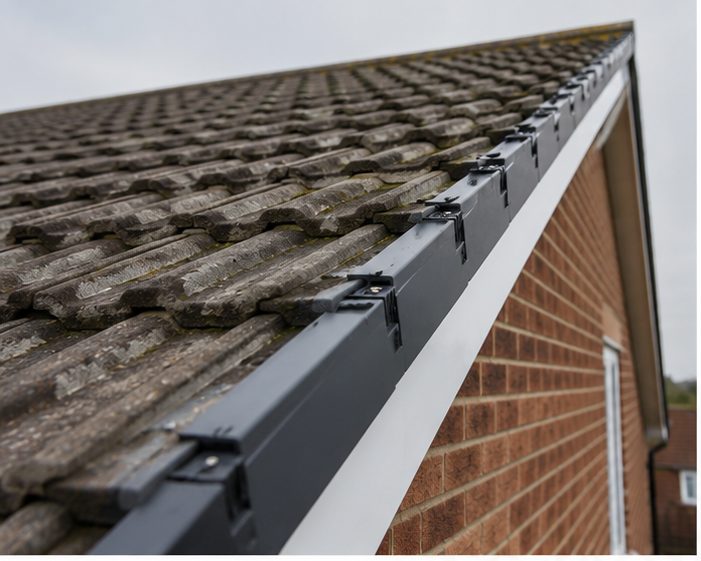
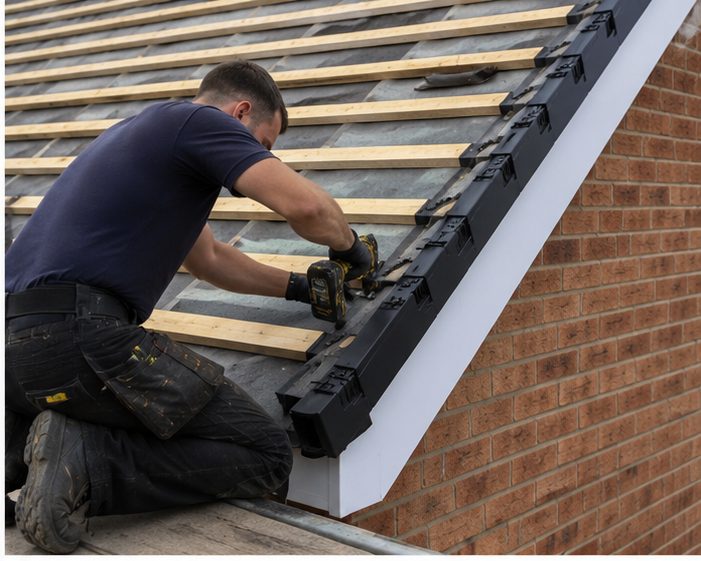
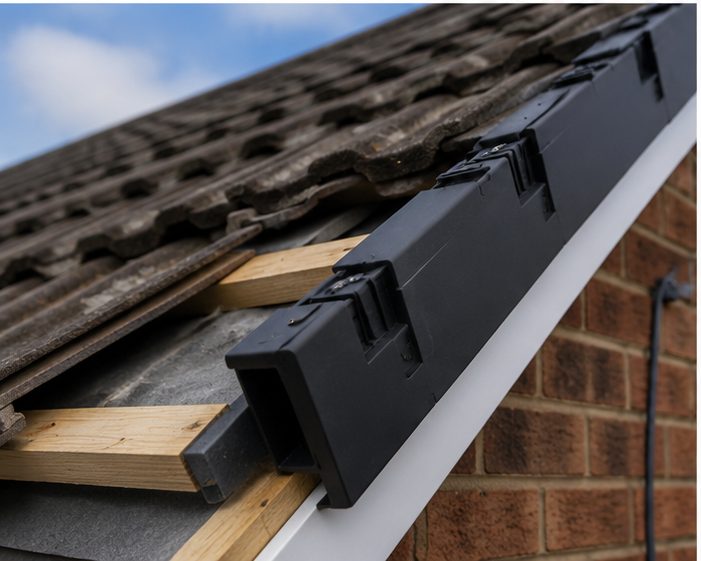
- Dry verge repair after mortar failure. Removing crumbled mortar from a gable edge and fitting dry verge units, so the end tiles are secure and the roof edge is closed.
- Dry verge as part of a re-roof. Building the fixed verge into a new or re-laid roof, so the gable edge never relies on wet mortar from the start.
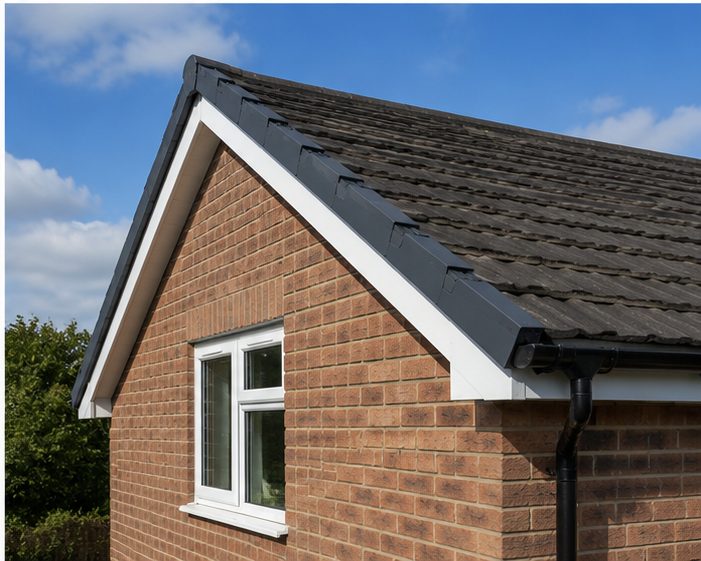
- Gable ends on mixed hipped roofs. Treating the individual gable edges found on otherwise hipped Filton houses, where the verge sees the most wind and rain.
- Tile-end and cap pieces. Fitting matching tile-end and cap pieces along the verge for a neat finish that also closes the edge against the weather.
- Closing gaps to birds and insects. Sealing the open roof edge where mortar has dropped away, so birds, insects and driven rain cannot get inside.
- Checks on ridge ends and top courses. Looking at the ridge end, the top course and the flashings beside a verge, so that a dry verge sits on a sound roof.
How We Fit Dry Verges in Filton
We start by looking at the gable edge from the ground: mortar on the path, tilting end tiles, gaps at the edge. Then we check the tile profile to see whether a dry verge system will fit, since the match depends on the shape of the tile in front of us.
Gable work needs safe access, usually scaffold, which we plan with you. Units are fixed according to the tile maker's guidance. A dry verge is not a cure for a roof failing elsewhere, so we tell you plainly if we notice other faults along the edge. Nothing is ordered until you agree.