
A dry verge replaces the lumpy line of mortar at a gable with a crisp, even edge. Here is what that does to the look of the house and what to expect.
On the semis and short terraces of Hillfields, the gable edge is one of the first things you see from the street. Old mortar verges stain, crack and fall away, and make a house look worn. A dry verge changes that edge into a straight, clean line. This guide describes how it looks, what choices you have, and how it ages.
The old mortar edge
A traditional verge has a ribbon of mortar pointed along the top of the gable wall. After a few seasons it cracks, darkens with algae and drops crumbs onto the path below. Hand-pointing is never perfectly even, so the line wobbles. On a row of similar houses that unevenness stands out, especially against neighbours with tidier edges. Compared with a hand-pointed edge, the difference is clear from the pavement.
What the dry verge looks like
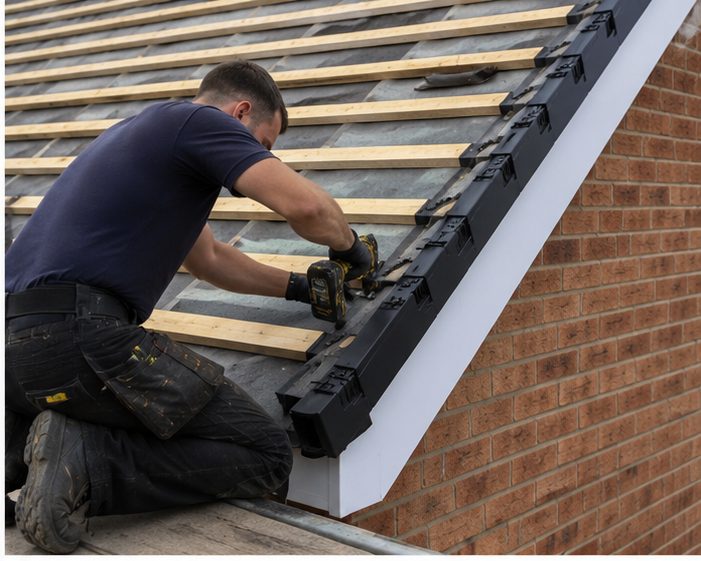
The dry verge uses factory-made units and cap pieces that follow the tile line. The edge is a straight, uniform strip, with tile-end pieces matching each course and neat ridge-end caps. Because there is no mortar, there are no wet patches or stains running down the gable, and the finish stays consistent from top to bottom of the slope. The pieces are made to a set size, which is why they line up so well.
- Clean, straight line along the gable edge
- Matching end pieces on every course
- Tidy ridge-end cap at the top
- No mortar stains running down the brickwork
Colour and finish
Verge units come in colours chosen to suit the tiles, so they blend rather than shout. Grey, brown and terracotta tones are common. We choose by laying a sample against the tiles on site, in the light your house gets. A good match makes the edge look original, while a poor match looks like an add-on. Some owners ask for a darker edge to frame the roof, and that works too.
How the edge ages
A dry verge does not crack or crumble, so it keeps its shape. Rain still leaves some dirt, and a wash from the ground with a soft brush and hose is enough. It needs no repointing. On a hillside, where wind and rain are strong, a firm edge also stays looking right after bad weather. A little algae on the surface is normal and washes off.
Setting expectations
A dry verge improves the line of the roof edge, but it does not hide faults elsewhere. If tiles are slipping or the barge board is rotten, we say so. It is checked on site that the tile profile is compatible. Where work may need planning or Building Regulations checks, we advise before work starts. We would rather you knew the limits than expected a miracle.
Frequently Asked Questions
Will a dry verge match my existing tiles?
We choose a colour that sits well with your tiles by testing samples on the roof. A close match is usually possible, though old, weathered tiles can differ a little from new units, which soften in appearance over time. Sample pieces are held against your tiles first.
Does a dry verge change the roof pitch or shape?
No. It follows the existing line of the roof. What changes is the finish at the edge, which becomes straight and consistent instead of a hand-pointed mortar strip. Neighbouring houses are unaffected. It simply refinishes the edge, so the house keeps its familiar shape.
Is it worth doing if only one gable looks bad?
Often yes, but many owners do both gables so the house looks even. We can quote either way and tell you honestly whether one side alone will look odd next to the other. A matching pair looks best.
Talk to our team about dry verge systems in Hillfields
Every roof is different — the fastest way to get an accurate answer is a quick chat with our team.