
Failed mortar at a gable leaves gaps that birds and insects find quickly. A dry verge closes that edge with fixed units, which changes what can get in and what can nest there.
Many Greenbank terraces and inter-war houses have a gable, and along its edge sits the verge. Where old mortar cracks and crumbles, small gaps open between the tiles and the wall. Birds and insects notice them early. This guide explains what a dry verge changes at that edge and what it does not.
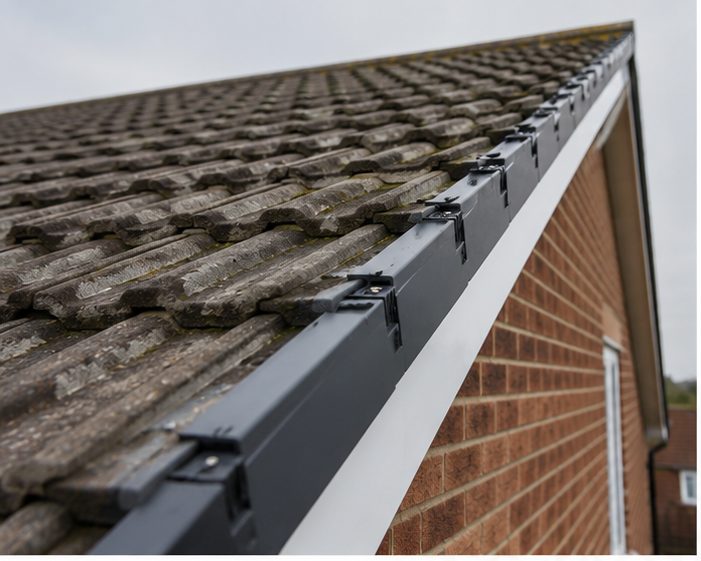
The problem with a failing mortar verge
Mortar at a verge is exposed to rain, frost and wind. Over time it shrinks, cracks and drops out in pieces, often onto the path or drive below. Each lost piece leaves a hole. Starlings, sparrows and bees favour that sort of sheltered cavity, and wasps can use the space just under the tile ends.
How a dry verge closes the edge
A dry verge uses mechanically fixed verge units and tile-end pieces in place of wet mortar. The units run along the edge and cover the tile ends, so there is no open bed of crumbling material to nest in. Fitted to the tile maker's guidance, the edge is shut off from the weather as well as from pests.
What it does not do
A dry verge protects the edge, not the whole roof. If a nest is already inside the roof space, or there are gaps at the ridge, eaves or under a damaged tile elsewhere, birds and insects can still get in there. It is also not a way to evict anything already living behind the old mortar, which needs dealing with separately and carefully.
- It seals the verge, not other openings.
- It does not remove an existing nest.
- It cannot fix tiles failing somewhere else.
- It suits the profile only after a check on site.
Before we fit one
If we find signs of nesting or a wasp nest near the edge, we deal with that first and tell you what we see. Birds can be protected at certain times of year, so we advise on timing before work begins. We then clear the loose mortar, check the tile ends and fit the dry verge units neatly along the gable.
What to watch from the ground
You can keep an eye out from the garden or pavement for insects flying in and out at the edge, birds carrying material to one spot, or mortar and straw on the path. Those are clues that a verge needs attention. Please do not poke at the edge or climb up to look. Call us and we will take a proper look from a safe position.
- Bits of mortar or tile dust on paths and drives.
- Birds repeatedly visiting the same gap.
- Wasps or bees entering near the gable.
- Nesting material hanging at the roof edge.
Frequently Asked Questions
Will a dry verge stop wasps nesting at the gable?
It removes the open gaps in old mortar that wasps and bees like to use there. It cannot stop them nesting elsewhere in the roof space. If you already have a nest, that should be dealt with first.
Can birds still get under a dry verge?
Once fitted properly, the units close the edge with no open mortar bed to squeeze into. Birds can still use other gaps such as eaves or ridge, so the rest of the roof is checked as well.
Is it a good idea to block a bird nest?
Not while it is in use. Nesting birds are protected, so if there is an active nest we plan the work around it. We would rather wait and do it properly than rush and cause a problem.
Talk to our team about dry verge systems in Greenbank
Every roof is different — the fastest way to get an accurate answer is a quick chat with our team.